How Much Does an Exhibition Stand Cost? A Detailed Look at Pricing Factors

Brendan Cogbill
- Introduction
- Booth Size and Layout: The Foundation of Your Budget
- Custom vs. Modular Displays: Understanding the Trade-Offs
- Materials and Visual Features That Affect Costs
- Labor Costs for Installation and Dismantle
- Shipping, Drayage, and On-Site Handling
- Hidden and Overlooked Costs
- Maximizing Value Through Strategic Planning
- How All Exhibit Solutions Helps You Stay on Budget
Introduction
Trade shows are a powerful tool for connecting with potential customers, showcasing products, and expanding brand awareness. But while many companies are eager to participate, one major question always arises in the planning phase: how much does an exhibition stand cost? The answer is not as simple as quoting a flat rate. The cost of an exhibition stand can vary widely depending on several key factors, from the size and layout of the booth to the materials used, custom features, labor requirements, and even the location of the event.
At All Exhibit Solutions, we specialize in professional trade show booth installation and dismantle services. We understand how much detail goes into planning a successful exhibition and how important it is to stay on budget. In this blog, we break down the most important components that influence the cost of an exhibition stand, giving you a comprehensive understanding of what to expect when budgeting for your next trade show.
Booth Size and Layout: The Foundation of Your Budget
The size of your exhibition stand is the first major factor that will influence your total cost. A standard 10×10 inline booth, for example, will be far more affordable than a large island booth or double-deck exhibit. Not only does square footage dictate how much material and labor is required, but it also affects other variables like lighting, flooring, and signage.
The layout plays an equally important role. Simple, open floor plans that require minimal construction are less expensive than custom designs that incorporate enclosed meeting spaces, product showcases, or interactive technology zones. Whether you need a compact display or a sprawling exhibit with multiple access points, the size and design complexity will heavily influence your overall exhibition stand pricing.
Custom vs. Modular Displays: Understanding the Trade-Offs
Exhibitors often choose between modular systems and fully custom-built displays. Modular stands are made from pre-engineered components that can be reconfigured for different booth sizes and layouts. They tend to be more budget-friendly, especially when used across multiple events. Modular systems can also offer streamlined setup, lightweight materials for easier transport, and reduced labor requirements.
Custom-built stands, on the other hand, are tailored to match the brand’s unique identity and goals. They often include high-end finishes, bespoke features, and striking architecture that create a one-of-a-kind presence on the show floor. However, these benefits come with higher costs due to increased design time, specialty fabrication, and more involved installation and dismantle processes. Companies must weigh the advantages of visual impact and brand alignment against the higher price point when choosing their approach.
Materials and Visual Features That Affect Costs
Another key factor in determining how much an exhibition stand costs is the choice of materials and the visual elements included in the build. Lightweight materials like aluminum and fabric can keep both fabrication and shipping costs down, while heavier materials like wood or glass increase expenses in terms of both material cost and handling.
Incorporating visual features like backlit graphics, digital signage, and custom flooring can significantly enhance the appearance of your booth but will also add to the budget. Technology elements such as LED video walls, interactive touchscreens, and audio systems provide a high level of engagement but require additional planning, power considerations, and support.
At All Exhibit Solutions, we’ve seen how these details elevate the attendee experience. However, it’s important to balance visual appeal with budget constraints and to choose features that align with your event goals.
Labor Costs for Installation and Dismantle
Labor is one of the most significant components in the total exhibition stand cost. Trade show booth setup and breakdown can involve a team of skilled professionals, especially for complex structures or multi-level booths. Labor rates vary by location and are influenced by local union rules, venue regulations, and the timeline of the event.
At All Exhibit Solutions, we provide experienced installation and dismantle services that ensure your booth is set up properly, safely, and on schedule. By working with a reliable partner, exhibitors can avoid costly delays, last-minute changes, and additional overtime charges. Labor costs can also be reduced by designing a booth that is easier and faster to assemble. This is why it’s helpful to involve your installation team in the early planning stages to create an efficient and realistic timeline.
Shipping, Drayage, and On-Site Handling
Transporting your trade show booth to and from the venue is another area that can significantly impact your budget. The cost of shipping depends on the size and weight of your display, the distance it must travel, and the delivery method. Air freight is faster but more expensive, while ground shipping is more economical but may require longer lead times.
Once your exhibit arrives at the venue, drayage fees are applied for moving materials from the dock to your booth space. Drayage is usually calculated based on weight and can be surprisingly expensive. Minimizing the size and weight of your materials can help reduce this cost. Additionally, exhibitors should factor in the cost of return shipping and any storage needs for the booth in between shows.
By designing booths with logistics in mind, All Exhibit Solutions helps clients avoid common shipping pitfalls and reduce unnecessary transportation expenses.
Hidden and Overlooked Costs
In addition to the primary costs of design, materials, labor, and logistics, there are several secondary expenses that often go overlooked. Utilities such as electricity, internet, and water can add hundreds or even thousands of dollars to your bill, depending on the venue. You may also need to pay for cleaning services, security, insurance, or special certifications required for your industry.
Other hidden costs include graphic updates, replacement parts, staff accommodations, and promotional giveaways. While each of these items may seem small on its own, together they can significantly increase your total investment.
All Exhibit Solutions recommends creating a detailed expense plan that includes both essential and optional line items. This ensures you have a full understanding of the true cost of exhibiting and allows you to prioritize expenses more effectively.
Maximizing Value Through Strategic Planning
The good news is that you don’t have to break the bank to create a professional, effective exhibition presence. With the right planning and execution, it’s entirely possible to stay within budget while making a strong impression. Choosing reusable components, simplifying installation, and working with a trusted labor partner are just a few ways to maximize your return.
It also pays to plan ahead. Rush orders and last-minute changes often lead to higher fees and unnecessary stress. By working with All Exhibit Solutions early in the process, clients benefit from expert guidance, accurate estimates, and seamless coordination from start to finish. Our team helps exhibitors identify opportunities to save without sacrificing quality or effectiveness.
How All Exhibit Solutions Helps You Stay on Budget
Our team specializes in trade show booth installation and dismantle, but our value extends far beyond the show floor. We help exhibitors understand the full scope of their trade show costs and make strategic decisions that support both performance and profitability. From labor planning and show logistics to pre-show walkthroughs and post-show breakdown, we’re there to ensure every detail runs smoothly.
When clients ask us how much does an exhibition stand cost, we respond with a comprehensive consultation that factors in size, design complexity, shipping, and labor. We provide clarity, transparency, and expert recommendations based on years of industry experience. Whether you’re preparing for a major national show or a regional event, we can help you build a budget that works, and stick to it.
Determining how much an exhibition stand costs requires a detailed look at several interconnected factors. Booth size, design style, materials, labor, and logistics all play a role in shaping the final price. By understanding these variables and working with an experienced partner like All Exhibit Solutions, you can take control of your trade show budget and create an exhibit that makes a lasting impact.
Exhibiting successfully isn’t just about how your booth looks. It’s about how well it performs, how efficiently it’s installed, and how effectively it fits within your overall marketing strategy. If you’re ready to plan smarter for your next event, reach out to All Exhibit Solutions for expert support and cost-effective solutions that help your brand stand out.
Frequently asked questions
How much does an exhibition stand cost?
For a 10×10 inline space at a mid-size US show, all-in costs typically land between $10,000 and $25,000 once space, stand, freight, drayage, labour and travel are counted. Large custom islands at national shows run well into six figures.
What drives the cost of an exhibition stand up?
Size and layout first, then construction. Enclosed meeting rooms, second levels, hanging signs, custom fabrication and interactive technology all add cost, and each one also adds labour hours and rigging that have to be scheduled around the general contractor.
Is a modular stand cheaper than a custom build?
Usually, and it stays cheaper across a season because it packs smaller, ships lighter and goes up faster. A custom build wins when the space has to do something specific that modular components cannot, and when the stand will be used often enough to justify the investment.
Recommended Articles
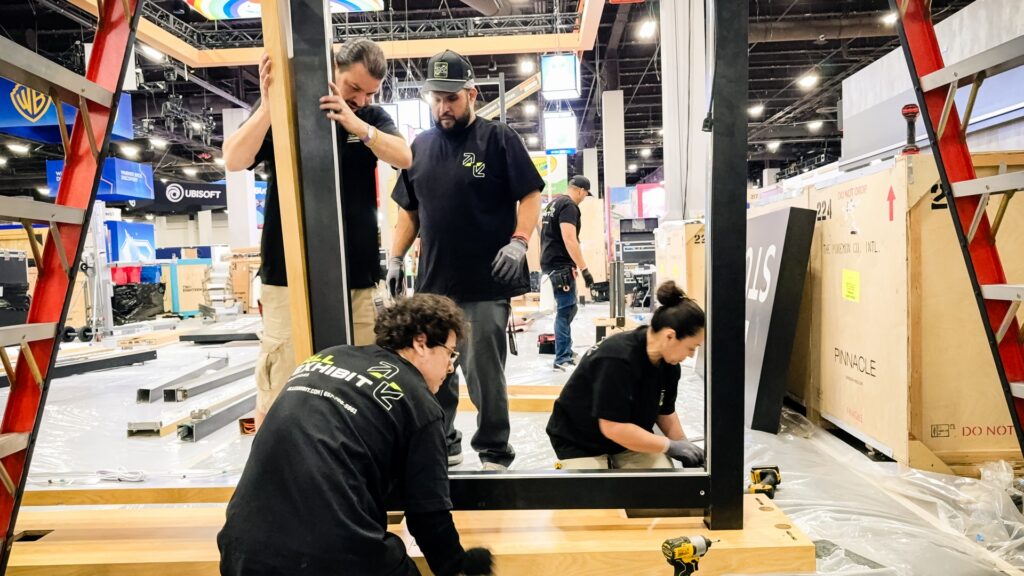
What Trade Show Labor Actually Costs and How to Estimate It
Then compare the estimate against the actual invoice afterward and keep the comparison. Two or three shows of that record turns estimating from guesswork into a reliable forecast. All Exhibit...

Brendan Cogbill
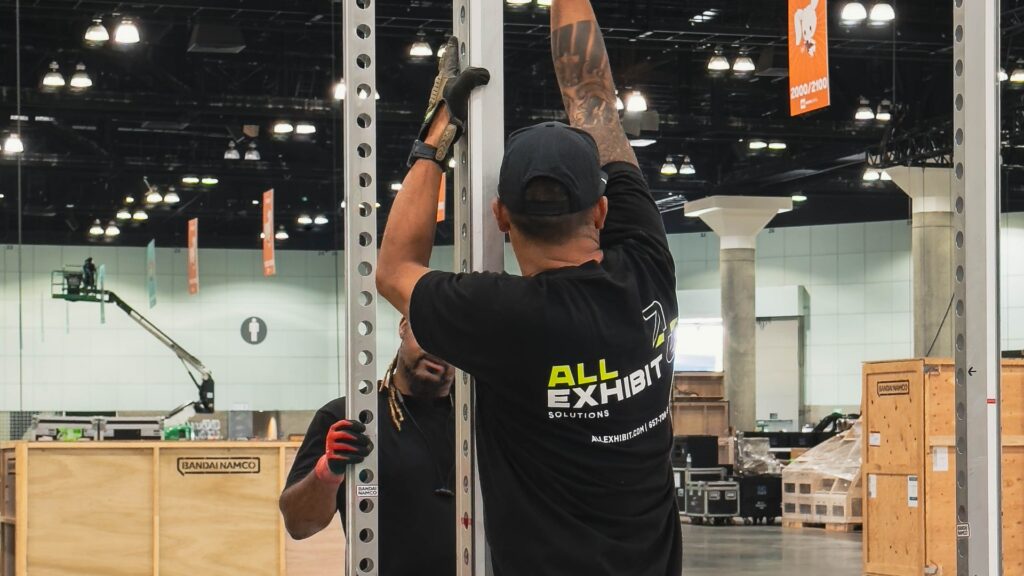
What Is an Exhibitor Appointed Contractor and When Do You Need One?
There is a cost dimension as well. Some shows charge an EAC processing fee, and a few apply a surcharge calculated against the value of the work being performed on the floor. These amounts are...
Brendan Cogbill
Trade Show Booth Rentals: Costs & What’s Included
It is worth asking how much of the rental inventory is genuinely reconfigurable, because that single answer shapes what you can do across a season. Many rental systems are modular by design, which...
Brendan Cogbill
Common Trade Show Rejection Reasons and How to Avoid Them
It is also worth separating the two kinds of no you might receive. A design rejection happens before the show, when your submitted plan conflicts with the rules, and it is the cheaper problem because...
Brendan Cogbill
Top Pop-Up Display Ideas for Your Exhibition Booth
Audience matters as much as venue size. A pop-up aimed at engineers and technical buyers can lean into detailed product imagery and a demo screen, while one built for a consumer-facing event might...
Brendan Cogbill
How to Choose a Trade Show Booth Company You Can Trust
However impressive a design looks in a rendering, it only matters if it goes up correctly, on time, and looking exactly as promised. Installation and dismantle is where every other decision is...
Brendan Cogbill
Inline vs. Island Booths: What Is an Inline Booth and Which Is Right for You?
The configuration you choose ripples straight through your budget and your build. Beyond the space rental itself, islands and peninsulas usually require more material, more complex structures, and...
Brendan Cogbill

Exhibit Management 101: Running Your Trade Show Program Like a Pro
A single trade show is a project. A year of trade shows is a program, and the difference between the two is exhibit management. When a company exhibits a few times a year, the work tends to be...