- Introduction
- Managing Tight Schedules and Deadlines
- Coordinating Multiple Vendors and Exhibitors
- Handling Budget Constraints and Cost Management
- Ensuring Safety and Compliance
- Maximizing Floor Space and Layout Efficiency
- Handling Last-Minute Changes and Emergencies
- Creating a Seamless Attendee Experience
Introduction
Trade shows remain one of the most powerful platforms for businesses to showcase products, engage with clients, and build industry connections. However, the behind-the-scenes effort required to organize a successful trade show is no small feat. Trade show organizers juggle countless moving parts, from coordinating vendors to managing tight schedules and ensuring smooth execution. Each stage of the process presents its own unique set of challenges, and even small missteps can disrupt the entire event.
All Exhibit Solutions understands the complexities that come with trade show management. As a trusted provider of trade show booth installation and dismantlement services, we work closely with organizers to alleviate many of the logistical hurdles they face. Our goal is to streamline the process, ensuring that exhibits are set up efficiently and dismantled with precision, allowing organizers to focus on delivering an exceptional event experience.
Managing Tight Schedules and Deadlines
One of the most pressing challenges for trade show organizers is managing tight schedules. Trade shows operate on rigid timelines, with exhibitors often given limited windows to install and dismantle their booths. Missing these deadlines can create a domino effect, delaying the overall setup of the show floor and causing significant stress for organizers.
The logistical demands of trade show booth installation can be overwhelming, particularly when multiple exhibitors require attention at the same time. Organizers must coordinate booth deliveries, ensure the necessary equipment is in place, and manage crews working on-site. Any delay in one area can throw off the entire schedule, leaving little room for error.
Professional trade show booth installation services play a critical role in addressing these challenges. With experienced teams handling the setup process, booths are installed quickly and efficiently, minimizing the risk of delays. This level of expertise ensures that even complex installations are completed within the allocated time frame, keeping the event on track and alleviating much of the pressure on organizers.
Coordinating Multiple Vendors and Exhibitors
Trade shows often involve a large number of vendors and exhibitors, each with their own requirements and expectations. Organizers must juggle communication between all parties, ensuring that every exhibitor’s needs are met while keeping the overall event organized and cohesive. This can be a daunting task, as conflicting demands and last-minute changes frequently arise.
Miscommunication or lack of coordination between vendors can lead to logistical bottlenecks, incorrect booth placements, and incomplete installations. For organizers, managing this level of detail requires extensive planning and constant oversight. Even the most seasoned event professionals can find it challenging to align the efforts of so many different contributors.
By partnering with a company like All Exhibit Solutions, organizers can reduce the strain of managing vendor coordination. Our team handles the installation and dismantling of trade show booths, ensuring that each exhibitor’s space is set up according to plan. This allows organizers to focus on broader event logistics without getting bogged down in individual exhibitor requirements.
Handling Budget Constraints and Cost Management
Budget management is a persistent challenge for trade show organizers. Planning an event of this scale involves numerous expenses, from venue rental and marketing to logistics and staffing. Booth installation and dismantlement often represent significant portions of the overall budget, and unforeseen costs can quickly derail financial plans.
Organizers must strike a balance between delivering high-quality experiences for exhibitors and attendees while staying within budget. This can be particularly challenging when managing large-scale trade shows with multiple moving parts. Cost overruns in one area may lead to compromises in another, ultimately impacting the overall success of the event.
Working with an experienced trade show booth installation company can help organizers keep costs under control. All Exhibit Solutions provides transparent pricing and efficient services, ensuring that installations are completed on time and within budget. By streamlining this aspect of the trade show process, organizers can allocate resources more effectively and avoid unnecessary expenditures.
Ensuring Safety and Compliance
Trade show booth installation and dismantlement involve significant physical labor and technical expertise. From assembling large structures to managing electrical components, safety is a top priority throughout the process. For trade show organizers, ensuring that every aspect of the event adheres to industry safety standards and regulations is essential.
The risks associated with improper booth installation are considerable. Structural instability, incorrect wiring, or poor material handling can lead to accidents, posing a danger to both exhibitors and attendees. Beyond the immediate safety risks, non-compliance with regulations can result in fines, legal liabilities, and reputational damage.
All Exhibit Solutions prioritizes safety at every stage of booth installation and dismantlement. Our teams are trained to follow industry best practices, ensuring that all installations meet regulatory requirements and are executed with precision. By relying on professionals who understand the intricacies of safety compliance, trade show organizers can mitigate risks and create a secure environment for everyone involved.
Maximizing Floor Space and Layout Efficiency
Optimizing floor space is another significant challenge for trade show organizers. With a finite amount of space available, it’s essential to ensure that every square foot is used effectively. Poorly planned layouts can lead to overcrowded areas, limited visibility for exhibitors, and diminished attendee engagement.
Booth placement and configuration play a crucial role in creating an inviting and navigable show floor. Organizers must consider factors such as traffic flow, sightlines, and booth sizes to ensure that the space is used to its full potential. However, achieving this balance requires careful planning and expertise.
At All Exhibit Solutions, we understand the importance of maximizing space without compromising the overall aesthetic or functionality of the event. Our booth installation services are tailored to fit the available layout, ensuring that exhibitors can showcase their products in a way that enhances visibility and engagement. This attention to detail allows organizers to make the most of their venue while delivering a seamless experience for attendees.
Handling Last-Minute Changes and Emergencies
Even the most meticulously planned trade shows are not immune to last-minute changes and emergencies. Exhibitors may request alterations to their booth setup, technical issues may arise, or unforeseen logistical challenges can throw plans off course. For organizers, the ability to adapt quickly and resolve issues on the fly is essential.
Handling these last-minute changes can place significant stress on organizers, particularly when multiple exhibitors require adjustments simultaneously. The challenge is further compounded by tight schedules and limited time to address unexpected issues.
All Exhibit Solutions offers responsive and adaptable booth installation services, ensuring that last-minute changes are managed swiftly and efficiently. Our experienced teams are equipped to handle on-site modifications, allowing organizers to maintain flexibility without compromising the overall event timeline. This level of adaptability is invaluable in creating a smooth and successful trade show experience.
Creating a Seamless Attendee Experience
At the heart of every successful trade show is the attendee experience. From the moment visitors enter the venue to the time they leave, their impression of the event is shaped by the quality of the exhibits, the flow of the floor plan, and the overall atmosphere.
Booth installation and dismantlement play a direct role in shaping this experience. Poorly installed booths, cluttered layouts, or unfinished spaces can detract from the overall event, leaving attendees with a negative impression. Conversely, a well-organized show floor with professionally installed booths enhances engagement, encourages exploration, and reflects positively on the event as a whole.
By partnering with All Exhibit Solutions, organizers can ensure that every aspect of booth installation is handled with care and precision. Our commitment to quality craftsmanship ensures that each booth contributes to an engaging and visually impressive show floor, enhancing the overall attendee experience.
Trade show organizers face a wide range of challenges, from managing tight schedules to coordinating vendors and handling last-minute changes. However, with the right partners, many of these obstacles can be overcome. All Exhibit Solutions offers expert trade show booth installation and dismantlement services, helping organizers streamline their operations and deliver successful events.
If you’re planning an upcoming trade show, contact us today to learn how we can support your efforts and ensure a smooth, seamless experience from start to finish.
Introduction
Trade shows are invaluable opportunities for businesses to network, explore industry innovations, and form partnerships that drive growth. With so many vendors offering similar products and services, it can be overwhelming to navigate the trade show floor and make the right connections. Asking the right questions is essential for filtering through the noise, identifying the best vendors, and ensuring the products or services they offer align with your company’s goals. Whether you are seeking solutions for trade show booth installation, marketing materials, or technology, the vendors you choose play a significant role in the overall success of your trade show experience.
At All Exhibit Solutions, we understand the intricacies of trade shows. As experts in trade show booth installation and dismantlement, we know that selecting reliable vendors can make the difference between a smooth, organized event and one filled with logistical headaches. Asking thoughtful and strategic questions allows you to evaluate vendors more effectively, helping you get the most out of your trade show participation.
Why Asking the Right Questions Matters
Walking into a trade show without a plan can result in missed opportunities and poor decision-making. Engaging with vendors and asking insightful questions enables you to make informed decisions, saving time and resources in the long run. This process is crucial for discovering new technologies, innovative services, and high-quality products that could elevate your business.
By engaging vendors with the right questions, you gain a clearer understanding of their capabilities, track record, and how their offerings compare to competitors. Asking about timelines, costs, and flexibility helps you gauge how well their services align with your trade show needs. For those investing in trade show booth installation and dismantlement, working with experienced vendors can ensure your booth is not only set up correctly but dismantled efficiently when the event concludes. Effective vendor partnerships can minimize downtime, prevent miscommunications, and improve overall event outcomes.
Key Questions to Ask Vendors at Trade Shows
When evaluating vendors, it’s essential to gather information that goes beyond the surface-level sales pitch. One of the first questions to ask is what differentiates their product or service from others in the market. Trade shows often feature vendors with overlapping offerings, so understanding what makes one vendor stand out is crucial. This could relate to innovation, pricing, product quality, or unique service elements. Vendors who can articulate their competitive edge are often more confident in their ability to deliver results, making them valuable partners in the trade show process.
Another critical area to explore is pricing and the scope of services. Transparency in costs helps with budget planning and prevents hidden fees that could disrupt financial planning for the event. Asking for a breakdown of pricing and available service packages allows you to compare vendors fairly and select one that provides the best value for your investment. For trade show booth installation and dismantlement, understanding whether the vendor offers full-service solutions or limited services is essential to making informed decisions.
Experience also plays a pivotal role in vendor selection. Asking about past projects, particularly those that align with the scale and nature of your trade show booth, can provide insight into a vendor’s ability to meet your expectations. Vendors with experience in handling large-scale or complex installations are often better equipped to handle challenges that may arise during the setup or teardown process.
Lead times and delivery schedules are equally important to address. Trade shows operate on strict timelines, and delays in booth installation can impact the entire event schedule. Ensuring that vendors can meet deadlines and adhere to production schedules reduces the risk of logistical issues. Questions about how vendors manage their timelines and what measures they take to avoid delays will give you peace of mind when planning your trade show presence.
Flexibility and problem-solving are qualities that distinguish great vendors from average ones. Trade shows are dynamic environments where unforeseen issues are common. Asking vendors how they handle last-minute changes or unexpected challenges provides insight into their adaptability and resourcefulness. This is especially relevant for vendors responsible for booth installation and dismantlement, as quick problem-solving can make the difference between a smooth setup and a chaotic experience.
Questions Specific to Booth Installation and Dismantle
For companies focused on booth design and installation, it’s important to dig deeper into the vendor’s process and approach. Booth installation is a critical component of trade show success, and the way a vendor handles this task reflects on your company’s professionalism and attention to detail. Asking how the vendor ensures safety and compliance during the installation process is crucial. Booths must meet specific regulations and safety standards, and vendors who prioritize compliance help protect both your team and attendees.
Space efficiency is another area to consider. Trade show floors are often crowded, and making the most of your booth’s footprint is essential. Vendors who have experience in maximizing booth layouts can provide creative solutions that enhance your booth’s visual appeal and functionality. Understanding how a vendor plans the booth layout to optimize space while maintaining an attractive design can improve the overall attendee experience.
Coordination with other vendors and trade show staff is another essential element to inquire about. Booth installation often involves collaboration with multiple teams, including electricians, lighting specialists, and audio-visual experts. Vendors who are skilled at managing these relationships can streamline the installation process, ensuring that all elements of the booth come together seamlessly.
The Role of Sustainability in Vendor Selection
Sustainability is becoming an increasingly important factor in trade show planning. Asking vendors about their sustainability initiatives and eco-friendly options helps ensure your trade show presence aligns with current environmental standards. Vendors offering sustainable materials, energy-efficient designs, and reusable booth components demonstrate a commitment to reducing their environmental impact. This aligns with the broader trend toward sustainable business practices, which can enhance your brand’s reputation among eco-conscious consumers and trade show attendees.
Inquiring about packaging, materials, and post-show dismantlement practices can reveal valuable insights into how environmentally responsible a vendor is. Vendors who minimize waste, offer recyclable materials, and implement green practices throughout the installation and dismantlement process are often preferred partners for businesses looking to reduce their carbon footprint.
How All Exhibit Solutions Can Support Your Trade Show Success
At All Exhibit Solutions, we recognize that successful trade shows rely on more than just eye-catching booth designs. Our expertise in trade show booth installation and dismantlement ensures that your booth is set up efficiently and dismantled smoothly, allowing you to focus on engaging with attendees and maximizing your event presence.
We pride ourselves on offering full-service solutions that simplify the process for our clients. From managing tight schedules to handling last-minute adjustments, our team is dedicated to ensuring that your booth reflects the quality and professionalism of your brand. Our experienced staff understands the importance of clear communication, coordination with other vendors, and strict adherence to trade show timelines.
When you partner with All Exhibit Solutions, you gain more than just a service provider—you gain a trusted partner committed to the success of your event. Our focus on precision, safety, and efficiency helps clients navigate the complexities of trade shows with confidence.Trade shows present endless opportunities for growth, networking, and innovation, but success hinges on the relationships you build with the right vendors. By asking strategic questions, you can identify partners who align with your goals and bring added value to your trade show experience. From booth installation to dismantlement, vendors play a vital role in ensuring seamless execution.
At All Exhibit Solutions, we are here to support you every step of the way. Whether you need professional booth installation, dismantlement, or logistical support, our team is ready to help. Contact us today to learn how we can enhance your trade show success and simplify the vendor selection process.
- Introduction
- Why Influencers Are Key to Trade Show Success
- Choosing the Right Influencer for Your Trade Show
- Collaborating with Influencers to Maximize Trade Show Engagement
- Creating Shareable Content with Influencers
- Measuring Influencer Impact on Trade Show Performance
- Why Partner with All Exhibit Solutions for Trade Show Success
Introduction
In the fast-paced world of trade shows, standing out from the competition can be challenging. With countless booths vying for attention, attracting the right audience to your space requires more than just an eye-catching design. One powerful way to elevate your trade show presence is by collaborating with influencers. These trusted voices can amplify your brand’s message, drive traffic to your booth, and engage audiences in ways traditional marketing cannot.
At All Exhibit Solutions, we specialize in trade show booth installation and dismantle, ensuring your booth is set up for maximum impact. But the physical setup is just one piece of the puzzle—boosting visibility through influencer marketing can significantly enhance overall success.
Why Influencers Are Key to Trade Show Success
Influencers are no longer just social media personalities; they are essential players in modern marketing strategies. With curated audiences and high engagement rates, influencers bring credibility and trust that brands often struggle to establish on their own.
When applied to trade shows, influencers can:
- Drive Foot Traffic – Their followers often attend trade shows specifically to interact with them. This creates natural interest around your booth.
- Enhance Brand Awareness – Influencers introduce your brand to a broader audience through pre-show promotions, social media posts, and live updates during the event.
- Engage Attendees – Influencers can host Q&A sessions, live demonstrations, or giveaways that keep attendees at your booth longer, increasing the likelihood of lead generation.
Industries such as technology, fitness, fashion, and beauty benefit significantly from influencer marketing at trade shows. However, any industry that thrives on community engagement can see remarkable returns from partnering with the right influencers.
Choosing the Right Influencer for Your Trade Show
Not all influencers are created equal, and selecting the right one can make or break your campaign. A strong influencer collaboration starts with aligning brand values and audience demographics. Here’s how to ensure you choose the best fit:
- Relevance Over Follower Count – It’s tempting to choose influencers with the largest following, but relevance matters more. A micro-influencer with 20,000 engaged followers in your niche can be more effective than a celebrity with a broader but less interested audience.
- Engagement Metrics – Analyze an influencer’s engagement rate (likes, comments, shares) rather than just their follower count. This helps determine how connected they are to their audience.
- Alignment with Brand Identity – Ensure the influencer’s voice and style match your brand’s tone. An influencer who regularly engages in trade shows or product demos will likely integrate more naturally with your booth.
- Audience Demographics – Study the influencer’s audience to ensure their followers match your target market. Factors like age, location, and interests play a crucial role in trade show marketing success.
Several tools, such as HypeAuditor or AspireIQ, can assist in vetting influencers and identifying potential partners.
Collaborating with Influencers to Maximize Trade Show Engagement
Once you’ve selected the right influencer, the next step is creating a collaborative plan that ensures seamless integration with your trade show strategy. Influencers can contribute before, during, and after the event to extend the reach of your trade show presence.
Pre-Show Promotion
Start collaborating with influencers at least 3-4 weeks before the trade show.
- Social Media Teasers – Have influencers post teasers about your booth, products, and exclusive giveaways.
- Email Marketing – Influencers can mention your brand in their newsletters or blogs, generating early interest among potential attendees.
- Countdowns and Sneak Peeks – Create excitement with countdowns to exclusive events at your booth or early product reveals.
At the Show
Engaging influencers at the trade show ensures their presence drives traffic directly to your booth.
- Booth Takeovers – Allow influencers to take over your brand’s social media, live-streaming or posting real-time updates.
- Live Demonstrations – Influencers can demonstrate products or services, providing credibility and entertainment for the audience.
- Giveaways – Create exclusive giveaways that attendees can enter by visiting your booth or engaging with influencer content.
Post-Show Engagement
Influencers continue to add value after the trade show ends.
- Recap Videos – Ask influencers to post highlights from the trade show, showcasing interactions at your booth.
- Follow-Up Campaigns – Influencers can engage their audience with follow-up content, encouraging post-show purchases or consultations.
Creating Shareable Content with Influencers
Content is king, and influencers are experts at creating engaging material. Co-creating content with influencers ensures their audience remains captivated while boosting visibility for your trade show booth.
Encourage influencers to generate a mix of the following content:
- Booth Walkthrough Videos – Virtual tours of your booth for audiences unable to attend the show.
- Interactive Polls and Q&A – Instagram stories or Twitter polls that engage audiences directly.
- User-Generated Content – Ask attendees to share their experiences, tagging both the influencer and your brand for increased visibility.
Using branded hashtags throughout the show ensures all influencer-driven content is easy to find and track.
Measuring Influencer Impact on Trade Show Performance
Understanding the success of your influencer collaboration is essential for refining future trade show strategies. Measuring return on investment (ROI) helps quantify the impact and determine whether the partnership should continue.
Key performance indicators (KPIs) to track include:
- Booth Traffic – Track how many attendees visited the booth directly through influencer promotions.
- Social Media Mentions – Monitor how often your booth, products, or trade show presence is mentioned.
- Lead Generation – Count the number of leads collected through influencer engagements, whether via sign-ups, contests, or QR code scans.
- Engagement Metrics – Assess likes, shares, and comments on influencer-generated content related to your brand.
By evaluating these KPIs, businesses can fine-tune future collaborations, maximizing returns on trade show investments.
Why Partner with All Exhibit Solutions for Trade Show Success
While influencers help drive traffic and engagement, the foundation of trade show success lies in the quality of your booth. At All Exhibit Solutions, we provide professional trade show booth installation and dismantle services, ensuring your booth not only stands out but functions seamlessly.
Our experienced team understands the intricacies of booth setup and dismantle, handling every detail so you can focus on influencer engagement and customer interactions. A well-installed booth complements influencer-driven traffic, creating an immersive experience for attendees.
Influencers are transforming the trade show experience by bridging the gap between brands and audiences. By choosing the right influencer, creating engaging content, and measuring success, businesses can boost visibility and engagement significantly.
At All Exhibit Solutions, we handle the critical task of trade show booth installation and dismantle, setting the stage for influencer collaborations to thrive. Ready to elevate your next trade show? Contact us today to start planning a seamless, impactful trade show experience.
Introduction
Trade shows are one of the most powerful marketing tools available to businesses, offering unmatched opportunities for networking, brand exposure, and lead generation. However, without careful planning and budgeting, the costs associated with participating in trade shows can quickly add up. To maximize return on investment (ROI) and avoid unexpected expenses, businesses need to develop a comprehensive trade show budget. This guide will walk you through the critical elements to consider, ensuring you cover all aspects from booth installation and dismantlement to staffing and logistics. By partnering with All Exhibit Solutions, businesses can streamline their trade show experience and ensure every installation and dismantlement is taken care of with expertise.
Booth Space Costs
Booth space is often the largest expense in a trade show budget. Securing the right location and size can significantly impact the overall success of your exhibit.
Trade show organizers typically offer booth spaces at varying prices depending on factors such as booth size, location on the floor, and proximity to high-traffic areas. Prime spots near entrances, lounges, or main walkways generally command higher fees. Early registration often provides cost benefits, as organizers may offer discounts for businesses that commit well in advance.
To optimize your budget, evaluate the expected foot traffic and visibility of different booth locations. While it might be tempting to go for the most prominent spot, a well-designed booth in a slightly less expensive area can still draw substantial attention. Striking a balance between cost and visibility is key to making the most of your trade show investment.
Booth Design and Fabrication
The design and fabrication of your trade show booth play a crucial role in attracting visitors and communicating your brand message. Booths can range from simple pop-up displays to elaborate custom-built structures, and costs will vary accordingly.
Custom booths are often the most effective at standing out, but they can also be expensive. Modular or reusable booth designs are cost-efficient alternatives, allowing businesses to repurpose the same structure across multiple trade shows with minor adjustments. This not only reduces fabrication costs but also minimizes waste, contributing to more sustainable trade show practices.
When budgeting for booth design, factor in the cost of materials, graphics, lighting, and interactive elements. High-quality materials may require a larger upfront investment but can enhance the durability and overall appearance of the booth, saving money in the long run.
Installation and Dismantlement
Booth installation and dismantlement are critical to ensuring a smooth setup and breakdown process. Professional installation and dismantle (I&D) services, such as those provided by All Exhibit Solutions, can help streamline this process and prevent costly delays.
Labor costs for I&D can vary based on the complexity of the booth design, the time required for assembly, and union regulations at the venue. Some venues have strict rules regarding the use of outside labor, which can lead to additional fees if not carefully planned.
To manage costs, work with experienced providers who are familiar with the venue’s regulations and timelines. Additionally, detailed pre-show planning can minimize the risk of last-minute changes that could increase labor expenses. Investing in professional I&D services ensures your booth is ready on time and dismantled efficiently, allowing you to focus on engaging with attendees.
Shipping and Logistics
Transporting your trade show booth and materials can introduce hidden costs if not carefully managed. Logistics expenses include freight charges, drayage (moving items from the loading dock to the booth space), and storage fees.
Shipping costs depend on the size and weight of your materials, as well as the distance they need to travel. Consolidating shipments or opting for lighter materials can help reduce freight expenses. Drayage fees, often calculated by weight, can quickly add up, so it’s essential to understand the venue’s pricing structure.
Planning shipping schedules well in advance can also prevent rush fees and minimize the risk of damaged or lost items. Partnering with a logistics provider that specializes in trade shows can help navigate these challenges and ensure your materials arrive on time and in good condition.
Marketing and Promotions
Marketing and promotional activities are vital to driving traffic to your booth and generating leads. While digital marketing plays a significant role in pre-show promotion, on-site materials and giveaways are equally important.
Allocate a portion of your trade show budget to branded materials such as banners, brochures, and promotional items. Engaging booth designs, interactive displays, and multimedia presentations can further captivate attendees and create a memorable experience.
Additionally, consider investing in targeted advertising before the event to build anticipation and encourage attendees to visit your booth. Social media campaigns, email newsletters, and partnerships with event organizers can enhance your visibility and maximize your marketing impact.
Staffing and Travel Expenses
Staffing your booth with knowledgeable and engaging representatives is essential for a successful trade show experience. However, travel, lodging, and meal expenses can quickly accumulate.
When planning your budget, account for the number of staff members required to manage the booth effectively. Consider whether to bring in-house team members or hire temporary staff from the local area. Hiring locally can reduce travel costs and ensure you have enough personnel to cover breaks and engage with visitors.
Training is another important factor. Well-trained staff are better equipped to answer questions, demonstrate products, and collect leads, all of which contribute to a higher ROI. Set aside funds for pre-show training sessions to ensure your team is prepared to represent your brand effectively.
On-Site Services and Utilities
Trade show venues often charge for on-site services and utilities such as electricity, Wi-Fi, and audiovisual equipment. These services are essential for powering displays, lighting, and interactive elements within your booth.
Review the venue’s service catalog to understand the associated costs and budget accordingly. In some cases, bundling services or negotiating packages can help reduce expenses. Additionally, ensure you have contingency plans in place for technical difficulties or unexpected equipment needs.
Cleaning and security services may also be necessary, depending on the nature of your exhibit. Keeping the booth clean and organized throughout the event enhances the visitor experience and reflects positively on your brand.
Contingency and Miscellaneous Costs
No matter how carefully you plan, unforeseen expenses are inevitable. Allocating a portion of your budget to contingency costs can provide peace of mind and financial flexibility.
Unexpected expenses might include emergency repairs, last-minute graphic changes, or additional promotional materials. By planning for these contingencies, you can avoid scrambling for resources or exceeding your overall budget.
Post-Show Follow-Up and Analysis
The trade show experience doesn’t end when the event concludes. Following up with leads and analyzing the effectiveness of your participation are crucial for maximizing ROI.
Budget for post-show activities such as lead management, CRM software, and performance analysis tools. Sending personalized follow-up emails or promotional offers can help nurture leads and convert them into loyal customers.
Analyzing the success of your booth through metrics such as foot traffic, lead conversion rates, and overall engagement provides valuable insights for future trade shows. Continuous improvement based on these insights can lead to more successful events and better budget management over time.
Planning and executing a successful trade show requires careful budgeting across multiple categories. From booth space and design to staffing, logistics, and post-show follow-up, every aspect plays a vital role in achieving a positive ROI.
By working with experienced professionals like All Exhibit Solutions for booth installation and dismantlement, businesses can streamline the process and focus on what matters most—connecting with potential clients and growing their brand. A well-crafted budget not only prevents overspending but also ensures a seamless and productive trade show experience. Contact us today and ensure your exhibit stands out on the floor.
- How do you plan a trade show?
- How far in advance should you start planning?
- How much does exhibiting actually cost?
- Setting objectives you can measure
- Choosing the right show and reading competitors
- Booth design: rent or buy?
- Installation and dismantle: what to lock down
- Day-of execution
- Post-show: teardown, follow-up, measurement
- Sustainability without greenwashing
- Frequently asked questions
How Do You Plan a Trade Show?
Trade show planning works backward from the move-in date, not forward from today. Start 9 to 12 months before the show, lock the space and the budget first, then sequence exhibit design, service orders, freight, staffing, and follow-up against the show’s published deadlines. Every one of those deadlines has a price attached: order late and the same service costs 20% to 40% more.
Two numbers should anchor the whole plan. First, total show cost typically runs about three times the cost of your booth space, a rule of thumb published by EXHIBITOR Magazine and echoed across industry budget guides. Second, the costs that blow up budgets are not the exhibit, they are drayage, labor overtime, electrical, and freight, which commonly add 15% to 25% on top of what teams first estimate.
The rest of this guide covers the timeline, the budget structure, and the decisions that determine whether the show produces pipeline or just receipts. If you are still deciding whether exhibiting belongs in your marketing mix at all, start with why trade shows work as a marketing channel.
How Far in Advance Should You Start Planning a Trade Show?
Nine to twelve months for a major national show. Four to six months is workable for a regional or second-tier show if the exhibit already exists. Below three months you are paying premiums on nearly every line item and choosing from whatever floor space nobody else wanted.
Here is the countdown, built around the deadlines that actually carry financial consequences.
| When | What has to happen | Why the timing matters |
|---|---|---|
| 9 to 12 months out | Select the show, contract booth space, set goals and total budget | Corner and entrance-adjacent spaces are claimed first and carry a premium; late buyers get leftover placement |
| 6 to 9 months out | Decide rent vs. buy, commission exhibit design, submit island designs for organizer approval, book hotels | Show-adjacent hotels run 2x to 3x normal rates and sell out early; island booth designs often need rigging and height approval |
| 4 to 6 months out | Graphics production, EAC paperwork and certificate of insurance, sponsorship and show-guide ad decisions | Exhibitor-appointed contractor notification deadlines are firm; miss them and you are locked into the general contractor’s labor rates |
| 3 months out | Launch pre-show marketing, start booking booth meetings, select and brief staff | Booked meetings convert far better than walk-up traffic, and the attendee list takes time to work |
| 6 to 8 weeks out | Order from the exhibitor services kit: electrical, internet, carpet, furniture, cleaning, labor. Book freight. | This is the single highest-leverage deadline. Early-order discounts typically save 20% to 40% versus on-site rates |
| 3 to 4 weeks out | Staff training, lead capture setup and CRM integration, demo schedule, follow-up sequence written in advance | The follow-up email cannot be written after the show if you want to send it within 48 hours |
| 1 to 2 weeks out | Ship to the advance warehouse, confirm I&D crew call times, finalize collateral quantities | Advance warehouse shipping typically costs 10% to 20% less than direct-to-show delivery and is far more predictable |
| Move-in | Supervised install inside straight-time hours | Overtime runs 1.5x and Sunday or holiday double time runs 2x; a delayed install can double the labor line |
| 0 to 48 hours after | Send lead follow-up | Roughly 40% of exhibitors wait three to five days, and industry estimates suggest up to 80% of leads never get contacted at all |
| 2 to 4 weeks after | Measure against goals, debrief, arrange exhibit storage | Exhibitors who set measurable goals beforehand report 25% to 30% better outcomes; only about 37% formally measure at all |
How Much Does It Cost to Exhibit at a Trade Show?
Booth space is the number most teams budget for and the number least likely to surprise them. According to EXHIBITOR Magazine, exhibit space runs roughly $20 to $138 per square foot with a median near $59. Regional and second-tier shows often fall between $15 and $40 per square foot, while prime space at major national conventions can reach $100 to $150. Total show cost then lands at roughly three times the space fee.
A first-time small-business exhibitor at a mid-size show can put a credible presence on the floor for $4,000 to $8,000. A small-to-midsize exhibitor at a major show more typically lands between $10,000 and $30,000 all in.
| Category | Typical share of total | What it covers |
|---|---|---|
| Booth space | 20% to 30% | Square footage, badge allotment, directory listing, services portal access |
| Exhibit and graphics | 25% to 40% | Design, fabrication or rental, signage, furnishings, flooring |
| Services and logistics | 25% to 45% | I&D labor, drayage, freight, electrical, internet, AV, cleaning, storage |
| Travel and staffing | 10% to 25% | Flights, hotels, per diems, training, temporary staff |
| Marketing and lead capture | 10% to 20% | Pre-show campaigns, sponsorships, collateral, badge scanners, CRM integration |
| Contingency | 10% to 15% on top | Overtime, reprints, last-minute service orders, freight surprises |
Published allocations vary considerably between sources, so treat these as a planning framework rather than a formula. Build from your own prior-show invoices where you have them.
The Costs That Wreck Budgets
None of these are secret. They are documented in the exhibitor manual. They catch teams out because they were never in the original estimate.
- Drayage. The fee for moving your freight from the loading dock to your space and back. Charged by hundredweight, typically $100 to $200 per CWT at major shows, and up 20% to 35% since 2019 according to EXHIBITOR Magazine. A 20×20 exhibit weighing 5,000 to 8,000 pounds can incur $5,000 to $16,000 in drayage alone. It is handled exclusively by the show’s official contractor, so there is no competitive bid.
- Labor overtime. Union straight time at major convention centers runs roughly $75 to $150 per person per hour, with overtime at 1.5x and Sunday or holiday work at 2x.
- Show services. Electrical and internet commonly run $500 to $2,000. Carpet rental runs $3 to $8 per square foot. Furniture runs $200 to $1,000 and up.
- Late ordering. Ordering from the services kit after the discount deadline costs 20% to 40% more for identical service.
Setting Objectives You Can Actually Measure
“Increase brand awareness” is not an objective, because no post-show number can confirm or refute it. Objectives need a metric, a target, and a date.
Pick one primary objective per show. Programs that chase lead volume, product launch buzz, partner recruitment, and press coverage simultaneously tend to under-deliver on all four, because booth staffing, layout, and demo scheduling pull in different directions for each.
| If the objective is | Measure | Set the target before the show |
|---|---|---|
| Lead generation | Qualified leads, cost per qualified lead, leads-to-opportunity rate | Qualified lead count and acceptable cost per lead |
| Pipeline | Sourced pipeline value at 30, 60, and 90 days | Dollar pipeline target and attribution method in the CRM |
| Product launch | Demos delivered, demo-to-lead conversion, press mentions | Number of scheduled demos booked in advance |
| Existing customer retention | Booked customer meetings held, renewal conversations opened | Meeting count confirmed pre-show |
| Partner or channel recruitment | Qualified partner conversations, signed LOIs | Target account list built before travel |
Decide the attribution mechanism while you are still setting the target, not afterward. If badge scans never make it into the CRM with a campaign tag, the show has no measurable result regardless of how it felt on the floor.
Choosing the Right Show and Reading Your Competitors
The most consequential planning decision is which show, and the metric that matters is not total attendance. It is buyer density: the share of attendees who match your ideal customer profile. A regional show with 3,000 highly relevant attendees frequently outperforms a national show with 40,000 mostly irrelevant ones, at 30% to 50% of the total investment.
Ask organizers for the attendee breakdown by job title, seniority, and company size, not just the headline number. Ask what percentage of attendees are exhibitors rather than buyers, since that ratio quietly determines how many real prospects walk the floor.
What to Learn From Competitors Before You Design Anything
Pull last year’s floor plan and exhibitor list. That single document tells you which competitors committed, how much space they bought, and where they were positioned. Then look at what you can learn without guessing:
- Space commitment trend. A competitor moving from a 10×20 inline to a 30×30 island is telling you the show produces for them. One shrinking or dropping out is telling you the opposite.
- Positioning language. Their show-guide listing and booth headline reveal the claim they are leading with this year. Yours needs to be distinguishable from it at ten feet, in three seconds.
- Demo strategy. If every competitor runs scheduled stage demos, an open consultation layout stands out. If nobody demos, demoing is the differentiator.
- Adjacency. Who will be next to you matters more than most exhibitors expect. Neighboring a direct competitor invites side-by-side comparison; neighboring a complementary vendor can generate referrals.
Booth Design: Should You Rent or Buy?
Rent when you exhibit at fewer than three or four shows a year, when booth size varies between shows, or when you are testing a new market. Buy when you run a stable multi-show schedule at consistent sizes and can amortize the build across several years, accepting that ownership adds storage, refurbishment, and repair costs between shows.
Design decisions that affect performance more than aesthetics:
- Readable at distance. Attendees decide whether to approach from roughly ten feet away while walking. The single clearest thing in the booth should state what you do, not your tagline.
- Open perimeter. A table across the front of the booth reads as a barrier. Roughly 48% of exhibitors report that eye-catching displays draw the most attendees, and layout improvements are associated with 30% to 45% better stop rates.
- Freight weight. Because drayage is billed by weight, design choices are budget choices. Lighter modular systems and flat-packed components cut drayage and freight on every future show, not just this one.
- Staffing density. Plan roughly one staffer per 50 square feet of space so the booth is neither unattended nor crowded with your own team.
For more on making the footprint work, see how to maximize your trade show booth space.
Installation and Dismantle: What to Lock Down Before Move-In
Installation is where planning either holds or collapses, because it is the one phase with no slack in it. The show opens at a fixed hour whether the booth is finished or not.
Labor jurisdiction rules differ at every convention center. Two companies can install identical exhibits in two cities and pay dramatically different labor costs based on local union agreements, right-to-work status, and which tasks exhibitor staff are permitted to perform themselves. That variation is why the install plan cannot be copied from the last show.
Settle these before move-in day:
- EAC notification and insurance. If you are using an exhibitor-appointed contractor rather than the general contractor, the show has a notification deadline and a certificate-of-insurance requirement. Miss it and you lose the option.
- Straight-time targeting. Know the published straight-time window and schedule the install inside it. Overtime at 1.5x and double time at 2x is where install budgets double.
- Freight timing. Advance warehouse delivery ahead of the deadline is cheaper and more predictable than direct-to-show. Late freight is the most common cause of overtime.
- Supervision. Someone with authority over the exhibit needs to be on the floor during install to resolve problems in the moment rather than escalating them.
- Dismantle plan and storage. Decide before the show where the exhibit goes afterward. Rushed teardown is where components get damaged and where next show’s refurbishment cost is created.
A contractor that works the same exhibit across multiple shows carries knowledge no rate sheet reflects: assembly order, which crate holds what, and how long the install genuinely takes. That knowledge is what keeps a crew inside straight time.
All Exhibit Solutions provides trade show installation and dismantling covering booth assembly, structural setup, graphic installation, electrical connections, freight and drayage coordination, and complete teardown, with experienced union and non-union crews and a dedicated on-site supervisor on every job. Across 500+ events installed in 25 states, that supervision is the constant.
Day-of Execution
Open the Floor With the Booth Already Finished
Arrive before doors open with the install complete, graphics straight, power tested, and lead capture logged in and confirmed working. Testing badge scanners on show morning, not during the first rush, is the difference between capturing the day’s leads and reconstructing them from business cards.
Run Demos on a Published Schedule
Scheduled demonstrations give attendees a reason to return at a specific time and give staff a natural opening line. Post times on booth signage and in social posts during the show. A demo that draws a small crowd also draws passers-by, since attendees stop where other attendees have stopped.
Qualify and Capture in the Same Conversation
Every captured lead needs three things attached before staff move on: qualification notes, next step, and owner. A scanned badge with no context is barely a lead. Brief the team to record budget, timeline, and decision authority in the moment, because nobody reliably remembers conversation 40 of a show day.
Debrief Each Evening
Fifteen minutes at the end of each day to compare which messages produced questions and which fell flat. A booth is a live test environment, and there is no reason to run day three with day one’s pitch if something better surfaced.
Post-Show: Teardown, Follow-Up, and Measurement
Follow Up Within 48 Hours
This is the highest-leverage variable in the entire program and the most commonly wasted. Roughly 40% of exhibitors wait three to five days, about 81% use email as the channel, and industry estimates suggest up to 80% of trade show leads are never contacted at all. Write the follow-up sequence three to four weeks before the show so it only needs personalizing, not drafting, while attention is still fresh.
Dismantle Deliberately
Teardown is when damage happens and when next show’s repair bill gets written. Components need to be packed to their original spec, crates need accurate contents labels, and outbound freight paperwork has to be submitted inside the show’s window or the exhibit sits in the hall accruing charges. All Exhibit Solutions handles dismantle, packing, and freight coordination, including post-event storage and asset management between shows.
Measure Against the Targets You Set
Only about 37% of exhibitors formally measure ROI after each event, while exhibitors who set measurable goals in advance report 25% to 30% better outcomes. Review at 30, 60, and 90 days rather than once: for long B2B sales cycles, the pipeline that closes in month three is invisible in a week-one report. Record total cost, qualified leads, cost per qualified lead, and sourced pipeline, then compare against the targets set during planning and against your other channels.
Sustainability Without Greenwashing
Sustainability has moved from nice-to-have to procurement requirement, as ESG teams increasingly ask marketing for trade show impact data. The problem is that a recycling logo on a booth panel is not data, and buyers have learned to tell the difference.
Events generate an average of roughly 2.5 pounds of landfill waste per attendee per day. Traditional custom booths are estimated to generate 500 to 700 kg of CO2e across production and logistics, largely because the build-use-discard cycle treats a structure used for three days as disposable.
What actually reduces impact, in rough order of effect:
- Reuse the structure. Modular aluminum framing with dye-sublimated fabric graphics can cut material waste substantially versus single-use timber and MDF builds, and aluminum is recyclable essentially indefinitely. Reuse beats recycling.
- Cut printed collateral. The largest volume of post-show waste for most exhibitors is not the booth, it is the brochures nobody took. Digital delivery to a scanned badge removes the waste and improves follow-up data at the same time.
- Reduce freight weight and distance. Lighter, flat-packed exhibits lower emissions and drayage on the same decision. This is the rare sustainability move that pays for itself immediately.
- Replace PVC vinyl. PVC banner material is generally not recyclable in municipal streams. Recycled-PET tension fabric is lighter, reprintable, and reusable across shows.
- Switch to LED. LED lighting draws substantially less power than halogen, cutting both the electrical order and the load.
If you intend to make a sustainability claim at the booth, make it countable. “This structure has been used at 14 events” or “we diverted X pounds from landfill this show year” is a claim an attendee can evaluate. “Eco-friendly materials” is not. Track program-level metrics across a show year rather than a single event: shipping weight and distance, percentage of components reused versus newly fabricated, and waste diverted from landfill.
Where All Exhibit Solutions Fits in the Plan
All Exhibit Solutions handles the installation and dismantling phase, the part of the plan with the least margin for error and the most exposure to overtime and jurisdiction rules. That means scoping against your floor plan and booth specs, coordinating freight and drayage, supervised assembly on the show floor, and packing, shipping, or storing the exhibit afterward.
The same crews cover corporate event installation for conferences and product launches, retail installations including pop-ups and window displays, and experiential activations. Review the full service range, check coverage by state, or browse recent installations.
Frequently Asked Questions
How far in advance should you plan a trade show?
Nine to twelve months for a major national show, four to six months for a regional show if the exhibit already exists. The binding constraints are booth space selection, which happens earliest and determines placement, and the exhibitor services kit discount deadline roughly six to eight weeks out, where late orders cost 20% to 40% more.
How much does it cost to exhibit at a trade show?
Plan for roughly three times your booth space cost as the total. Exhibit space itself runs about $20 to $138 per square foot depending on the show, with a median near $59. A first-time exhibitor at a mid-size show can manage $4,000 to $8,000; a small-to-midsize exhibitor at a major show typically lands between $10,000 and $30,000 all in.
What is drayage and why is it so expensive?
Drayage is the fee for moving your freight from the venue’s loading dock to your booth space and back after the show. It is billed by hundredweight, typically $100 to $200 per CWT at major shows, and it is handled exclusively by the show’s official contractor, so there is no competitive bidding. Because it is weight-based, reducing exhibit weight is the only real lever exhibitors control.
What is an exhibitor-appointed contractor?
An exhibitor-appointed contractor, or EAC, is an installation and dismantle company you hire directly rather than using the show’s general services contractor. Using one requires notifying the show by a published deadline and supplying a certificate of insurance. Exhibitors use EACs for continuity, since a contractor that knows your specific exhibit installs it faster.
How many staff do you need at a trade show booth?
A common planning ratio is one staffer per 50 square feet of booth space, so a 10×20 inline needs roughly four people and a 20×20 island roughly eight, accounting for breaks and shift coverage. Understaffing leaves visitors unattended; overstaffing creates a wall of your own team that discourages approach.
Should you rent or buy a trade show booth?
Rent below roughly three or four shows a year, when booth sizes vary, or when testing a new show. Buy when the schedule is stable and sizes are consistent enough to amortize the build across several years. Ownership adds storage, refurbishment, and repair costs that rental absorbs.
How soon should you follow up on trade show leads?
Within 48 hours. Roughly 40% of exhibitors wait three to five days, and estimates suggest up to 80% of trade show leads are never contacted at all. Writing the sequence before the show is what makes a 48-hour turnaround achievable.
How do you measure trade show ROI?
Track total show cost against qualified leads, cost per qualified lead, and sourced pipeline at 30, 60, and 90 days, with campaign tagging applied in the CRM at capture. Only about 37% of exhibitors measure formally, and those who set targets in advance report 25% to 30% better outcomes, largely because measurement is only possible against a number set beforehand.
Planning Your Next Show?
Send us your floor plan and booth specs and we will build the installation plan around your move-in window. Request a free quote or place an order.
Introduction
Trade shows and conferences are two of the most significant types of business events, each serving unique purposes and attracting different audiences. Whether you’re a business looking to showcase your products or a professional seeking to enhance your knowledge and network, understanding the distinctions between trade shows and conferences is essential for making the most of these opportunities.
Both events offer unique advantages, but their core objectives, layouts, and engagement styles are vastly different. Navigating these differences can be challenging without the right knowledge and preparation. That’s where All Exhibit Solutions comes in. We specialize in trade show booth installation and dismantlement, ensuring businesses have a seamless and professional experience when participating in events. By understanding these event types and tailoring your approach, you can strategically align your goals and maximize the value of your participation.
What Are Trade Shows?
Trade shows are industry-specific events designed to showcase products, services, and innovations. These events primarily focus on fostering business-to-business (B2B) relationships and providing a platform for companies to generate leads, gain exposure, and build credibility within their sector.
The hallmark of a trade show is its exhibition space, where businesses set up booths to display their offerings. These booths are not just about functionality; they are visual representations of a brand’s identity. The design, layout, and overall appeal of a booth play a critical role in attracting attendees and creating a lasting impression. Professional trade show booth installation ensures that every element of the setup is visually appealing, functional, and aligned with the event’s requirements.
Trade shows typically operate on a large scale and often have a competitive atmosphere. Attendees include industry professionals, buyers, and decision-makers who are actively seeking solutions or products that meet their needs. Exhibitors must focus on creating a strong visual presence and providing hands-on experiences, such as product demonstrations, interactive displays, and engaging branding, to stand out in a crowded venue.
Trade shows are not just an opportunity to showcase your brand; they are an environment where businesses can gather valuable insights about competitors, industry trends, and customer preferences.
What Are Conferences?
Conferences, on the other hand, are events centered around education, knowledge-sharing, and professional development. These events bring together professionals from similar industries to discuss trends, share insights, and foster collaboration. While trade shows aim to showcase products and services, conferences prioritize content delivery, making them ideal for businesses and professionals focused on intellectual engagement and networking.
The structure of a conference typically revolves around sessions led by speakers, expert panels, and interactive workshops. The goal is to provide attendees with actionable insights, new skills, and professional growth opportunities. Unlike trade shows, where the focus is on products, conferences concentrate on fostering meaningful discussions and collaborations.
Attendees at conferences are often professionals looking to gain knowledge, network with peers, and participate in workshops that enhance their expertise. While some conferences may include exhibitor spaces, the emphasis is usually on lectures, roundtable discussions, and networking opportunities. The layout of a conference often includes session rooms, communal spaces for informal discussions, and stages for keynote speakers rather than expansive exhibition halls.
Businesses participating in conferences should focus on establishing their thought leadership. Presentations, panel discussions, and workshops provide opportunities to share insights and build credibility. This approach not only strengthens your professional image but also helps you connect with like-minded professionals who may become future collaborators or clients.
Key Differences Between Trade Shows and Conferences
While trade shows and conferences share similarities as business events, their purposes, audiences, layouts, and engagement styles are distinctly different. Understanding these differences is critical for businesses planning their participation.
The primary purpose of a trade show is to showcase products or services and generate leads. Trade shows are highly visual and interactive, with businesses relying on booths, product demonstrations, and promotional activities to attract and engage attendees. The success of a trade show presence often hinges on the quality of the booth setup. Professional booth installation ensures that exhibitors have a polished and professional display that maximizes their impact.
Conferences, by contrast, focus on education, professional development, and networking. The audience at conferences is typically composed of professionals looking to learn from industry experts, share knowledge, and build meaningful connections. Unlike trade shows, where the layout emphasizes exhibition spaces, conferences prioritize session rooms, stages, and communal areas for discussions.
Engagement at trade shows is transactional and product-focused, while conferences rely on intellectual exchanges through workshops, panels, and discussions. These differences highlight the importance of tailoring your approach depending on the event type.
Insights for Businesses Participating in Trade Shows
Trade shows are dynamic and fast-paced, requiring a strategic approach to stand out in a competitive environment. Businesses participating in trade shows should prioritize creating visually compelling booths that draw attendees. Eye-catching graphics, clear branding, and interactive displays are all essential elements of a successful trade show booth.
Professional trade show booth installation is critical for ensuring that every detail of your setup is flawless. From assembling displays to optimizing the layout, expert installation services ensure your booth is functional, attractive, and ready on time. A well-designed booth creates a lasting impression and encourages attendees to engage with your brand.
In addition to an impressive visual presence, businesses should leverage product demonstrations and promotional giveaways to captivate visitors. These elements not only attract attention but also create opportunities for meaningful interactions that can lead to valuable business connections and sales.
All Exhibit Solutions provides expert booth installation and dismantlement services, helping businesses navigate the logistical challenges of participating in trade shows. By focusing on clear branding, strategic layouts, and engaging features, exhibitors can maximize their ROI and achieve their event goals.
Insights for Businesses Attending Conferences
Conferences are less about showcasing products and more about showcasing expertise. Businesses participating in conferences should focus on delivering valuable content through presentations, workshops, or panel discussions. Sharing industry insights and thought leadership helps establish credibility and fosters meaningful connections with attendees.
Networking is a key component of conferences. Engaging with attendees during breaks, participating in Q&A sessions, or hosting informal discussions can leave a lasting impression and build relationships that may lead to future collaborations. The goal is to position your business as a trusted authority in your industry.
Since conferences don’t emphasize physical displays, businesses can focus on preparing compelling presentations and distributing branded materials like brochures or digital handouts. This approach ensures that attendees leave with a clear understanding of your expertise and how it aligns with their needs.
How All Exhibit Solutions Can Support Your Trade Show Success
For businesses participating in trade shows, professional support is critical to ensuring a seamless and successful event experience. All Exhibit Solutions specializes in trade show booth installation and dismantlement, offering comprehensive services that take the stress out of event preparation.
Our team ensures that every booth is set up to meet the highest standards of quality, functionality, and aesthetic appeal. From installing displays and signage to optimizing layouts for maximum engagement, we handle every detail. After the event, we efficiently manage the dismantlement process, saving businesses time and effort.
Whether you’re a first-time exhibitor or a seasoned participant, All Exhibit Solutions provides the expertise and professionalism needed to help your business stand out. With our support, you can focus on building connections and achieving your event goals while we handle the logistics.
Understanding the differences between trade shows and conferences is essential for businesses looking to make the most of these events. Trade shows focus on showcasing products and generating leads, while conferences emphasize education and networking. Tailoring your approach to align with the unique characteristics of each event type is the key to success.
For businesses participating in trade shows, professional booth installation and dismantlement are critical to ensuring a seamless and impactful presence. All Exhibit Solutions offers expert services that allow you to focus on what matters most: building relationships, showcasing your offerings, and achieving your goals.
Contact All Exhibit Solutions today to learn how we can help make your next trade show experience a success, leaving a lasting impression on your audience and setting your business apart in a competitive environment.
- Introduction
- Start with Stunning Booth Design
- Use Strategic Lighting to Enhance Visual Appeal
- Engage Attendees with Interactive Experiences
- Design a Booth Layout That Encourages Flow
- Prepare Your Team to Represent Your Brand
- Attract Attention with Trade Show Giveaways
- Ensure a Stress-Free Setup and Dismantle
- Promote Your Booth Before the Show
- Make Your Next Trade Show a Success
Introduction
Trade shows are filled with energy, competition, and opportunity, making them the perfect setting to showcase your brand. But with countless booths vying for attention, the question is: how can you ensure yours stands out? From captivating booth design to flawless execution, every detail matters when it comes to making a lasting impression.
At All Exhibit Solutions, we specialize in trade show booth installation and dismantlement, allowing exhibitors to focus on engaging attendees without the stress of setup. Whether you’re a seasoned exhibitor or preparing for your first show, these tips will help you make your next trade show event a standout success.
Start with Stunning Booth Design
A visually compelling booth is the foundation of any successful trade show presence. The design is the first thing attendees will notice, and it sets the tone for their entire experience with your brand.
Incorporating bold graphics, cohesive branding, and vibrant colors that align with your company’s identity can make all the difference. A visually polished booth not only grabs attention but also communicates professionalism. Add standout features like illuminated signage, dynamic screens, or a sleek product display to create a focal point that naturally draws people in.
While design sparks interest, flawless execution seals the deal. A professionally installed booth ensures every element looks polished and functions seamlessly. At All Exhibit Solutions, we take care of the setup so you can focus on making connections.
Use Strategic Lighting to Enhance Visual Appeal
Lighting has the power to transform your trade show booth into something extraordinary. It directs attention, sets the mood, and enhances the overall aesthetic. Strategic spotlights can highlight key products, promotions, or signage, while ambient lighting creates a welcoming and comfortable environment for visitors. Consider backlit displays and LED accents to give your booth a sleek, modern touch. Incorporating color-changing LED lights or programmable effects can add dynamic energy, helping your booth align with your branding or adapt to different product showcases throughout the day. Thoughtfully placed lighting can also guide visitors through your booth, ensuring they focus on the most important areas while enjoying a seamless experience. Combining natural lighting with artificial elements, such as soft uplighting or perimeter lighting, creates a balance that feels warm and inviting. Effective lighting ensures your message stands out from across the trade show floor and invites attendees to explore further. With the support of a professional installation team like All Exhibit Solutions, you can seamlessly incorporate lighting elements that elevate your booth and ensure it shines. Properly installed lighting not only enhances visual appeal but also reinforces your brand’s professionalism and attention to detail.
Engage Attendees with Interactive Experiences
Creating an engaging experience is essential for capturing attention and leaving a lasting impression. Attendees are naturally drawn to booths that encourage participation, interaction, and curiosity, especially in a busy trade show environment where hundreds of exhibitors are competing for attention. A static booth can easily get overlooked, but one that creates an immersive and interactive experience draws people in and keeps them engaged for longer, increasing the chances of building meaningful connections.
Interactive technology is one of the most effective ways to create this type of experience. Incorporating tools like touchscreens, virtual product demonstrations, or AR/VR experiences can showcase your products or services in a hands-on, memorable way. For example, a touchscreen display allows attendees to explore your offerings at their own pace, learn about key features, and visualize real-world applications. Augmented reality (AR) and virtual reality (VR) take engagement to the next level by transporting visitors into immersive environments where they can interact with your products in ways that would not be possible otherwise. These tools not only entertain but also educate, helping visitors connect the dots between your products and their needs.
Live demonstrations are equally powerful for creating excitement and highlighting the unique benefits of your offerings. Showing your product or service in action builds trust by proving that it delivers on its promises. Whether it’s a product demo, a live tutorial, or a “before-and-after” showcase, these real-time experiences help attendees understand how your solutions solve real problems. Visitors are far more likely to remember and talk about a booth where they witnessed something impressive or useful firsthand, rather than one that relies solely on brochures or static displays.
Design a Booth Layout That Encourages Flow
A well-designed layout is key to keeping visitors comfortable while ensuring they interact with your space as intended. Start with an open and inviting design that eliminates barriers to entry.
Your most important products or displays should be visible from the aisles to entice visitors into the booth. Once they enter, create designated zones for specific purposes—like product demonstrations, meeting spaces, or lead collection. Smooth traffic flow ensures the booth feels organized and professional rather than cramped or overwhelming.
With expert installation from All Exhibit Solutions, you can trust that your booth will look seamless and function perfectly, creating an environment that invites visitors to stay and explore.
Prepare Your Team to Represent Your Brand
Even with the best booth design, your team plays a critical role in delivering an outstanding trade show experience. Their professionalism, knowledge, and enthusiasm will define how attendees perceive your brand.
Start by training your team on key talking points and elevator pitches that clearly communicate your value. Encourage them to engage attendees with open-ended questions to better understand their needs and interests. A friendly, approachable demeanor goes a long way in making visitors feel welcome.
Lead collection is equally important. Whether using digital tools or sign-up sheets, your team should be ready to gather and organize leads for post-show follow-up.
A polished booth setup from All Exhibit Solutions ensures your staff has the perfect environment to succeed. With the technical aspects handled, they can focus on building connections and driving meaningful conversations.
Attract Attention with Trade Show Giveaways
Giveaways are a tried-and-true method for attracting traffic and creating a positive brand association. However, the best giveaways are those that add value and align with your business.
Useful items like branded notebooks, water bottles, or reusable bags ensure attendees remember your booth long after the show. Sustainable giveaways are increasingly popular and demonstrate your company’s commitment to eco-friendly practices. Limited-edition items or contests can also create excitement and encourage visitors to stop by your booth.
Pair your giveaways with an eye-catching display or interactive experience to amplify their impact. Professional booth setup and dismantle services from All Exhibit Solutions ensure your giveaways are organized and well-presented.
Ensure a Stress-Free Setup and Dismantle
Behind every successful trade show is a flawless setup and breakdown. These processes can be time-consuming and stressful without the right support.
Working with a professional team like All Exhibit Solutions removes the hassle. Our expert crew handles every detail of your booth installation and dismantlement, from assembling displays to managing lighting and technology components. With our support, you can avoid costly delays, last-minute issues, or damaged materials.
A professionally installed booth looks clean, organized, and ready to impress. When the event ends, dismantling is just as smooth, leaving you free to focus on leads, follow-ups, and event takeaways.
Promote Your Booth Before the Show
Success at a trade show starts before the event even begins. Pre-show promotion helps generate interest and ensures people know where to find you.
Share updates on social media to create buzz, including details about your booth location, giveaways, or live demos. Email your client base to invite them to visit, offering teasers about what they can expect. Attendees are far more likely to stop by your booth if they’ve heard about it beforehand.
Combine strong pre-show promotion with a visually engaging booth and seamless setup to guarantee a memorable experience.
Make Your Next Trade Show a Success
Standing out at a trade show requires creativity, strategy, and flawless execution. From eye-catching design and lighting to interactive experiences and well-trained staff, every detail counts. By focusing on engagement, flow, and professional presentation, your booth can make a powerful impact.
All Exhibit Solutions takes the stress out of booth setup and breakdown. Our professional installation and dismantlement services ensure your booth looks its best, allowing you to focus on connecting with attendees and driving results.
Ready to make your next trade show event pop? Contact All Exhibit Solutions today for expert trade show booth services that will help you stand out from the crowd.
Introduction
Trade shows are bustling arenas where businesses come to showcase their offerings, connect with potential customers, and generate meaningful sales. These events offer unique opportunities to make lasting impressions, but success requires more than just attending. In a crowded exhibition hall, where countless companies are vying for attention, it’s crucial to stand out. Mastering the art of selling at a trade show involves a combination of preparation, effective booth design, and strategic engagement. By adopting these practices, you can turn your next trade show into a platform for remarkable growth.
Preparation is Key
The cornerstone of trade show success lies in meticulous preparation. Without clear goals and a well-defined strategy, it’s easy to get lost in the chaos of a busy event. Before the trade show, identify your primary objectives. Are you aiming to generate leads, close sales on-site, or increase brand awareness? Each goal requires a tailored approach, and having a focus allows you to allocate your resources more effectively and track your performance afterward.
Understanding the audience is another vital aspect of preparation. Researching the demographics, interests, and challenges of the trade show attendees enables you to craft messaging that resonates. Tailoring your pitch to their specific needs shows that you’ve done your homework and positions your business as a solution provider. Additionally, creating a professional and visually compelling booth is critical. A polished setup not only attracts attendees but also reflects your brand’s credibility and professionalism. Investing time and resources in booth design ensures you make a strong first impression.
Designing an Engaging Booth
Your booth is the focal point of your trade show presence, and its design significantly influences attendee engagement. A thoughtfully designed booth that embodies your brand identity can draw visitors in and create lasting impressions. Visual appeal plays a significant role here—vibrant graphics, clean layouts, and strategic lighting can help your booth stand out in a crowded space.
Incorporating interactive elements into your booth design can further enhance engagement. Product demonstrations, touchscreens, and live presentations allow attendees to interact directly with your offerings, creating a more memorable experience. These interactions often leave a deeper impact than static displays. Properly placed signage and lighting also play a crucial role in guiding attendees to key areas of your booth, ensuring they engage with the most important aspects of your display.
Working with a professional booth installation team can make a significant difference in the final presentation. A team of experts ensures that all elements—from visuals to structural design—are executed flawlessly. This professional touch not only enhances your booth’s functionality but also allows you to focus on engaging with attendees and building connections instead of worrying about setup details.
Training Your Team for Success
Even the most beautifully designed booth won’t achieve its potential without the right team to bring it to life. Your booth staff are the face of your business during the event, and their interactions with attendees can make or break your trade show success. Training your team to engage confidently and professionally is essential.
Team members should have in-depth knowledge of your products or services and be ready to answer questions with clarity and enthusiasm. Beyond technical knowledge, interpersonal skills are equally important. Staff should focus on active listening to understand attendees’ needs and provide tailored solutions. Assigning specific roles, such as product experts, lead gatherers, or demo specialists, ensures that each team member knows their responsibilities, creating a cohesive and efficient operation.
A friendly and approachable demeanor can make your booth more inviting. Attendees are more likely to engage with a team that exudes enthusiasm and warmth, encouraging them to spend more time learning about your offerings. By equipping your team with the right skills and attitude, you can turn booth visitors into valuable leads and customers.
Crafting a Compelling Sales Pitch
At a trade show, you have only a few moments to capture an attendee’s attention and spark their interest. This is why a concise and compelling sales pitch is crucial. Your pitch should communicate the value of your product or service clearly and effectively while addressing the specific needs of your audience.
Personalization is key to making your pitch stand out. Tailor your message to the individual you’re speaking with, referencing their industry or challenges where possible. This shows that you understand their needs and positions your product as a solution. Visual aids, such as videos or live product demonstrations, can further enhance your pitch by providing attendees with a tangible understanding of your offerings. A strong pitch leaves a lasting impression and motivates attendees to take action, whether that’s making a purchase, scheduling a follow-up meeting, or requesting more information.
Maximizing Engagement with Promotions and Giveaways
Promotions and giveaways are powerful tools for drawing booth traffic and sparking interest. Offering exclusive trade show discounts or special packages can create urgency and encourage attendees to make on-the-spot decisions. These offers provide a clear incentive for visitors to engage with your booth and take the next step toward becoming a customer.
Giveaways, such as branded merchandise or useful items, serve a dual purpose. Not only do they attract visitors to your booth, but they also act as reminders of your brand long after the event. To maximize the impact of your promotions and giveaways, integrate them into your lead collection efforts. For example, ask attendees to provide their contact information in exchange for participating in a raffle or receiving a free gift. This approach turns casual booth visits into actionable opportunities for follow-up.
Post-Show Follow-Up: Turning Leads into Customers
The trade show may end, but the work doesn’t stop there. Following up with leads is a critical step in turning the connections you’ve made into long-term business relationships. With the help of All Exhibit Solutions, your booth’s professional setup ensures a lasting impression that sets the stage for meaningful post-event communication. Organize the contact information you’ve collected during the event, categorizing leads by their level of interest and potential value. This strategic organization helps you prioritize your outreach and focus on the most promising opportunities.
Personalizing your follow-up communication is key to standing out. Reference specific conversations or interests discussed at the trade show to demonstrate that you value attendees’ time and understand their needs. All Exhibit Solutions’ expertly crafted booth installations create an environment that makes these interactions memorable, making your follow-ups even more impactful. Timely follow-ups are equally important. Reaching out shortly after the event keeps your brand fresh in the minds of potential customers and reinforces your commitment to building a relationship. With a professional trade show partner like All Exhibit Solutions supporting your efforts, your post-show strategy will help you maximize the returns on your trade show investment.
The Role of Professional Booth Installation in Trade Show Success
A professionally installed booth is the backbone of a successful trade show presence. The quality of your booth’s setup directly impacts how attendees perceive your brand. A polished, well-organized display communicates professionalism and attention to detail, setting the stage for meaningful interactions.
Working with experts like All Exhibit Solutions ensures that your booth is designed and installed to the highest standards. Their expertise in trade show booth installation and dismantle takes the stress out of logistics, allowing you to focus on what matters most—engaging with attendees and driving sales. From layout planning to finishing touches, their professional touch ensures your booth supports your sales strategy and leaves a lasting impression on visitors.
Selling at a trade show requires more than just showcasing a product or service. Success depends on a combination of preparation, engagement, and follow-up. By setting clear objectives, creating an engaging booth, and training your team for meaningful interactions, you can maximize your sales potential. Incorporating promotions, crafting compelling pitches, and executing timely follow-ups further solidify your success. Partnering with professionals like All Exhibit Solutions ensures that your booth is designed and installed to impress, giving you the foundation to excel. With the right approach, tools, and support, your next trade show can be your most successful one yet. Contact All Exhibit Solutions for your next trade show. and ready to make a lasting impression. Let’s make your next trade show a standout success!
- Introduction
- Preparing Your Social Media Strategy Before the Trade Show
- Creating Eye-Catching Visual Content
- Leveraging Social Media Platforms During the Event
- Engaging Your Audience with Interactive Campaigns
- Partnering with Influencers and Event Organizers
- Measuring and Analyzing Post-Show Results
- How Professional Booth Installation Elevates Your Social Media Strategy
TL;DR: Learn how to crush your trade show social media game—from building buzz before the event and creating scroll-stopping content, to going live from the floor, running interactive campaigns, teaming up with influencers, and tracking what actually worked.
Introduction
Trade shows provide a unique opportunity for businesses to connect with their target audience, showcase their products, and build lasting relationships. But in today’s digital world, the trade show floor isn’t the only place you can make an impact. Social media marketing has become a critical tool for amplifying your trade show presence, driving booth traffic, and engaging with your audience. In this guide, we’ll explore how to create an effective social media strategy for your next trade show and how a professional trade show booth partner like All Exhibit Solutions can enhance your efforts.
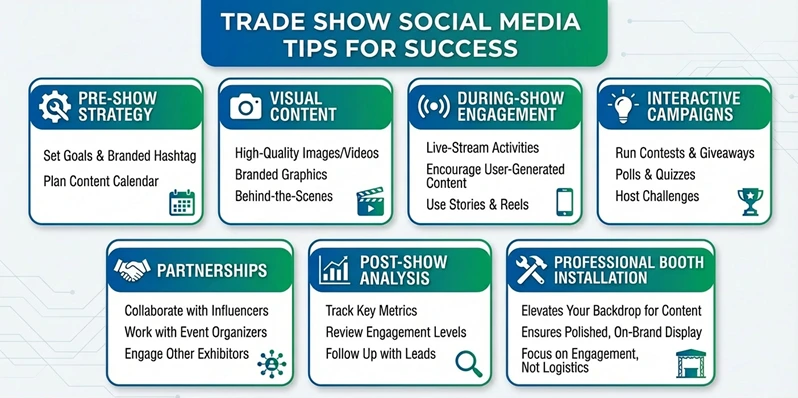
Preparing Your Social Media Strategy Before the Trade Show
A successful social media campaign starts with a solid strategy. Before the event, take the time to define your goals, research your audience, and plan your content. Here’s how:
- Set Clear Goals: Determine what you want to achieve with your social media marketing. Are you aiming to increase brand awareness, generate leads, or drive engagement? Clear goals will guide your efforts and help you measure success.
- Create a Branded Hashtag: Research the event’s official hashtags and create your own unique branded hashtag. This allows attendees to find your content easily and associate it with your booth or brand.
- Plan Your Content Calendar: Develop a schedule for your social media posts leading up to the trade show. Include teasers, countdowns, and behind-the-scenes content to build excitement. Share details about your booth location, giveaways, and special presentations to encourage attendees to visit.
By planning your strategy in advance, you can ensure your social media efforts are consistent, impactful, and aligned with your overall trade show objectives.
Creating Eye-Catching Visual Content
Social media is a highly visual platform, and creating engaging content is essential for standing out. Your posts should capture attention and showcase your brand in the best possible light.
- Use High-Quality Images and Videos: Share professional photos of your products, booth design, and team in action. Videos can be particularly effective for demonstrating products or highlighting key features of your booth.
- Incorporate Branded Graphics: Use your brand colors, fonts, and logo to create cohesive visuals that reinforce your identity. Branded graphics can make your posts more recognizable and memorable.
- Show Behind-the-Scenes Content: Share snippets of your booth being installed and prepared. This gives your audience a sneak peek into your process and builds anticipation for the final result.
High-quality visual content not only attracts attention but also encourages attendees to share your posts, increasing your reach.
Leveraging Social Media Platforms During the Event
Once the trade show begins, it’s time to ramp up your social media activity. Use real-time updates to engage with your audience and create excitement.
- Live-Stream Booth Activities: Platforms like Instagram Live, Facebook Live, and LinkedIn Live allow you to broadcast product demos, Q&A sessions, or guest appearances directly from your booth. This provides value to followers who can’t attend the event in person.
- Encourage User-Generated Content: Ask attendees to tag your brand in their posts and use your branded hashtag when sharing their experiences at your booth. Reposting user-generated content not only boosts engagement but also shows appreciation for your audience.
- Utilize Stories and Reels: Short, dynamic content formats like Instagram Stories, Reels, or TikToks are perfect for capturing the energy of the trade show. Use these tools to share event highlights, announce giveaways, or showcase interactive elements of your booth.
Real-time content keeps your audience engaged and creates a sense of immediacy, encouraging them to connect with your booth during the event.
Engaging Your Audience with Interactive Campaigns
Interactive campaigns can take your social media marketing to the next level by actively involving your audience. Here are some ideas to boost engagement:
- Run Contests or Giveaways: Encourage attendees to participate in social media contests for a chance to win prizes. For example, you could ask participants to post a photo at your booth using your hashtag or share your content to enter.
- Incorporate Polls and Quizzes: Use features like Instagram Stories polls or Facebook quizzes to spark interaction. These tools can also provide valuable insights into attendee preferences.
- Host Challenges: Create a fun, shareable challenge related to your products or services. Challenges are a great way to increase your visibility and encourage attendees to interact with your brand.
Interactive campaigns not only make your booth more memorable but also create opportunities for meaningful engagement with your audience.
Partnering with Influencers and Event Organizers
Collaborating with influencers and event organizers can amplify your reach and attract a wider audience to your booth. Here’s how to leverage these partnerships effectively:
- Collaborate with Influencers: Partner with industry influencers who align with your brand values and have an engaged following. Ask them to share posts about your booth, live-stream from your display, or participate in your booth activities.
- Work with Event Organizers: Many trade shows have their own social media channels and newsletters. Reach out to event organizers to see if they’ll feature your booth or products in their promotional materials.
- Engage with Other Exhibitors: Build relationships with fellow exhibitors and cross-promote each other’s booths on social media. This can create a network effect that benefits everyone involved.
Influencers and partnerships provide credibility and expand your reach, helping to draw more attention to your trade show presence.
Measuring and Analyzing Post-Show Results
After the trade show, it’s essential to review the performance of your social media efforts to understand what worked and what could be improved. Here’s how:
- Track Key Metrics: Analyze metrics such as likes, comments, shares, impressions, and clicks. Look for patterns in which types of content performed best and resonated most with your audience.
- Review Engagement Levels: Evaluate how effectively you engaged attendees during the event. Did attendees use your branded hashtag? Were they tagging your booth in their posts?
- Follow Up with Leads: Use the connections made through social media to nurture leads. Personalized follow-ups can turn social media interactions into lasting business relationships.
By analyzing the data and learning from your results, you can refine your strategy for future trade shows and continue to grow your social media presence.
How Professional Booth Installation Elevates Your Social Media Strategy
While a strong social media campaign is critical, your trade show booth itself plays a significant role in your success. A well-designed and professionally installed booth provides the perfect backdrop for creating impactful social media content. Eye-catching designs and seamless setups not only enhance your event presence but also translate beautifully into visual content.
With the help of a professional partner like All Exhibit Solutions for booth installation and dismantle, you can ensure your display is polished, on-brand, and ready to impress. Their expertise allows you to focus on engaging your audience and making the most of your trade show experience, knowing the setup and logistics are in capable hands.
Mastering social media marketing for your next trade show is all about preparation, creativity, and engagement. From pre-show promotions to real-time updates and post-show analysis, every step of your social media campaign contributes to your overall success. By combining a strong online presence with a professionally designed and installed booth from All Exhibit Solutions, you can maximize your impact and create lasting connections with your audience.
Take your trade show marketing to the next level by aligning your social media efforts with a standout booth experience supported by All Exhibit Solutions. With the right strategy, tools, and professional booth setup, your next trade show can be your most successful one yet.
Contact All Exhibit Solutions today to ensure your booth is professionally installed, dismantled, and ready to make a lasting impression. Let’s make your next trade show a standout success!