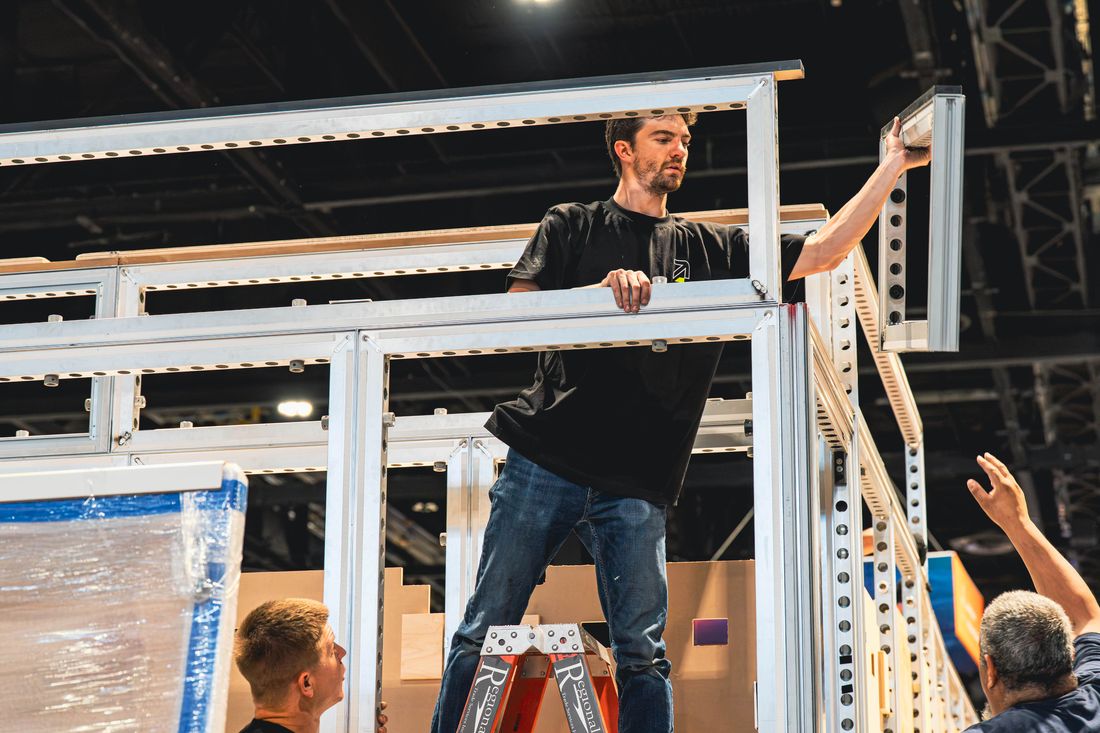
What is an Exhibitor Appointed Contractor?
What an EAC can and cannot do, what show management requires before one is allowed on the floor, and the venues where your own staff can set up the booth instead.
Read the guidePlain answers to the questions exhibitors and exhibit houses ask us before a show: who is allowed to touch what on the floor, what the paperwork is, what it costs, and what changes from one city to the next. Written by the crews who do the work, with the venue rules cited.
Start here
Nearly every surprise on a show floor traces back to one question: who was allowed to do that, and did the show know about it? Start with the definition, then look up your venue’s deadline.
What an EAC can and cannot do, what show management requires before one is allowed on the floor, and the venues where your own staff can set up the booth instead.
Read the guide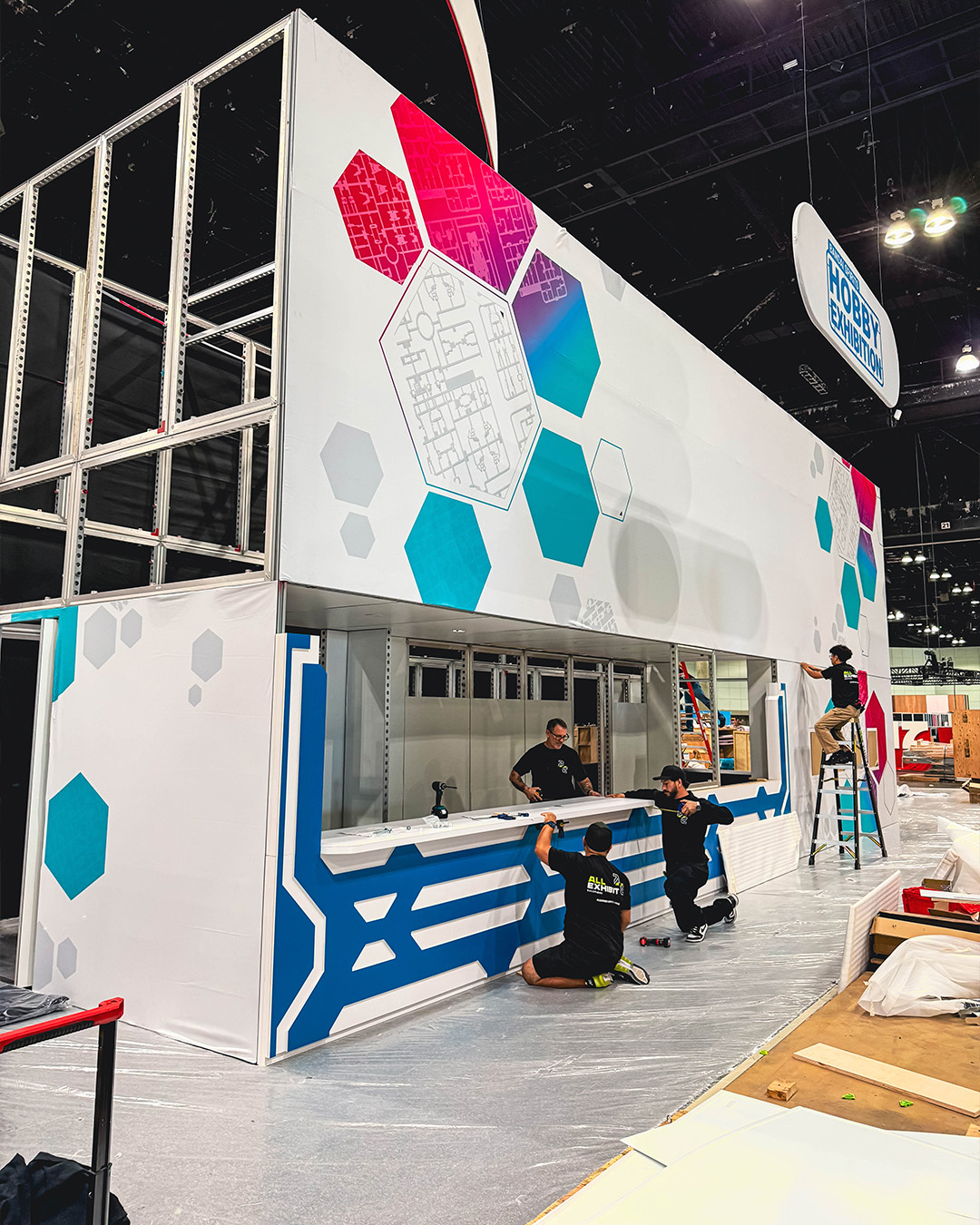
Notice deadlines, insurance limits, who must be named as additional insured, and the four buildings that add a gate of their own, for the venues we crew.
Look up your venueThe EAC series
Each guide covers one thing an exhibitor gets surprise-billed, delayed or turned away over. New ones are added in the order the questions come in, and every one is published without a sign-up form.
The definition, what the GSC keeps for itself, and the self-install limits by venue.
ReadNotice deadlines, insurance minimums and additional insureds, venue by venue.
ReadCarpenters, Teamsters, electricians and riggers. Which trade owns which task in each market.
Straight time versus overtime, four-hour minimums, supervision, and where the quote surprises come from.
The full-time-employee rule, the square-footage and tool limits, and the venues that let you.
General liability, workers’ comp, auto and umbrella limits, and who has to be named on the certificate.
What the general service contractor owns exclusively, how it is billed, and how to keep the weight down.
How a subcontracted crew fits your build, your schedule and your client relationship.
Planning guides
The EAC series is about the rules. These cover everything around them: what a show costs, how install and dismantle is scheduled, how booths are designed, and how exhibits move between cities.
Show calendars by state
Venues we crew
Dock access, marshalling yards, rigging, ceiling heights, what the house keeps for its own staff. Each venue below has its EAC paperwork filed in the deadlines guide today, and gets a full working guide of its own as the series grows.
Home market. Teamsters 631 on the floor; most shows per year in the footprint.
Union market. Exhibitor staff may work one-to-one alongside a union installer.
Split market. Orlando is non-union; Miami Beach is union, and often mishandled.
Hardest jurisdiction in the country. Supervisor ID cards, Javits-run rigging, three-day notice at some shows.
ESCA badge required. No badge, no entry, no vouching; $10M umbrella for contractors.
Right-to-work. Badged full-time employees may do their own install and dismantle.
Send us the exhibitor manual and we will tell you what applies to you: the deadline, the insurance, who can set up what, and what it will cost. No charge for the read.
How these are written
Most of what is published about trade show labor is written by the people selling it, or by the general service contractors who would rather you did not hire anyone else. These guides are held to a different standard.
Venue event planning guides, exhibitor manuals, GSC work rules and show-specific EAC packets. Each guide ends with the documents it was built from, so you can check the wording yourself.
Deadlines and insurance limits move. Every guide carries the date it was last verified, and the venue tables are re-read against the current manuals before the January to March run.
Other labor companies gate their union rules behind a lead capture. Ours are open. Share them with a client, print them for a crew, or send them to a show organizer who disagrees with you.
Questions
Venue, booth number, footprint and dates. We come back with a labor plan, the paperwork we file on your behalf, and a price.