Inside the Custom Trade Show Exhibit Design Process

Brendan Cogbill
Introduction
A great custom exhibit looks effortless on the show floor, as if it simply appeared, perfectly suited to the brand and the space. Behind that ease is a process, and the brands that get standout results are the ones that respect it. A custom trade show exhibit is not bought off a shelf; it is developed through a series of deliberate steps, each of which shapes how the final booth performs, what it costs, and how easily it travels from one show to the next.
Understanding that process helps you be a better partner to your design and build team, ask sharper questions, and avoid the expensive surprises that come from skipping steps. This is a walk through how a custom exhibit comes together, from the first conversation about goals to the moment the booth is packed up and readied for its next appearance.
Start With Goals, Not Aesthetics
The most common mistake is to start with how the booth should look. The better starting point is what the booth needs to do. Are you launching a product, generating leads at volume, hosting private meetings, building brand awareness, or some combination? Each goal pulls the design in a different direction, changing everything from traffic flow to the balance of open space and enclosed rooms. A booth built to demo a complex product looks nothing like one built to capture as many badge scans as possible, and the difference begins with intent.
This is also where a custom approach proves its value over a stock one. Because every element is chosen to serve a specific objective, a well-designed custom exhibit tends to engage and convert more effectively, a point we explore further in our piece on why customized trade show booths lead to greater engagement and conversion. Nailing the goals up front is what makes the rest of the process efficient instead of circular.
Discovery and the Creative Brief
With goals defined, the discovery phase gathers the practical constraints that every later decision depends on. This is where you confirm your space size and configuration, your budget range, the shows you are committing to, your brand standards, and any must-have features like a demo theater, a meeting room, or product display. The output is a clear creative brief that everyone designs against, so the concept that follows is grounded in reality rather than wishful thinking.
Budget belongs in this conversation early, not late. An honest range lets the team design something you can actually build, and it prevents the heartbreak of falling for a concept that was never feasible. If you want a sense of what moves the number, our breakdown of exhibition stand cost and pricing factors is a useful reference to bring into the discovery discussion.
Concept and Design Development
Now the creative work begins. Designers translate the brief into initial concepts, usually as sketches and rough 3D renderings that explore layout, structure, and the overall look and feel. This stage is meant to be iterative. You react, the team refines, and the concept sharpens over a few rounds until it captures both the brand and the practical goals. Expect to discuss sightlines, how visitors enter and move, where conversations happen, and how the structure reads from across the hall.
As the design firms up, renderings become more detailed and realistic, giving you a confident preview of the finished booth. Resist the urge to rush this phase. Changes are cheap when they are still pixels and expensive once they are steel and millwork, so it pays to resolve questions while the exhibit lives on a screen.
Engineering and Material Selection
Once the look is approved, the design has to become buildable. Engineering turns the concept into real components with real dimensions, weights, and connection details, accounting for structural integrity, rigging loads, electrical and AV integration, and how the whole thing breaks down for transport. Material choices made here ripple through the entire life of the exhibit, affecting durability, weight, shipping cost, and how the booth holds up after repeated setups and teardowns.
This is the unglamorous phase that separates an exhibit that survives a season of shows from one that looks tired after two. Smart engineering also designs for the floor crew, making sure pieces are sized, labeled, and connected in ways that assemble quickly and pack back down without a fight.
Fabrication and the Pre-Build
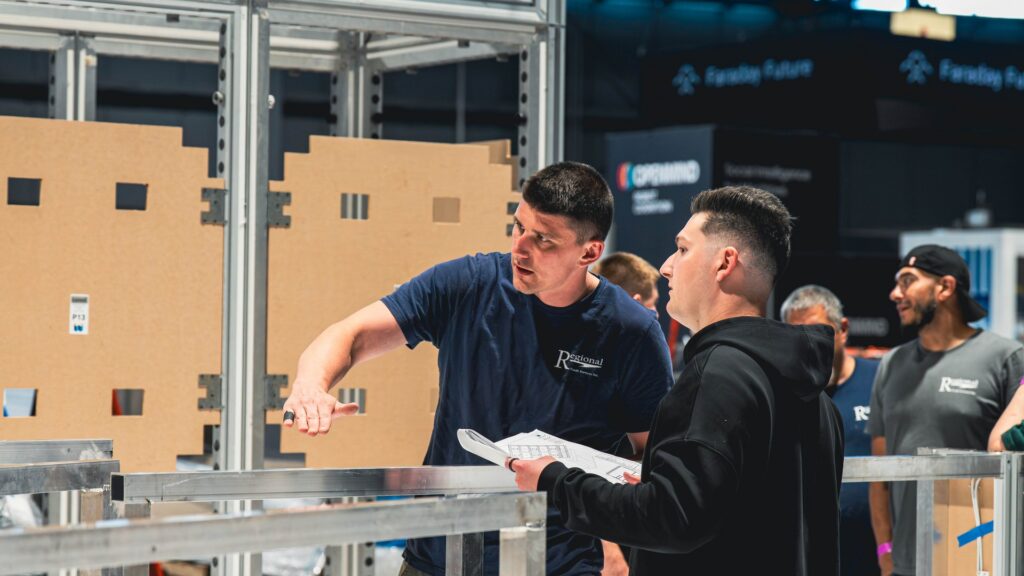
With engineering complete, fabrication brings the exhibit to life. Structures are built, graphics are produced, finishes are applied, and technology is integrated and tested. The best builders insist on a pre-build, assembling the booth in their facility before it ever ships. This dry run catches fit issues, graphic mismatches, and technical problems in a controlled environment, where fixing them is simple, rather than discovering them on the show floor with the clock running.
A thorough pre-build is one of the clearest signals of a serious partner. It is also your chance to see the real thing, walk it, and approve it before it heads to the show, so there are no surprises when the crates open in the hall.
Logistics, Installation, and Showtime
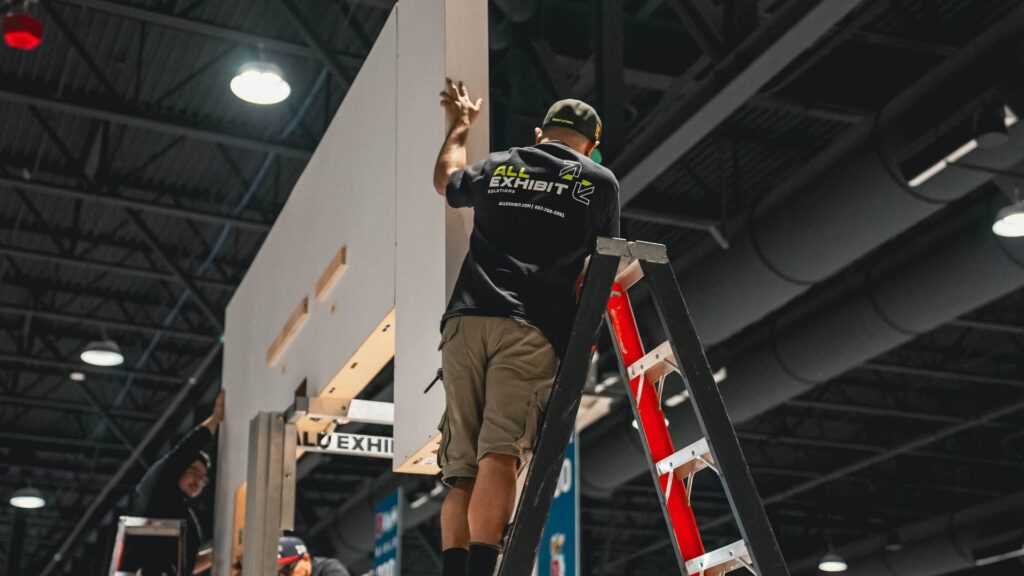
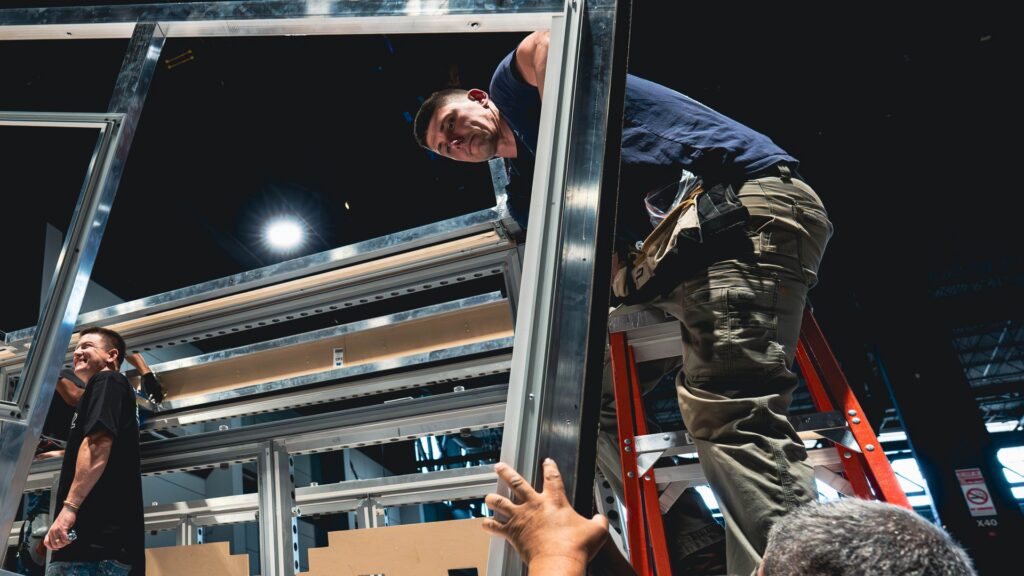
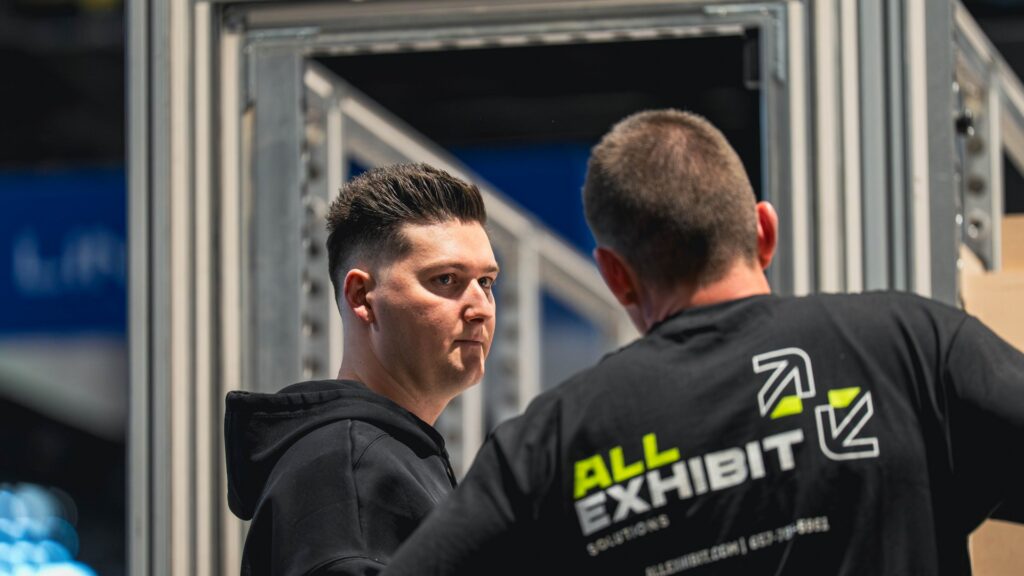
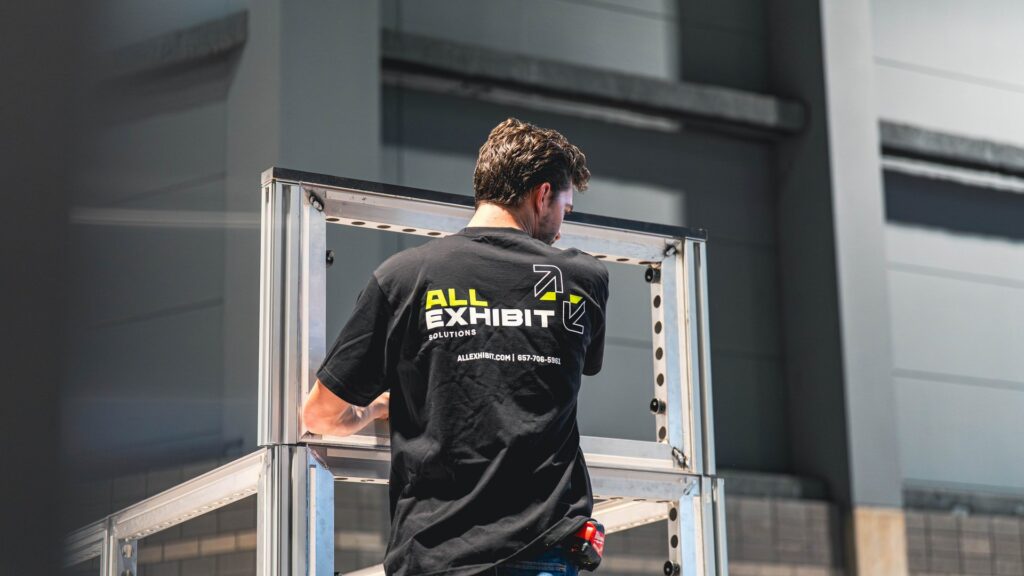
A beautiful exhibit is only as good as its execution on site. The final stretch covers crating, freight, material handling, and the install itself, all timed against the show’s move-in schedule. Skilled labor assembles the structure, hangs and aligns graphics, sets and tests AV, and dresses the booth down to the details before doors open. This is the moment the whole process is judged, and it is where experience pays off most visibly. At All Exhibit Solutions, our crews specialize in turning a designer’s vision into a flawless physical reality, handling the full installation and dismantle so the build matches the renderings exactly.
Strong logistics also protect the schedule when something goes sideways, because something occasionally does. A crew that has solved freight delays, missing drops, and last-minute changes a hundred times keeps a small problem from becoming a visible one.
After the Show: Reuse and Iterate
The process does not end when the show closes. A custom exhibit is an asset, and how it is dismantled, packed, stored, and refreshed determines how much value you get from it over time. Good documentation and disciplined teardown mean the booth comes back up faster next time, and a well-planned design allows for updates, new graphics, or reconfiguration as your program evolves. The best custom exhibits are built to grow and adapt across many shows rather than to peak once and fade.
Storage between shows is the quiet decision that shapes that long-term value. A custom exhibit that is stored properly, in the right cases and a climate-controlled space, arrives at the next show clean and undamaged and ready to install on schedule. One that is crammed into whatever room is available comes back with bent extrusion, scuffed panels, and missing hardware, eroding the investment a little more each time. Where and how the booth lives between events is as much a part of the process as how it was designed.
It is also worth measuring how the exhibit performs so each iteration is better than the last. Track the metrics that map to your original goals, whether that is qualified leads, meetings booked, or demos delivered, and feed what you learn back into the next round of design tweaks. A custom exhibit treated as a living program, refined show after show, compounds in value in a way that a one-and-done booth never can.
Treating the exhibit as a long-term investment, with a partner like All Exhibit Solutions who knows its every component, is what turns a single impressive booth into a reliable, evolving presence. If you are ready to build something made specifically for your brand and your goals, start the conversation with our team and we will help you move from idea to a custom trade show exhibit that performs show after show.
Recommended Articles
Trade Show Booth Rentals: Costs & What’s Included
It is worth asking how much of the rental inventory is genuinely reconfigurable, because that single answer shapes what you can do across a season. Many rental systems are modular by design, which...

Brendan Cogbill
Common Trade Show Rejection Reasons (and How to Avoid Them)
It is also worth separating the two kinds of no you might receive. A design rejection happens before the show, when your submitted plan conflicts with the rules, and it is the cheaper problem because...
Brendan Cogbill
Top Pop-Up Display Ideas for Your Exhibition Booth
Audience matters as much as venue size. A pop-up aimed at engineers and technical buyers can lean into detailed product imagery and a demo screen, while one built for a consumer-facing event might...
Brendan Cogbill
How to Choose a Trade Show Booth Company You Can Trust
However impressive a design looks in a rendering, it only matters if it goes up correctly, on time, and looking exactly as promised. Installation and dismantle is where every other decision is...
Brendan Cogbill
Inline vs. Island Booths: What Is an Inline Booth and Which Is Right for You?
The configuration you choose ripples straight through your budget and your build. Beyond the space rental itself, islands and peninsulas usually require more material, more complex structures, and...
Brendan Cogbill
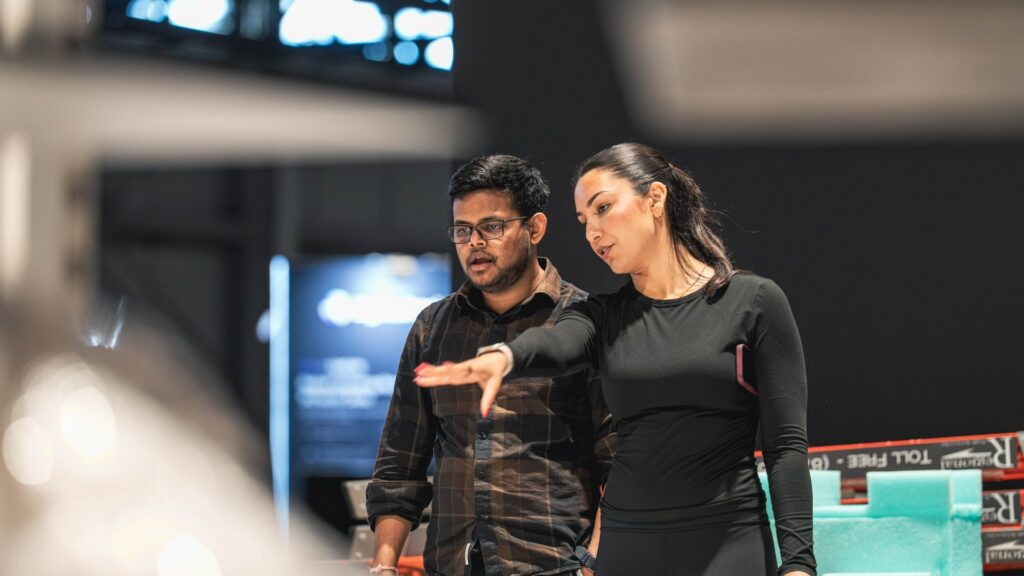
Exhibit Management 101: Running Your Trade Show Program Like a Pro
A single trade show is a project. A year of trade shows is a program, and the difference between the two is exhibit management. When a company exhibits a few times a year, the work tends to be...
Brendan Cogbill
What Is Suitcasing at Trade Shows, and How Do You Stop It?
The deepest protection against suitcasing is not a rule; it is a presence so strong that drifting away from it feels like missing out. A well-designed, well-built, and well-staffed booth pulls...
Brendan Cogbill
What a Strong I&D Partner Actually Saves You
On paper, installation and dismantle looks like a line item, a cost to minimize on the way to the part of the budget that feels more important. In practice, the quality of your labor partner quietly...