Your Pre-Show Installation Checklist for a Smooth Trade Show Move-In

Brendan Cogbill
Introduction
The difference between a calm move-in and a chaotic one is rarely talent on the show floor. It is planning that happened weeks earlier. By the time the crates hit the dock, every good outcome has already been decided: the drawings were approved, the freight was routed, the labor was booked, and someone knew exactly what was supposed to happen and when. A strong pre-show installation checklist turns a stressful scramble into a predictable sequence, and it protects the one resource you can never get back at a trade show, which is time on the floor before doors open.
This guide walks through the planning that should be locked down before install day, then ends with the on-site checks that confirm the booth is ready for visitors. Use it as a working document, not a one-time read. The exhibitors who move in smoothly are the ones who treat preparation as the real job and the install itself as the easy part.
Start With the Booth Drawings and the Show Manual
Nothing on your checklist matters until the design is approved and the show’s rules are understood. Begin with the final booth drawings, including plan views, elevations, and a rigging plan if anything hangs overhead. Confirm the booth fits within your contracted footprint and respects height limits, line-of-sight rules, and setback requirements for your space type. A design that looks perfect in a rendering can violate a show rule you never read, and discovering that on the floor is an expensive way to learn it.
Read the exhibitor manual cover to cover and note every deadline: advance warehouse dates, discount pricing cutoffs, electrical and rigging order deadlines, and target move-in windows. Order electrical, internet, plumbing, and hanging-sign labor early, because on-site rates and last-minute availability are brutal. If your booth needs power in specific spots, mark those locations on the floor plan so the electrical drop lands where the build actually needs it, not where someone guesses. It also helps to log every order confirmation number in one place, so that when a question comes up on site you can resolve it in minutes instead of digging through a week of email.
Lock Down Freight and Material Handling Early
Freight is where schedules quietly fall apart. Decide early whether your shipment goes to the advance warehouse or directly to show site, and understand the trade-offs. Advance warehouse shipping usually means your materials are waiting in your booth space when you arrive, which removes a major variable on install day. Direct-to-site can save storage fees but ties your start time to a delivery window you do not fully control.
Label every crate and case clearly, keep a packing list for each one, and photograph how things are packed so they can be repacked the same way after the show. Confirm your material handling estimate against the weight and piece count you are actually shipping, since drayage is one of the most underestimated line items in the entire budget. If you are weighing how all of these moving parts add up, our breakdown of what drives exhibition stand cost shows where freight and labor fit into the larger picture.
Build a Realistic Labor Plan
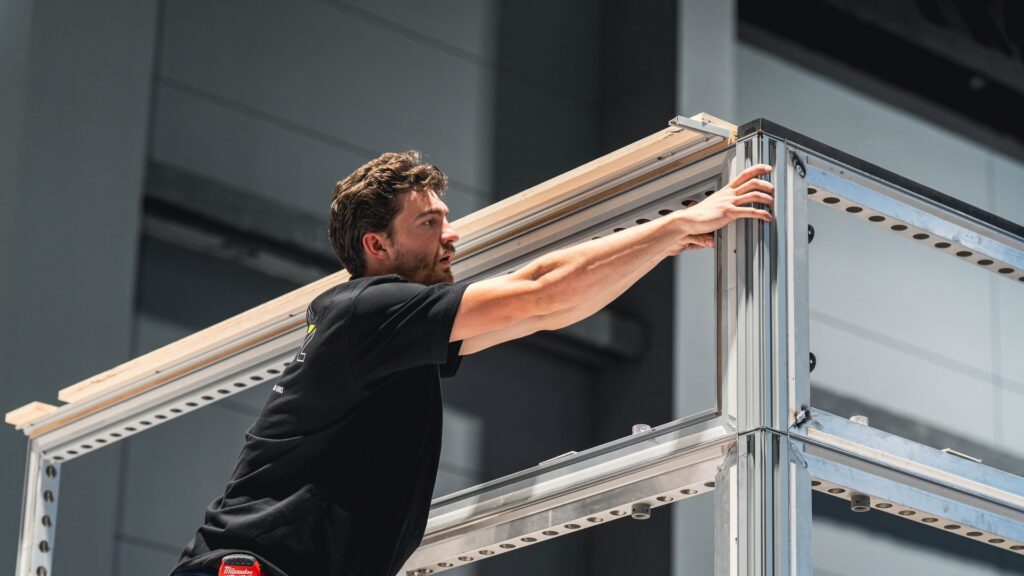
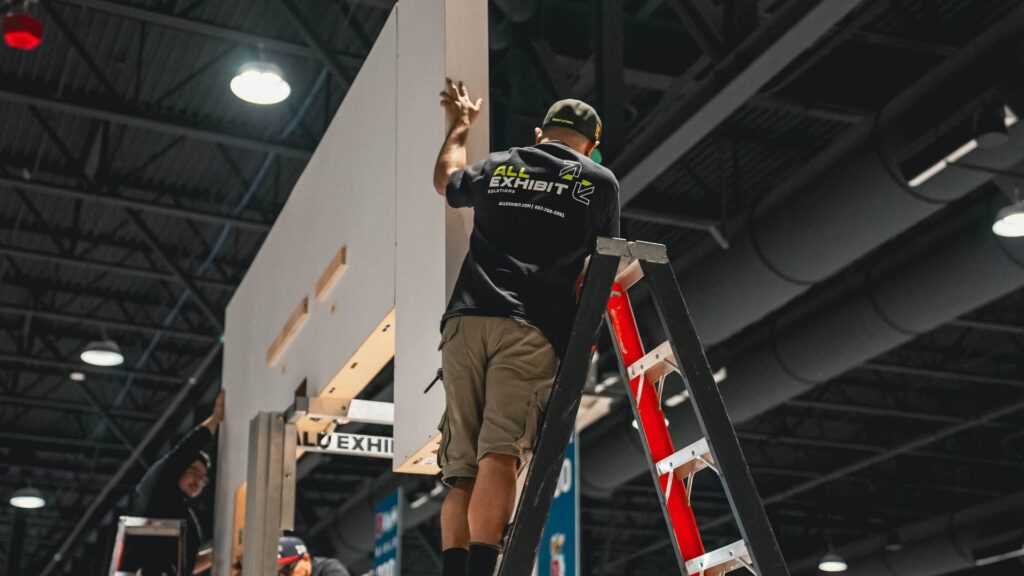
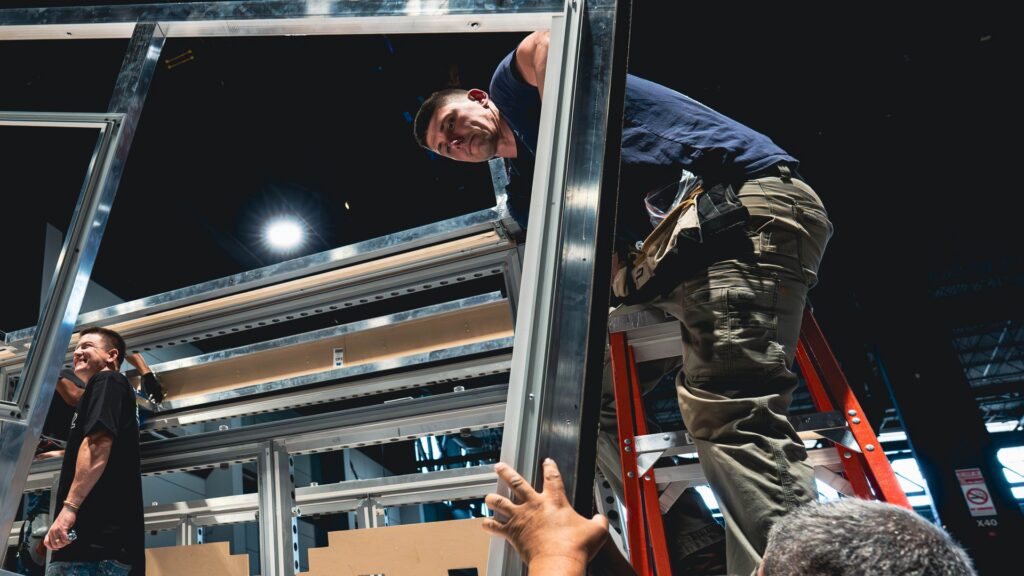
Underestimating labor is the fastest way to blow a move-in window. Base your crew size and call time on the real complexity of the build, not on optimism. A modular inline booth might come together with a small team in a few hours, while a large custom island with rigging, millwork, and AV can take multiple crews across more than one day. Map the install as a sequence of dependencies: structure first, then electrical, then graphics and AV, then dressing and detailing. When tasks are ordered correctly, crews stay productive instead of waiting on each other.
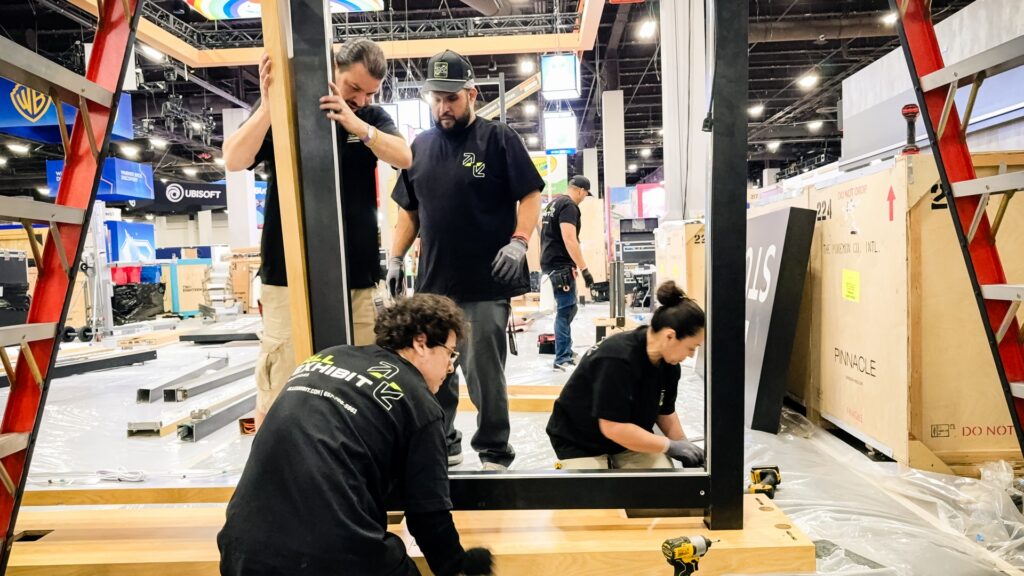
This is also where an experienced labor partner earns its keep. At All Exhibit Solutions, we plan crews around the booth and the show’s specific move-in rules, so the right number of skilled hands arrive at the right time with the right tools. If you want to understand how the trades fit together on the floor, our overview of how trade show installation and dismantle work walks through the full sequence from empty space to finished booth.
Assemble a Pre-Show Kit and Document Everything
Small gaps cause big delays, so build a kit that covers them before you leave. Print and pack a complete set of approved drawings, the show manual, your freight and labor orders, and key contact numbers for the general contractor, show services, and your on-site lead. Include a basic tool and hardware bag, spare fasteners, touch-up materials, cleaning supplies, and a few backup graphics or hardware pieces for the components most likely to get damaged in transit.
Keep one master schedule that everyone references, with target times for crate arrival, build milestones, electrical completion, AV checkout, and final cleaning. Assign a single point of contact who owns decisions on the floor, because a crew that knows exactly who to ask moves far faster than one that stops to debate. Good documentation does double duty here: the same notes and photos that keep install organized make the post-show dismantle and repack dramatically smoother.
Walk the Space Before Install Day
Whenever the schedule allows, get eyes on your actual space before the build begins. Confirm the booth dimensions match your contract, check where neighboring booths and aisles fall, and verify that your electrical and rigging points are where the order said they would be. Look for obstacles the floor plan never showed: a support column clipping a corner, a low ceiling pocket over your rigging zone, or a freight path that is narrower than expected. Catching one of these surprises a day early usually means a quick adjustment, while catching it during install can cost you hours you simply do not have.
This walk is also the moment to pressure-test your layout against how visitors will actually move. Plenty of booths look balanced on paper but feel cramped or awkward once they are standing, and small adjustments to product placement, demo stations, and storage can change the whole experience. Our guide to how to maximize trade show booth space is worth a quick review before you finalize anything, so the layout works as hard as the rest of your investment.
The On-Site Installation Checklist
Once you are on the floor, work the build as a sequence and confirm each stage before moving on. Check in crates against your packing list and inspect for transit damage immediately, while there is still time to react. Set and level the main structure, then verify it is square and stable before any graphics or fixtures go on. Bring in electrical and confirm every drop, outlet, and lighting circuit works under load, not just at a glance. Install AV, run a full power-on test, and play through any content so a dead screen is not discovered by your first visitor.
Finish with the details that visitors actually notice: clean graphics with no bubbles or peeling edges, tidy cable management, stocked literature and giveaways, and a clear, uncluttered storage area for crew bags and overflow product. Do a final walk-through from the aisle, standing where a prospect would stand, and fix anything that reads as unfinished. Then label and stage your empty crates for return so dismantle starts from order instead of chaos. A booth that is fully tested and detailed the night before doors open lets your team focus on conversations instead of crisis management.
A checklist like this works best when an experienced team stands behind it, turning the plan on paper into a build that is ready on time. If you would rather not carry all of this alone, the All Exhibit Solutions installation and dismantle labor team can manage the move-in end to end, and you are always welcome to have a partner walk the plan with you before your next show so nothing is left to chance.
Recommended Articles
What Trade Show Labor Actually Costs and How to Estimate It
Then compare the estimate against the actual invoice afterward and keep the comparison. Two or three shows of that record turns estimating from guesswork into a reliable forecast. All Exhibit...

Brendan Cogbill
What Is an Exhibitor Appointed Contractor and When Do You Need One?
There is a cost dimension as well. Some shows charge an EAC processing fee, and a few apply a surcharge calculated against the value of the work being performed on the floor. These amounts are...
Brendan Cogbill
Trade Show Booth Rentals: Costs & What’s Included
It is worth asking how much of the rental inventory is genuinely reconfigurable, because that single answer shapes what you can do across a season. Many rental systems are modular by design, which...
Brendan Cogbill
Common Trade Show Rejection Reasons and How to Avoid Them
It is also worth separating the two kinds of no you might receive. A design rejection happens before the show, when your submitted plan conflicts with the rules, and it is the cheaper problem because...
Brendan Cogbill
Top Pop-Up Display Ideas for Your Exhibition Booth
Audience matters as much as venue size. A pop-up aimed at engineers and technical buyers can lean into detailed product imagery and a demo screen, while one built for a consumer-facing event might...
Brendan Cogbill
How to Choose a Trade Show Booth Company You Can Trust
However impressive a design looks in a rendering, it only matters if it goes up correctly, on time, and looking exactly as promised. Installation and dismantle is where every other decision is...
Brendan Cogbill
Inline vs. Island Booths: What Is an Inline Booth and Which Is Right for You?
The configuration you choose ripples straight through your budget and your build. Beyond the space rental itself, islands and peninsulas usually require more material, more complex structures, and...
Brendan Cogbill

Exhibit Management 101: Running Your Trade Show Program Like a Pro
A single trade show is a project. A year of trade shows is a program, and the difference between the two is exhibit management. When a company exhibits a few times a year, the work tends to be...