What a Strong I&D Partner Actually Saves You

Brendan Cogbill
Introduction
On paper, installation and dismantle looks like a line item, a cost to minimize on the way to the part of the budget that feels more important. In practice, the quality of your labor partner quietly decides whether the rest of that budget pays off at all. A brilliant exhibit installed badly is just an expensive liability, while a modest booth installed flawlessly does its job every time. The value of strong trade show installation services is easy to overlook precisely because, when they are done well, nothing goes wrong, and it is hard to put a price on the disaster that never happened.
This is a look at what a strong installation and dismantle partner actually saves you, much of it invisible until you have lived through the alternative. Once you see where the value hides, the choice of partner stops looking like a cost to cut and starts looking like one of the highest-leverage decisions in your entire show budget.
The Hidden Costs of Going It Alone
The costs of weak labor rarely show up on an invoice. They show up as a booth that opens late, a damaged panel that has to be reprinted, a screen that never powered on, a missed freight deadline that triggers expensive rush shipping, or a team that spent the night before the show troubleshooting instead of preparing. None of these appear in the original quote, and all of them are real money, lost opportunity, and stress. The cheapest labor often turns out to be the most expensive once you tally what it actually cost you.
A strong partner prevents these losses before they happen. That prevention is the product. Understanding what good installation and dismantle involves, which we cover in our guide to how trade show installation and dismantle work, makes it easier to see how many ways a project can go wrong and how much skill it takes to make it look easy.
They Save You Money Where It Is Not Obvious
The clearest savings come from efficiency and avoidance. An experienced crew works faster and cleaner, which can reduce billable hours rather than inflate them. They size the team correctly, so you are not paying for idle hands or paying overtime to cover for an undersized crew. They handle freight and material handling smartly, helping you avoid the drayage and rush-shipping surprises that wreck budgets. And because they protect your exhibit, you spend far less on repairs and replacements over the life of the booth.
These savings compound across a show season. A booth that is installed and packed correctly every time stays in service longer and goes up faster at each event, lowering the true cost per show. When you weigh labor against the larger budget, captured in our look at exhibition stand cost and pricing factors, the partner you choose turns out to influence almost every other number on the page.
They Save You Time and Protect the Schedule
Time on a show floor is the most unforgiving resource there is, because the show opens whether you are ready or not. A strong partner builds a realistic schedule, sequences the work to avoid bottlenecks, and has the experience to keep small problems from becoming delays. When freight runs late or a drop is in the wrong place, they adapt without panic, because they have solved the same problem many times before.
That reliability is worth more than it looks. A booth finished and tested the evening before doors open buys your team rest, calm, and a sharp start. A booth still coming together at the opening bell costs you the first impressions that often matter most, and those are impossible to recover.
They Protect Your Exhibit From Damage
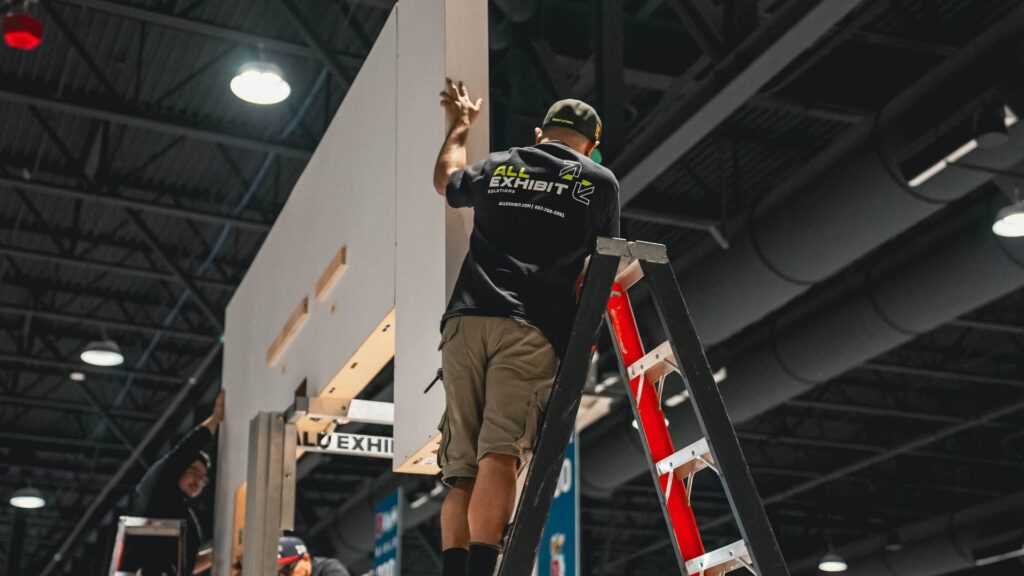
Your exhibit is a significant asset, and it is most vulnerable during the rush of setup and teardown. A skilled crew knows how to handle materials, assemble structures correctly, and pack everything to survive transit and come back ready for the next show. They treat your property the way you would, because protecting it is central to the job rather than an afterthought when time runs short.
This protection pays off long after a single event. Careful handling and disciplined packing extend the life of the booth, preserve the crispness of graphics and finishes, and prevent the slow erosion of value that turns a premium exhibit into a tired one. The savings are real even though they show up as costs you never had to pay.
They Navigate Labor Rules and Reduce Risk
Every venue has its own rules about who can perform which tasks, and getting them wrong can mean fines, stopped work, or liability. A seasoned partner knows the landscape, works within each show’s requirements, and keeps your installation compliant without drama. They also bring the right insurance, training, and safety practices, so the people working in your space are protected and so are you.
Risk that never materializes is easy to ignore, right up until it does. A partner who quietly keeps you on the right side of venue rules and safety standards is removing a category of expensive problems from your plate entirely, which is exactly the kind of value that does not announce itself.
They Free Your Team to Sell
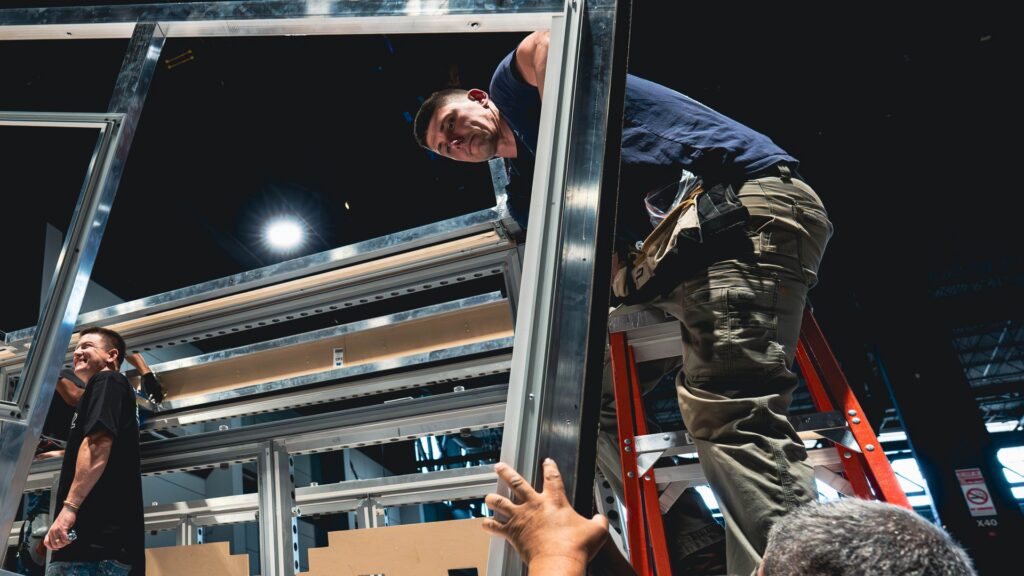
Perhaps the most underrated benefit is what a strong partner lets your own people do instead. You did not bring your team to a show to wrestle with extrusion and chase down forklifts. You brought them to meet customers, demo products, and build relationships that justify the entire investment. When labor is handled by professionals, your staff arrives rested and focused on the work only they can do. At All Exhibit Solutions, we see our job as clearing every logistical obstacle so your team can spend the show selling rather than fixing.
That shift in focus is where the return on a good partner becomes obvious. The hours your team spends in real conversations, rather than troubleshooting a booth, are the hours that actually move your business forward.
What to Look For in a Partner
Not all labor is created equal, so it pays to choose deliberately. Look for genuine experience with shows like yours, a clear and honest approach to estimating and scheduling, real accountability with a single point of contact, and a nationwide reach so you get the same standard at every venue. Ask how they handle the things that go wrong, because how a partner responds to a late truck or a damaged crate tells you more than any sales pitch ever will.
Pay attention to the warning signs, too. A quote that is dramatically lower than the rest usually means corners will be cut somewhere you will feel later, whether in crew size, experience, or accountability. Vague answers about scheduling, no clear owner for your project, or a reluctance to discuss what happens when something goes wrong are all signals worth heeding. The goal is not simply the lowest number; it is the lowest total cost once damage, delays, and stress are part of the math.
It also helps to think in terms of a relationship rather than a transaction. A partner who learns your booth, remembers how it goes together, and knows your preferences gets faster and more valuable with every show. That continuity is hard to quantify on a single invoice, but over a season it shows up as smoother installs, fewer surprises, and a team you trust to get it right without being watched. The best labor decision is usually the one you only have to make once.
The right partner becomes an extension of your team, invested in your success rather than just billing your hours. If you want to feel that difference on your next show floor, explore the All Exhibit Solutions installation and dismantle services and see what a real partner can do for you when the booth simply has to be right.
Recommended Articles
What Trade Show Labor Actually Costs and How to Estimate It
Then compare the estimate against the actual invoice afterward and keep the comparison. Two or three shows of that record turns estimating from guesswork into a reliable forecast. All Exhibit...

Brendan Cogbill
What Is an Exhibitor Appointed Contractor and When Do You Need One?
There is a cost dimension as well. Some shows charge an EAC processing fee, and a few apply a surcharge calculated against the value of the work being performed on the floor. These amounts are...
Brendan Cogbill
Trade Show Booth Rentals: Costs & What’s Included
It is worth asking how much of the rental inventory is genuinely reconfigurable, because that single answer shapes what you can do across a season. Many rental systems are modular by design, which...
Brendan Cogbill
Common Trade Show Rejection Reasons and How to Avoid Them
It is also worth separating the two kinds of no you might receive. A design rejection happens before the show, when your submitted plan conflicts with the rules, and it is the cheaper problem because...
Brendan Cogbill
Top Pop-Up Display Ideas for Your Exhibition Booth
Audience matters as much as venue size. A pop-up aimed at engineers and technical buyers can lean into detailed product imagery and a demo screen, while one built for a consumer-facing event might...
Brendan Cogbill
How to Choose a Trade Show Booth Company You Can Trust
However impressive a design looks in a rendering, it only matters if it goes up correctly, on time, and looking exactly as promised. Installation and dismantle is where every other decision is...
Brendan Cogbill
Inline vs. Island Booths: What Is an Inline Booth and Which Is Right for You?
The configuration you choose ripples straight through your budget and your build. Beyond the space rental itself, islands and peninsulas usually require more material, more complex structures, and...
Brendan Cogbill

Exhibit Management 101: Running Your Trade Show Program Like a Pro
A single trade show is a project. A year of trade shows is a program, and the difference between the two is exhibit management. When a company exhibits a few times a year, the work tends to be...