What Trade Show Labor Actually Costs and How to Estimate It

Brendan Cogbill
Introduction
Ask three exhibitors what labor cost them at the same show and you will get three very different answers, often for booths of similar size. That variation is not random, and it is not usually about the rate they were quoted. It is about hours, timing, and how well the build was planned before anyone arrived.
Labor is one of the few show costs you have meaningful influence over, but only if you understand how the number is assembled. This is a practical look at how trade show labor cost is calculated, what pushes it up, and how to produce an estimate you can actually hold yourself to.
Labor Is Billed in Hours, Not Projects
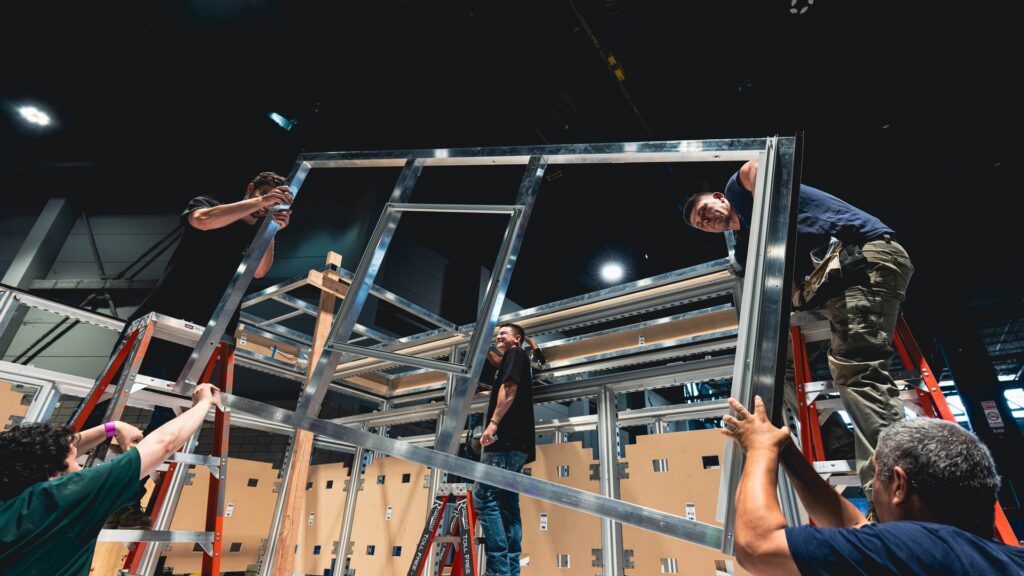
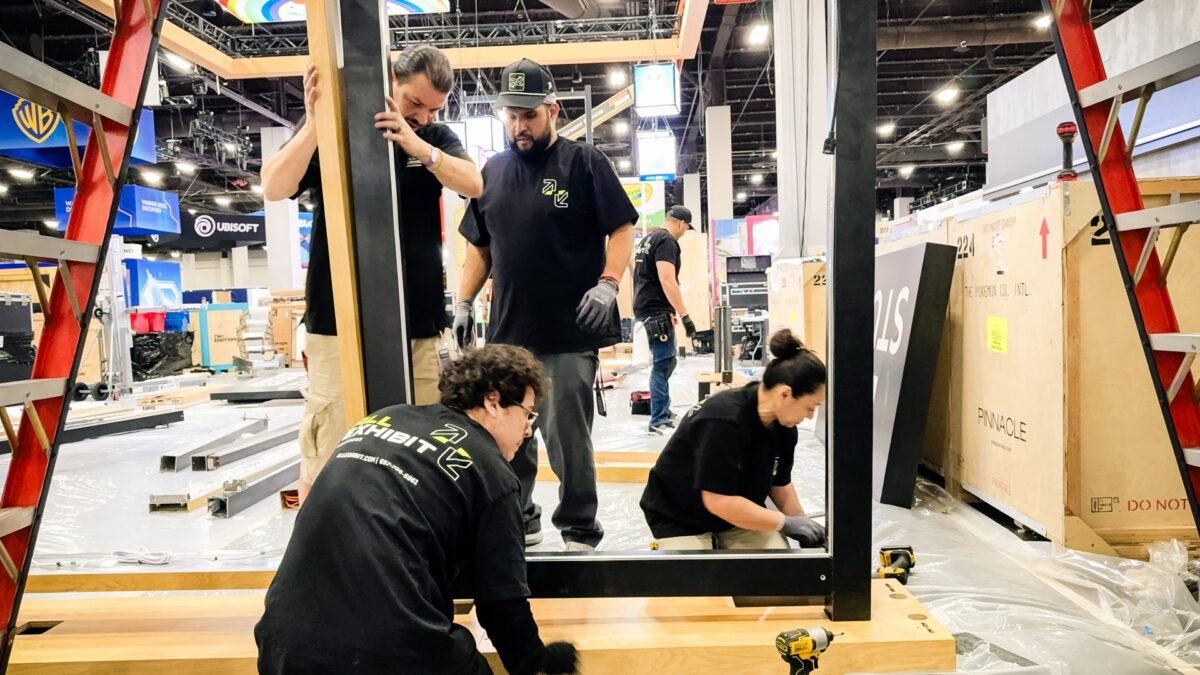
The first thing to internalize is that installation is almost never a flat fee. It is billed as an hourly rate multiplied by the number of workers multiplied by the hours worked. A crew of four working six hours is twenty-four billable hours, regardless of whether the booth looked simple on paper.
That structure is why two identical booths can produce very different invoices. The rate is largely fixed by the venue and the city. The hours are shaped by your design, your documentation, and your schedule, and that is where the real variance lives.
Straight Time, Overtime, and Double Time
Rates change according to when the work happens. Straight time applies during standard weekday working hours, typically something like eight in the morning to four or five in the afternoon. Work outside that window moves to overtime, and Sundays and holidays frequently move to double time.
The multiplier is the single largest swing factor in most labor bills. The same crew doing the same work can cost dramatically more purely because the work happened on a Saturday evening rather than a Tuesday morning. This is why the move-in window you are assigned matters so much to your budget, not just your stress level.
Minimums and How Time Is Counted
Labor orders carry minimums, commonly a one-hour minimum per worker, and time is typically rounded up to the next increment. A short task that takes twenty minutes is usually billed as a full hour per person.
Crews are also generally paid from their scheduled start time, not from the moment your freight appears. If your materials are late and a booked crew is standing in an empty space, you are paying for that wait. It is the most frustrating line on any invoice because nothing was produced for it, and it is almost entirely preventable through freight planning, which we cover in our guide to the hidden logistics of shipping, storage and scheduling.
Estimating Your Install Hours
A workable estimate starts by breaking the build into its real stages: unpacking and staging, assembling the structure, laying flooring, hanging graphics, setting and testing AV, and final detailing. Assign honest hours to each based on what the booth actually requires rather than a best case.
As a rough orientation, a simple inline booth may come together in a handful of crew hours, while a large custom island with rigging, millwork, and integrated technology can run into dozens across multiple crews and more than one day. Dismantle is usually faster than installation but is rarely as fast as people assume, often landing around half to two-thirds of the install time.
Travel and show-site minimums can apply on top of the hourly structure as well. Some venues bill a minimum call per worker per day regardless of how briefly they are needed, which is why splitting a job across two short days is often more expensive than completing it in one longer session. Consolidating the work into fewer, fuller shifts is usually the cheaper shape for the same total effort.
Crew Size Is a Real Decision
More people does not linearly mean less time. Some tasks can only accommodate so many hands, and an oversized crew produces idle workers who are still billing. An undersized crew, on the other hand, pushes the finish time later and risks tipping the whole job into overtime.
The right size comes from the dependency sequence rather than from the square footage. Structure has to be up before graphics can hang; power has to be live before AV can be tested. Sizing the crew to that sequence, which is the exercise in our guide to building a realistic install and dismantle schedule, is what keeps everyone productive.
Supervision is worth pricing separately in your estimate. Many exhibitors add a lead or supervisor whose hours are billed alongside the crew, and on a complex build that role pays for itself by keeping the sequence moving and resolving questions without stopping work. On a small inline booth it is usually unnecessary, and knowing which situation you are in prevents both an overspend and a stalled install.
What Quietly Inflates the Bill
Several things reliably add hours. Missing or unclear setup drawings force a crew to work things out on the floor. Damaged or missing components trigger improvisation. Late changes to the layout mean work gets redone. Poorly packed crates turn unpacking into a search.
Late freight is the most expensive of all, because it converts productive hours into waiting. Almost every item on this list traces back to preparation rather than to the crew, which is worth remembering when an invoice comes in higher than expected.
Dismantle deserves its own line in the budget rather than being folded into a single labor figure. It is ordered separately, it happens under different conditions, and it frequently falls outside standard hours because shows close in the evening. An exhibitor who budgets carefully for installation and then treats teardown as an afterthought is often surprised by the second invoice more than the first.
Advance Orders and the Rate You Pay
Labor ordered by the show’s advance deadline is generally cheaper than labor ordered on site, and availability is better. Waiting until you arrive to decide how many people you need almost always costs more and gives you less choice about when they show up.
Placing that order accurately, though, depends on having estimated your hours honestly in the first place. An advance order for far too few workers is not a saving; it is a shortfall you will pay to fix at on-site rates in the middle of move-in.
Gang size rules can also constrain the decision for you. Certain tasks, particularly anything involving lifts or overhead work, require a minimum number of workers for safety reasons, so the crew size is set by the job rather than by your preference. Knowing where those requirements apply prevents an estimate built on a crew the venue will not actually allow.
Budgeting With Confidence
Build your labor estimate from the same three inputs every time: realistic hours per stage, the crew size the sequence actually supports, and the rate that applies during your assigned window. Add a contingency for the normal disruptions, because freight runs late and things go wrong at almost every show.
Then compare the estimate against the actual invoice afterward and keep the comparison. Two or three shows of that record turns estimating from guesswork into a reliable forecast. All Exhibit Solutions builds these estimates before a project starts and works to them on the floor, because a crew that finishes inside straight time is the cheapest crew you will ever hire. You can read more about the All Exhibit Solutions team and our installation and dismantle services, part of the full range of services we offer, and if you want a realistic number for an upcoming show, reach out and we will work through the hours with you.
Recommended Articles
What Is an Exhibitor Appointed Contractor and When Do You Need One?
There is a cost dimension as well. Some shows charge an EAC processing fee, and a few apply a surcharge calculated against the value of the work being performed on the floor. These amounts are...

Brendan Cogbill
Trade Show Booth Rentals: Costs & What’s Included
It is worth asking how much of the rental inventory is genuinely reconfigurable, because that single answer shapes what you can do across a season. Many rental systems are modular by design, which...
Brendan Cogbill
Common Trade Show Rejection Reasons and How to Avoid Them
It is also worth separating the two kinds of no you might receive. A design rejection happens before the show, when your submitted plan conflicts with the rules, and it is the cheaper problem because...
Brendan Cogbill
Top Pop-Up Display Ideas for Your Exhibition Booth
Audience matters as much as venue size. A pop-up aimed at engineers and technical buyers can lean into detailed product imagery and a demo screen, while one built for a consumer-facing event might...
Brendan Cogbill

How to Choose a Trade Show Booth Company You Can Trust
However impressive a design looks in a rendering, it only matters if it goes up correctly, on time, and looking exactly as promised. Installation and dismantle is where every other decision is...
Brendan Cogbill
Inline vs. Island Booths: What Is an Inline Booth and Which Is Right for You?
The configuration you choose ripples straight through your budget and your build. Beyond the space rental itself, islands and peninsulas usually require more material, more complex structures, and...
Brendan Cogbill

Exhibit Management 101: Running Your Trade Show Program Like a Pro
A single trade show is a project. A year of trade shows is a program, and the difference between the two is exhibit management. When a company exhibits a few times a year, the work tends to be...
Brendan Cogbill
What Is Suitcasing at Trade Shows, and How Do You Stop It?
The deepest protection against suitcasing is not a rule; it is a presence so strong that drifting away from it feels like missing out. A well-designed, well-built, and well-staffed booth pulls...