How to Choose a Trade Show Booth Company You Can Trust

Brendan Cogbill
Introduction
Your trade show booth represents a significant investment of money, time, and brand reputation, and the company you trust to build and run it will make or break the return. Choose well and you gain a partner who quietly handles the complexity and makes you look great on the floor. Choose poorly and you inherit missed deadlines, budget surprises, and a booth that never quite delivers. With so many options out there, all promising the same things, knowing how to evaluate a trade show booth company is one of the most valuable skills an exhibitor can develop.
This guide walks through what actually matters when choosing a partner, from the experience and services that separate the serious players to the red flags that should give you pause. The goal is to help you make a confident, informed decision rather than a hopeful guess.
Know What Kind of Partner You Actually Need
Before you evaluate anyone, get clear on what you need them to do. Companies in this space range from full-service firms that design, build, ship, install, store, and manage everything, to specialists who focus on one part of the process, such as fabrication or labor. Some exhibitors want a single partner to hand the whole program to, while others have a booth already and simply need reliable installation and dismantle at each show. Neither is wrong, but knowing which you are looking for keeps you from overpaying for services you do not need or underbuying for a job that requires more.
It also helps to be honest about your own capacity. If your team can manage strategy and design but has no appetite for freight, labor coordination, and on-site execution, a partner strong in those areas matters far more than a flashy portfolio. Match the partner’s strengths to the gaps in your own operation, not to a generic idea of what a good vendor looks like.
Look for Real, Relevant Experience
Experience is the single best predictor of how a company will perform, but only if it is relevant. A firm that has handled booths like yours, at the kinds of shows and venues you attend, has already solved the problems you are about to face. Ask how long they have been doing this, how many projects they handle a year, and whether they know the specific venues and cities on your calendar, since local knowledge of show rules and labor practices saves real time and money.
Depth of experience also shows up in how a company talks about problems. A seasoned partner can tell you exactly what tends to go wrong on a show floor and how they handle it, because they have lived it many times. Vague reassurance is easy to give; specific, hard-won detail is the mark of a company that has genuinely done the work, not just sold it.
Evaluate the Full Range of Services
Even if you do not need everything today, a company’s full range of services tells you how well it understands the process end to end. Look at whether they handle design, fabrication, graphics, logistics and freight, installation and dismantle, storage, and on-site management. A partner who can cover the whole journey, and who understands how each stage affects the others, tends to deliver a smoother result than a patchwork of disconnected vendors who each blame the next when something slips.
Pay particular attention to whether design and build connect cleanly to execution. A beautiful concept means little if the same organization cannot install it well, which is why understanding the value of a strong custom approach, explored in our piece on why customized booths lead to greater engagement, goes hand in hand with confirming the company can actually deliver that vision on the floor.
Judge How They Communicate and Take Ownership
How a company communicates during the sales conversation is a preview of how they will communicate when something goes wrong at eleven at night before a show opens. Look for responsiveness, clarity, and a willingness to give straight answers rather than smooth deflections. Crucially, find out whether you will have a single, accountable point of contact who owns your project, or whether you will be handed from department to department whenever you have a question.
Ownership is what you are really buying. A partner who takes responsibility for outcomes, rather than just completing tasks, is the one who will catch the freight problem before it becomes your problem. That sense of accountability is hard to fake and easy to sense, so trust what the early interactions tell you.
Understand Pricing and What Is Included
Price matters, but the lowest quote is rarely the best value, and an unusually low number is often a warning rather than a deal. What matters is understanding exactly what is included, where additional costs may arise, and how the company handles changes and overages. A transparent partner walks you through the full picture so there are no surprises, while a vague one leaves room for the charges that appear after you have already committed.
Because exhibiting has so many interacting costs, it pays to understand the full economics before you compare quotes. Our detailed look at exhibition stand cost and the factors that drive it will help you read a proposal critically and recognize when a price is realistic rather than too good to be true.
Watch for the Red Flags
Some warning signs are worth taking seriously. Be cautious of a company that is slow or evasive in early communication, since it rarely improves once you have signed. Watch for pricing that is dramatically lower than everyone else, reluctance to provide references or examples of similar work, no clear point of contact, and vague answers about how they handle the things that go wrong. None of these guarantees a bad experience, but together they paint a picture worth heeding.
The strongest positive signal is the opposite of all that: a company that is responsive, specific, transparent about cost, proud to share relevant work, and candid about challenges. Confidence grounded in detail, rather than in promises, is what separates a partner you can trust from one you are merely hoping will work out.
Why Installation Quality Is the Real Test
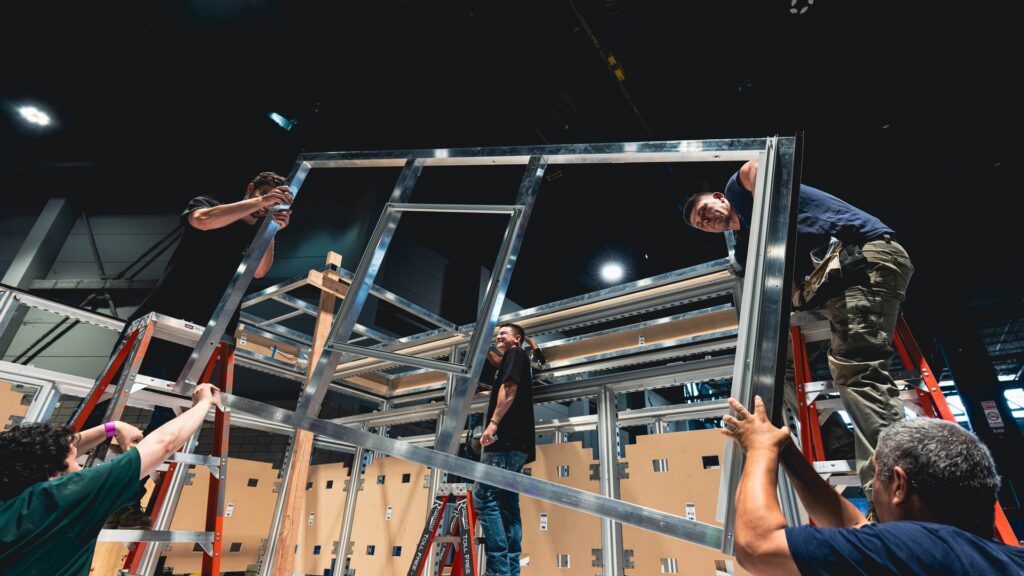
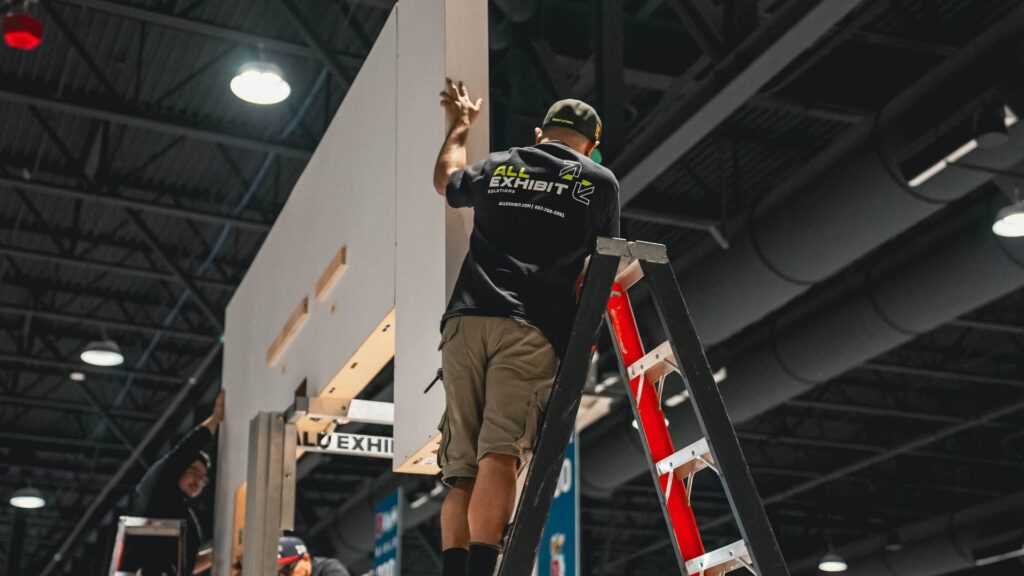
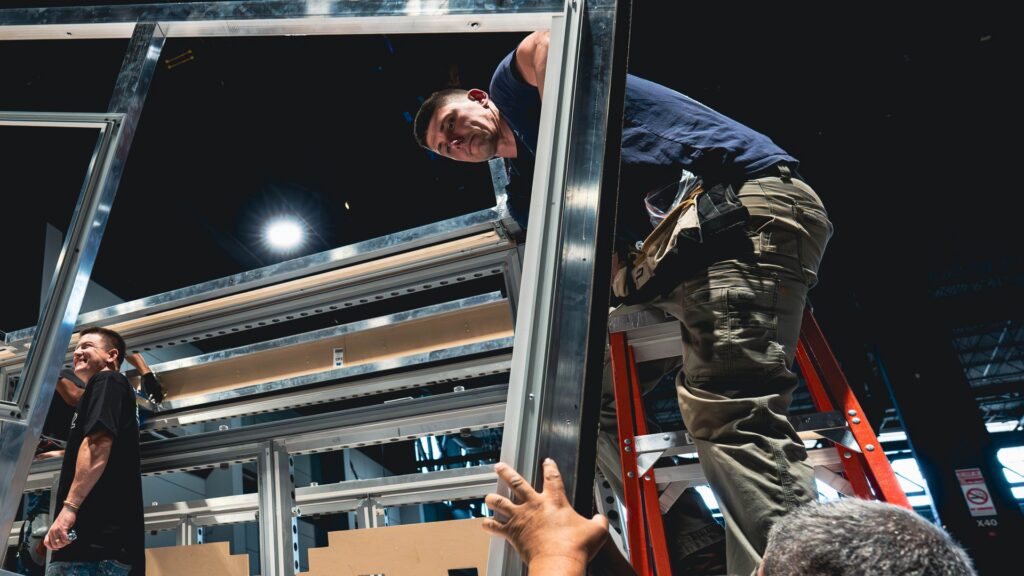
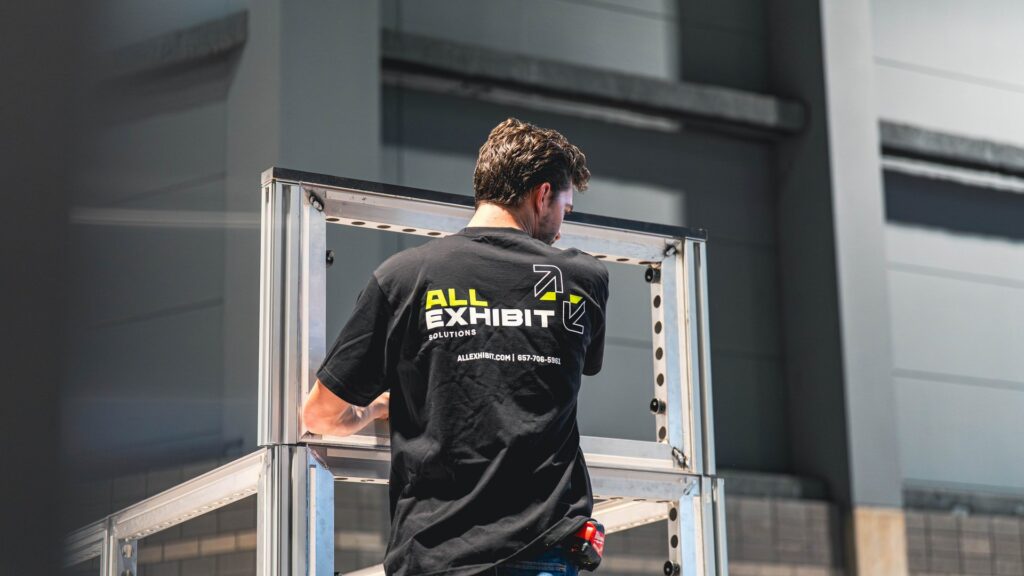
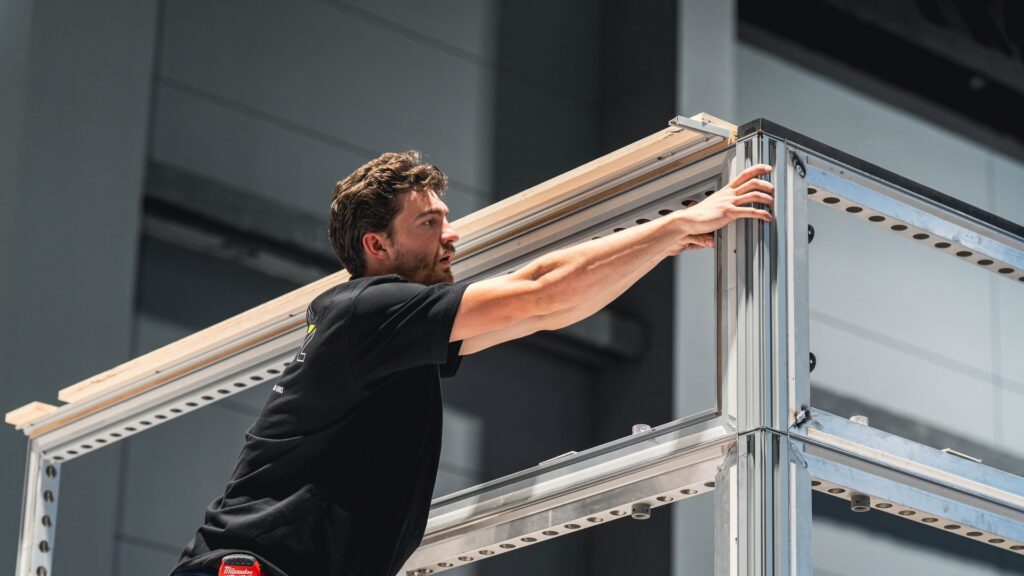
However impressive a design looks in a rendering, it only matters if it goes up correctly, on time, and looking exactly as promised. Installation and dismantle is where every other decision is tested, and it is the part of the process most likely to be undervalued until it goes wrong. A trade show booth company that treats installation as a core craft, with skilled crews and nationwide reach, protects everything you invested in the design and the build. This is exactly the standard the All Exhibit Solutions team holds itself to, handling installation and dismantle with the same care a brand puts into its booth.
When you evaluate any partner, picture the moment the crates open on the show floor, because that is where reputations are actually made. The right company makes that moment calm and predictable, which is the truest measure of whether you chose well.
It is also worth asking how a partner handles the unglamorous middle of a project, not just the pitch and the final reveal. Who answers when a freight question comes up two weeks out? How are change orders priced and approved? What happens if a panel arrives damaged the morning of install? The answers reveal whether you are hiring a true partner or simply renting a service, and that distinction is what you will feel most on the floor when the pressure is real.
Choosing a trade show booth company comes down to matching a partner’s strengths to your needs and trusting the signals of experience, communication, and accountability. If you want a labor and logistics partner who treats your exhibit as carefully as you do, with the reach to deliver the same standard at every venue, the All Exhibit Solutions team is ready to help. Start a conversation with our team and see how the right partner makes the whole show easier.
Recommended Articles
What Trade Show Labor Actually Costs and How to Estimate It
Then compare the estimate against the actual invoice afterward and keep the comparison. Two or three shows of that record turns estimating from guesswork into a reliable forecast. All Exhibit...

Brendan Cogbill
What Is an Exhibitor Appointed Contractor and When Do You Need One?
There is a cost dimension as well. Some shows charge an EAC processing fee, and a few apply a surcharge calculated against the value of the work being performed on the floor. These amounts are...
Brendan Cogbill
Trade Show Booth Rentals: Costs & What’s Included
It is worth asking how much of the rental inventory is genuinely reconfigurable, because that single answer shapes what you can do across a season. Many rental systems are modular by design, which...
Brendan Cogbill
Common Trade Show Rejection Reasons and How to Avoid Them
It is also worth separating the two kinds of no you might receive. A design rejection happens before the show, when your submitted plan conflicts with the rules, and it is the cheaper problem because...
Brendan Cogbill
Top Pop-Up Display Ideas for Your Exhibition Booth
Audience matters as much as venue size. A pop-up aimed at engineers and technical buyers can lean into detailed product imagery and a demo screen, while one built for a consumer-facing event might...
Brendan Cogbill
Inline vs. Island Booths: What Is an Inline Booth and Which Is Right for You?
The configuration you choose ripples straight through your budget and your build. Beyond the space rental itself, islands and peninsulas usually require more material, more complex structures, and...
Brendan Cogbill

Exhibit Management 101: Running Your Trade Show Program Like a Pro
A single trade show is a project. A year of trade shows is a program, and the difference between the two is exhibit management. When a company exhibits a few times a year, the work tends to be...
Brendan Cogbill
What Is Suitcasing at Trade Shows, and How Do You Stop It?
The deepest protection against suitcasing is not a rule; it is a presence so strong that drifting away from it feels like missing out. A well-designed, well-built, and well-staffed booth pulls...