What Is a Kiosk? A Practical Guide for Trade Shows and Beyond

Brendan Cogbill

Introduction
Walk any trade show floor, airport concourse, or shopping center and you will pass dozens of them without giving the word a second thought. A kiosk is one of those structures that is everywhere and yet rarely defined, which makes it easy to order the wrong one or to underestimate what it takes to run it well. For exhibitors and marketers, a kiosk can be one of the most efficient ways to put a brand, a product, or a self-service experience directly in front of people, but only if you understand what the term actually covers and what each version demands.
This guide breaks down what a kiosk is, the main types you will encounter, where they perform best, and the practical realities of building, shipping, and installing one. Whether you are weighing a compact unit for a ten-by-ten booth or a bank of interactive stations for a flagship activation, the same fundamentals apply.
What Is a Kiosk, Exactly?
At its simplest, a kiosk is a small, self-contained structure designed to deliver a focused interaction in a public space. It is compact by nature, usually meant to be staffed by one or two people or to operate entirely on its own through a screen. That compactness is the defining trait: a kiosk concentrates a single purpose, whether that is demonstrating a product, capturing leads, processing a transaction, or guiding visitors, into a footprint far smaller than a full booth.
The word covers a wide range, from a simple counter with branded graphics to a sophisticated touchscreen terminal with integrated payment hardware. What ties them together is intent. A kiosk is built to do one job in a tight space and do it cleanly, which is exactly why it fits so naturally into the crowded, fast-moving environment of a trade show.
Common Types of Kiosks
The simplest category is the basic display or demo kiosk: a branded counter or pedestal where staff greet visitors, show a product, and collect information. These are the workhorses of smaller exhibits and secondary spaces within larger booths. A step up are modular kiosks built from reconfigurable components, which can be scaled, restyled, and reused across multiple shows rather than rebuilt each time.
Then come the digital and interactive kiosks, which put a touchscreen at the center of the experience. These can run product configurators, play video, capture leads, or let visitors browse a catalog at their own pace. Finally, transactional and self-service kiosks handle real functions such as check-in, ordering, or payment, the same family of machines you see used for retail and wayfinding well beyond the show floor. If you are mapping kiosks against other exhibit formats, our overview of the five types of trade show booths to consider shows where a kiosk fits in the larger menu of options.
Where Kiosks Work Hardest
Kiosks earn their keep wherever space is tight and the goal is focused. In a small booth, a single well-designed kiosk can carry the entire presence, anchoring the space and giving staff a natural place to engage. In a large exhibit, kiosks act as satellite stations that spread visitors out, reduce bottlenecks at the main counter, and let several conversations happen at once instead of a single line.
They also shine in high-traffic, self-guided settings where staffing every interaction is impractical. A digital kiosk can demo a product or capture interest around the clock, even when the team is busy elsewhere. The same compact format that suits a booth also travels easily to lobbies, retail floors, and corporate events, which is part of why kiosks remain such a versatile investment.
What Goes Into a Kiosk That Performs
A kiosk lives or dies on a few details. Graphics need to read clearly from across an aisle, because a kiosk often has only a second or two to pull someone in. The structure should be sturdy and stable, since it will be bumped, leaned on, and used hard over several days. Storage matters more than people expect: even a small unit needs a discreet place for literature, giveaways, bags, and cables so the surface stays clean and inviting.
Lighting and finish carry a surprising amount of weight, too. A crisp, well-lit kiosk looks credible and premium, while a dim or flimsy one undercuts the brand no matter how good the product is. These are the same craft details that separate a memorable tabletop presence from a forgettable one, and our look at tabletop display ideas for trade shows is a useful companion when you are designing at this smaller scale.
Interactive and Digital Kiosks
When a kiosk adds a screen, the considerations multiply. Now there is hardware to mount securely, power and data to route cleanly, and content to load and test before doors open. The most common failure with digital kiosks is not the design; it is the technical setup, where a loose cable, an untested touchscreen, or a missing network connection turns a centerpiece into a dark rectangle. At All Exhibit Solutions, we treat the AV and power side of a kiosk with the same rigor as the structure, because an interactive unit only impresses when it actually works the moment a visitor reaches out to touch it.
Interactive kiosks also reward a little planning around flow. Give visitors room to stand and tap without blocking the aisle, position the screen at a comfortable height, and make the first action obvious. A kiosk that invites a clear, simple interaction will always outperform a more powerful one that confuses people in the first three seconds.
Planning, Logistics, and Installation
Because a kiosk is small, it is easy to assume it is simple to handle, but the logistics still matter. It has to be crated to survive transit, delivered on time, and assembled correctly on site, often alongside the rest of a larger booth. Electrical and network needs have to be ordered in advance, and the unit has to be placed where its power and data drops actually land. None of this is difficult with a plan, and all of it causes delays without one.
This is where an experienced labor partner makes a compact project effortless. A professional crew sets the kiosk, connects and tests the technology, and confirms the unit is stable and show-ready, so your team can focus on visitors instead of troubleshooting. The All Exhibit Solutions installation and dismantle labor team handles kiosks as part of a full booth or as a standalone, and the same crew that sets it up will pack it properly for the trip home.
Is a Kiosk Right for Your Booth?
A kiosk is the right call when you have a focused goal and limited space, when you want to add self-service or demo stations to a larger exhibit, or when you need a flexible asset you can reuse across many events. It is less suited to situations that demand a large, immersive environment or a great deal of private meeting space, where a full custom build serves better. The honest answer usually comes from matching the format to the single most important thing you want a visitor to do.
Budget is part of that honest answer, and a kiosk often wins on cost efficiency. Because it reuses across shows, ships in a smaller footprint, and installs quickly, a well-built kiosk can deliver a strong presence for a fraction of what a large custom environment costs to build, freight, and staff. The key is to invest where visitors actually notice, in the graphics, the screen experience, and the finish, rather than in size for its own sake. A focused kiosk that does one thing beautifully will almost always out-earn a bigger structure that tries to do everything at once.
If you are weighing whether a kiosk belongs in your next exhibit, it helps to talk it through with a team that builds and installs them constantly. Tell us what you want visitors to experience and let’s spec a kiosk that fits your space, your budget, and the way your audience actually moves through a show.
Recommended Articles
What Trade Show Labor Actually Costs and How to Estimate It
Then compare the estimate against the actual invoice afterward and keep the comparison. Two or three shows of that record turns estimating from guesswork into a reliable forecast. All Exhibit...

Brendan Cogbill
What Is an Exhibitor Appointed Contractor and When Do You Need One?
There is a cost dimension as well. Some shows charge an EAC processing fee, and a few apply a surcharge calculated against the value of the work being performed on the floor. These amounts are...
Brendan Cogbill
Trade Show Booth Rentals: Costs & What’s Included
It is worth asking how much of the rental inventory is genuinely reconfigurable, because that single answer shapes what you can do across a season. Many rental systems are modular by design, which...
Brendan Cogbill
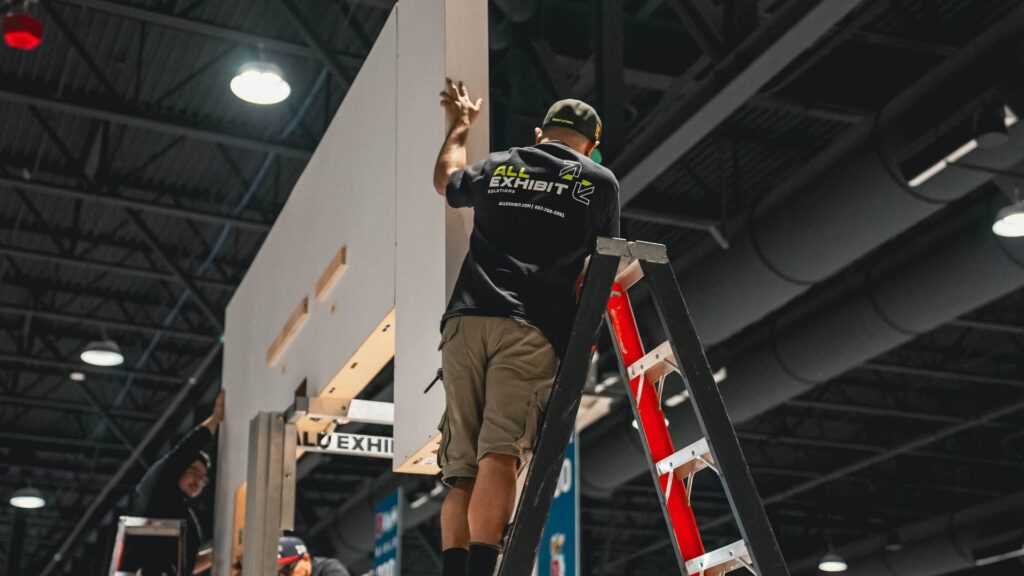
Common Trade Show Rejection Reasons and How to Avoid Them
It is also worth separating the two kinds of no you might receive. A design rejection happens before the show, when your submitted plan conflicts with the rules, and it is the cheaper problem because...
Brendan Cogbill
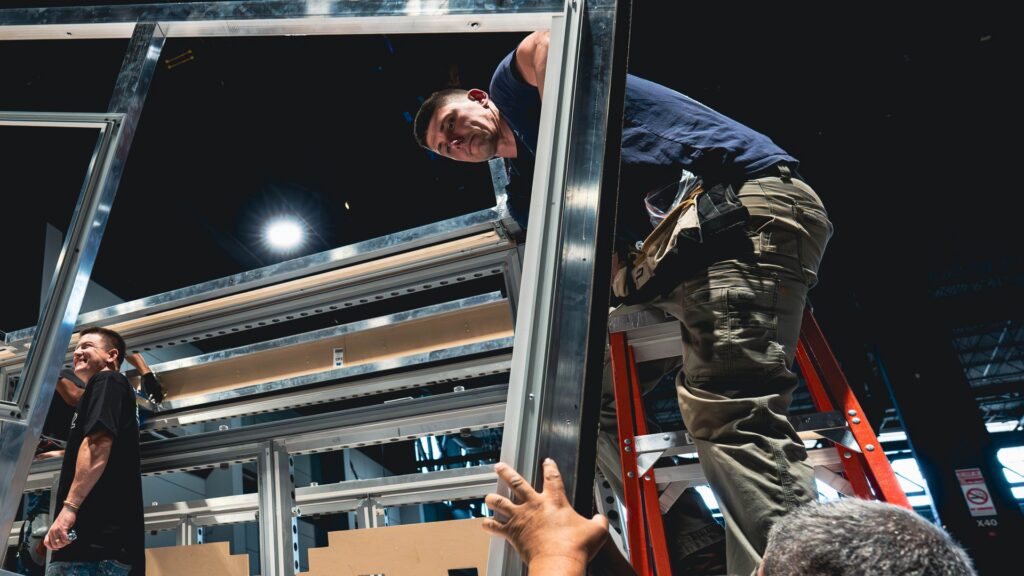
Top Pop-Up Display Ideas for Your Exhibition Booth
Audience matters as much as venue size. A pop-up aimed at engineers and technical buyers can lean into detailed product imagery and a demo screen, while one built for a consumer-facing event might...
Brendan Cogbill

How to Choose a Trade Show Booth Company You Can Trust
However impressive a design looks in a rendering, it only matters if it goes up correctly, on time, and looking exactly as promised. Installation and dismantle is where every other decision is...
Brendan Cogbill
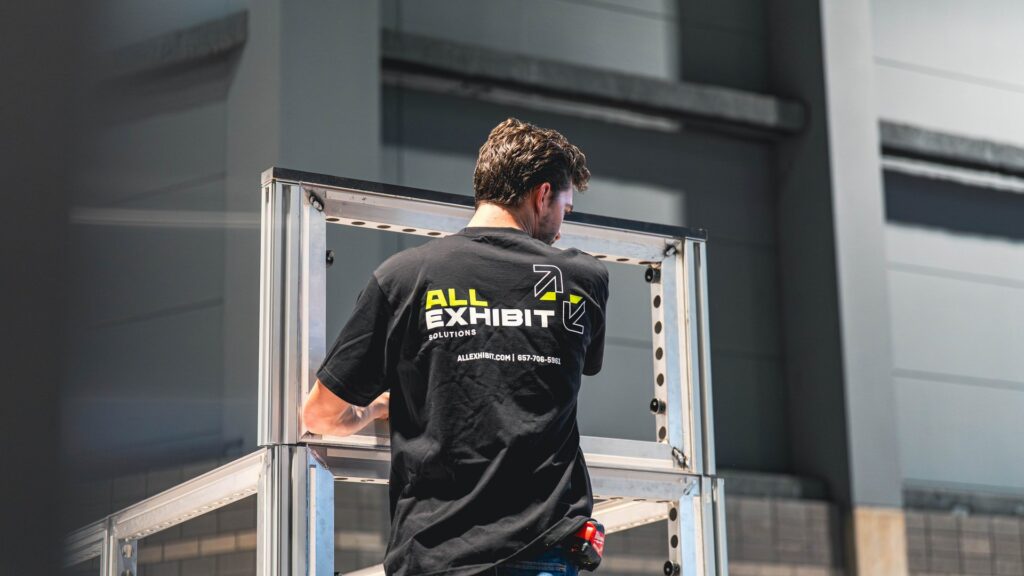
Inline vs. Island Booths: What Is an Inline Booth and Which Is Right for You?
The configuration you choose ripples straight through your budget and your build. Beyond the space rental itself, islands and peninsulas usually require more material, more complex structures, and...
Brendan Cogbill

Exhibit Management 101: Running Your Trade Show Program Like a Pro
A single trade show is a project. A year of trade shows is a program, and the difference between the two is exhibit management. When a company exhibits a few times a year, the work tends to be...