Top Meeting Pods Ideas for Trade Shows

Brendan Cogbill
- Introduction
- Why Meeting Pods Have Become Booth Essentials
- Open Pods for an Approachable Feel
- Enclosed Pods for Privacy and Focus
- Modular Pods That Flex With the Show
- Comfort and Acoustics That Keep Guests Engaged
- Technology That Earns Its Place in the Pod
- Placing Pods Where They Do the Most Good
- Making Meeting Pods Work on the Show Floor
Introduction
There is a moment at almost every trade show when a promising conversation needs somewhere quieter to go. A prospect leans in, asks a real question, and suddenly the open aisle, with its noise and foot traffic, feels like the wrong place to close the deal. Meeting pods exist for exactly that moment. They give your team a defined, semi-private space to sit down, talk numbers, and turn interest into next steps without losing the energy of the show floor around them.
For exhibitors who treat the booth as a place to do business rather than just hand out literature, meeting pods have become one of the smartest investments on the floor. The trick is designing them so they feel inviting rather than closed off, and integrated rather than bolted on. Here are some of the most effective ways to bring meeting pods into your next exhibit.
Why Meeting Pods Have Become Booth Essentials
The economics of a trade show favor depth over volume. A handful of serious conversations with qualified buyers will almost always outperform a stack of business cards collected at the aisle. Meeting pods support that shift by giving your staff a reason and a place to slow a good prospect down and have the conversation that actually moves a sale forward, the kind of focused selling our guide on how to sell at a trade show digs into.
They also signal something about your brand. A dedicated meeting space tells visitors that you came to the show to do real work, not simply to occupy square footage. That impression lands before a word is spoken, and it tends to attract the kind of attendee who is looking for a partner rather than a brochure.
Open Pods for an Approachable Feel
The most versatile meeting pods stay partly open. A low wall, a cluster of soft seating, and a defined floor treatment can mark out a space without sealing it off, which keeps the area feeling welcoming to passers-by. Visitors can see that conversations are happening, and that visible activity becomes its own form of attraction.
Open pods work especially well in larger island booths, where a sense of flow matters. Position them slightly off the main traffic path so seated guests are not jostled, but keep them within sight of the aisle so the space never feels hidden. The goal is a room within a room, distinct enough to feel private but transparent enough to feel part of the show.
Enclosed Pods for Privacy and Focus
Some conversations genuinely require four walls. When you are demonstrating sensitive technology, discussing confidential pricing, or hosting an executive who expects discretion, an enclosed meeting pod earns its footprint. Full-height walls and a door cut the noise dramatically and create the kind of calm that lets a high-value discussion breathe.
The design choice here is to keep the exterior working as hard as the interior. The outside of an enclosed pod is prime branding real estate, often visible from a distance, so treat those walls as a billboard rather than a blank box. Inside, comfortable seating, good lighting, and a screen for presentations turn the space into a genuine sales tool rather than a hideaway.
Modular Pods That Flex With the Show
Show floors vary, and so do your needs from one event to the next. Modular meeting pods, built from reconfigurable wall systems, let you scale the same components up or down depending on the booth size and the goals for that particular show. A single pod at a regional event might become a cluster of three at your flagship show, all from the same inventory.
This adaptability protects your investment and simplifies logistics, since your team works with familiar parts every time. It also keeps your meeting spaces consistent with the rest of your booth, because the same modular language can run through your walls, counters, and pods. The result is a cohesive environment rather than a meeting area that looks like it wandered in from a different booth.
Comfort and Acoustics That Keep Guests Engaged
A meeting pod only works if people want to stay in it. That comes down to details that are easy to overlook in the rush of planning. Seating should be comfortable enough for a twenty-minute conversation, not just a quick perch. Lighting should be warm and even, a relief from the glare of the open hall. And acoustics deserve real attention, because a pod that looks private but leaks every word does not actually do its job.
Soft materials, fabric walls, and a bit of carpet underfoot all help absorb sound and soften the space. These choices do double duty, making the pod both quieter and more inviting. Guests relax, conversations run longer, and your team gets the time it needs to make its case.
Technology That Earns Its Place in the Pod
Meeting pods are natural homes for the technology that supports a sales conversation. A large monitor for live demos, a screen-share setup for walking through proposals, and reliable power and connectivity all turn the pod into a working environment. The aim is to support the discussion, not to overwhelm it, so resist the urge to fill every wall with screens.
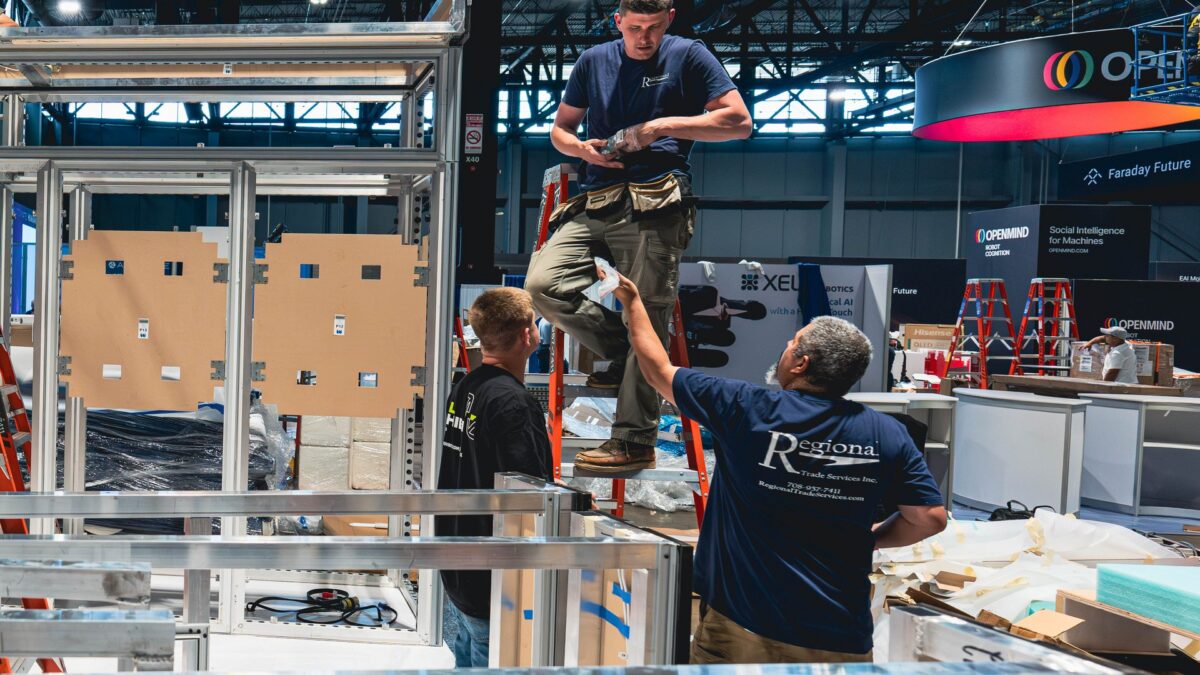
Cable management matters more than it sounds. Loose wires and visible power strips undercut an otherwise polished space, and they create a setup and teardown headache. Planning the technology and its routing during design, rather than improvising on site, keeps the pod clean and keeps your crew on schedule during move-in. All Exhibit Solutions handles that kind of detailed on-site assembly and integration for exhibitors nationwide, so the technical pieces come together as cleanly as the visible ones.
Placing Pods Where They Do the Most Good
Where you put a meeting pod inside the booth has as much influence on its success as how you design it, and it ties directly into how you maximize your trade show booth space overall. A pod buried in the back corner, far from the energy of the aisle, tends to sit empty, while one positioned just off the main traffic flow stays busy. The aim is to make the space feel like a natural next step from a conversation that began at the edge of the booth, close enough that inviting someone in feels effortless, but set back enough that seated guests are not bumped by the crowd.
Sightlines deserve careful thought as well. Visitors should be able to glimpse activity inside an open pod without feeling like they are intruding, because visible engagement is one of the strongest signals that something worth stopping for is happening at your booth. For enclosed pods, the placement question shifts to flow: position the entrance so that walking in feels welcoming rather than like stepping into a sealed room. In larger islands, a cluster of pods can even shape the entire layout, guiding foot traffic along a path that leads naturally toward your team and your most important conversations.
The number of pods matters too. It is tempting to maximize meeting space, but a booth crowded with pods can feel closed off and hard to enter. Striking a balance between open, approachable areas and private meeting spaces keeps the booth inviting while still giving your team the rooms it needs to do real business.
Making Meeting Pods Work on the Show Floor
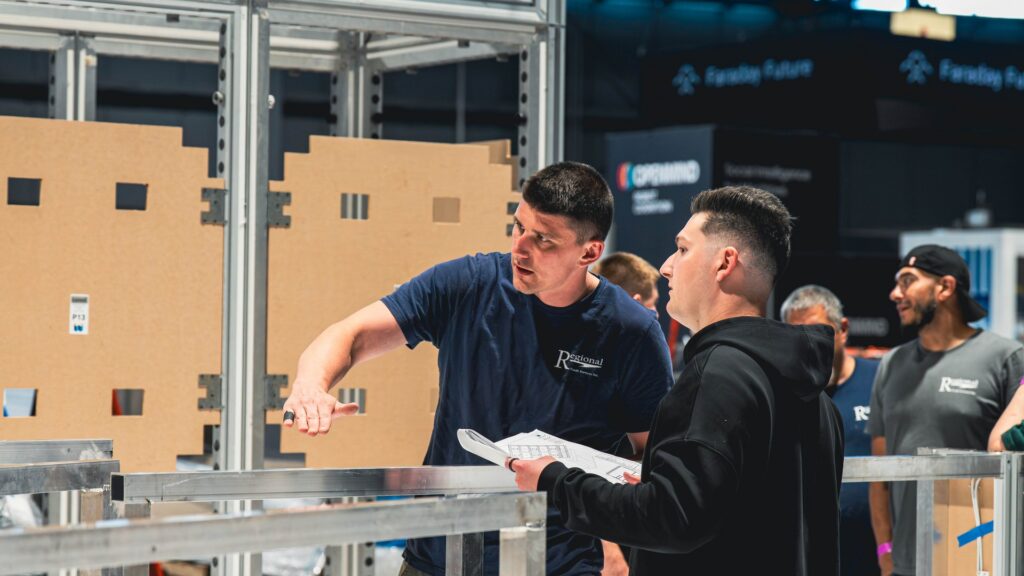
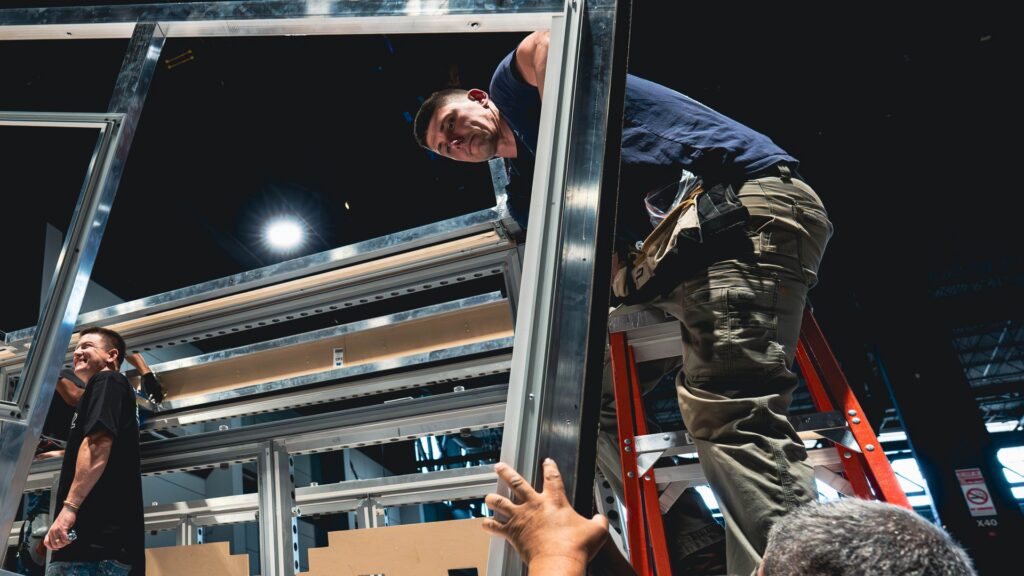
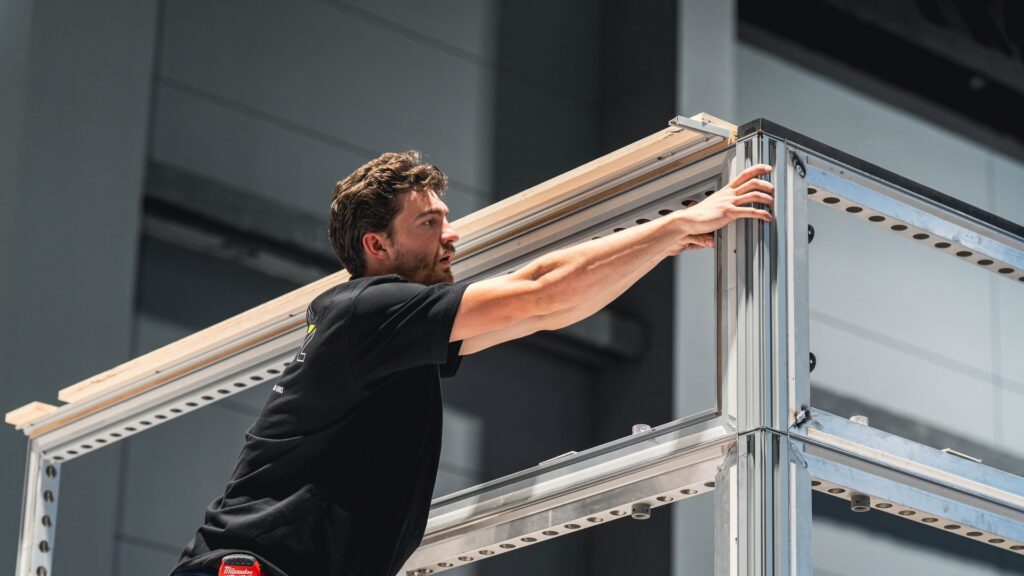
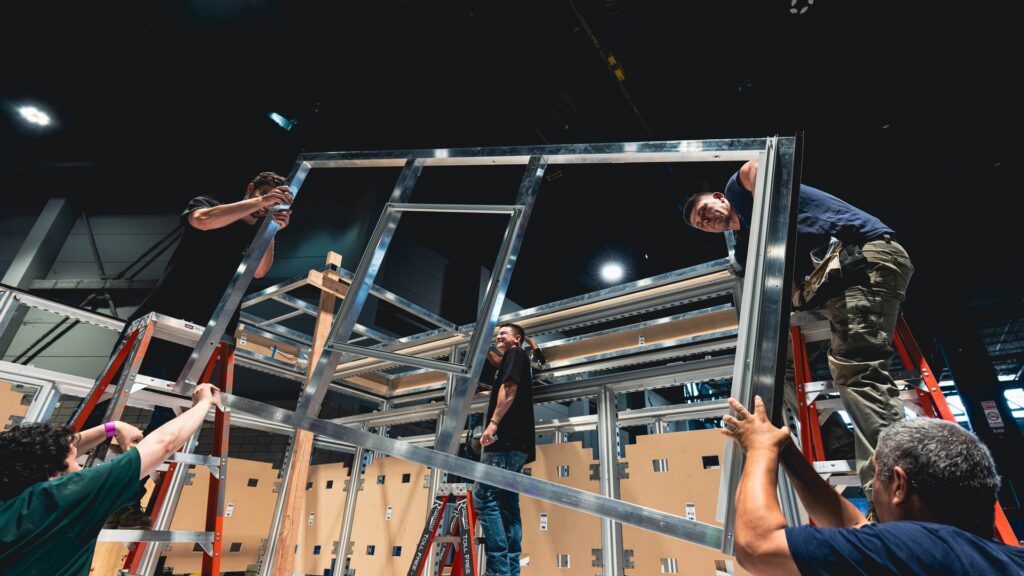
The best meeting pod design still depends on a smooth install. These structures involve walls, doors, electrical, furniture, and AV, and getting them standing correctly within a tight move-in window takes a crew that has done it many times before. A pod that goes up crooked or arrives missing a panel can cost you the very meetings it was meant to host.
That is why exhibitors increasingly lean on a dedicated trade show installation and dismantle team to manage the build. With over a decade of experience and well over a thousand projects behind them, the installers at All Exhibit Solutions know how to bring complex booth elements together on time and take them down without drama when the show ends.
When you are ready to fold meeting pods into your next exhibit, let’s talk through a layout that turns conversations into closed business. Share your booth size and your goals for the show, and we will help you design pods that pull their weight from the first morning to the last.
Recommended Articles
Trade Show Booth Rentals: Costs & What’s Included
It is worth asking how much of the rental inventory is genuinely reconfigurable, because that single answer shapes what you can do across a season. Many rental systems are modular by design, which...

Brendan Cogbill
Common Trade Show Rejection Reasons (and How to Avoid Them)
It is also worth separating the two kinds of no you might receive. A design rejection happens before the show, when your submitted plan conflicts with the rules, and it is the cheaper problem because...
Brendan Cogbill
Top Pop-Up Display Ideas for Your Exhibition Booth
Audience matters as much as venue size. A pop-up aimed at engineers and technical buyers can lean into detailed product imagery and a demo screen, while one built for a consumer-facing event might...
Brendan Cogbill
How to Choose a Trade Show Booth Company You Can Trust
However impressive a design looks in a rendering, it only matters if it goes up correctly, on time, and looking exactly as promised. Installation and dismantle is where every other decision is...
Brendan Cogbill
Inline vs. Island Booths: What Is an Inline Booth and Which Is Right for You?
The configuration you choose ripples straight through your budget and your build. Beyond the space rental itself, islands and peninsulas usually require more material, more complex structures, and...
Brendan Cogbill

Exhibit Management 101: Running Your Trade Show Program Like a Pro
A single trade show is a project. A year of trade shows is a program, and the difference between the two is exhibit management. When a company exhibits a few times a year, the work tends to be...
Brendan Cogbill
What Is Suitcasing at Trade Shows, and How Do You Stop It?
The deepest protection against suitcasing is not a rule; it is a presence so strong that drifting away from it feels like missing out. A well-designed, well-built, and well-staffed booth pulls...
Brendan Cogbill
What a Strong I&D Partner Actually Saves You
On paper, installation and dismantle looks like a line item, a cost to minimize on the way to the part of the budget that feels more important. In practice, the quality of your labor partner quietly...