Trade Show Exhibit Fabrication Process (Start to Finish)

Brendan Cogbill
Introduction
Trade shows are a high-stakes environment where your exhibit has just seconds to make an impression. Behind every seamless booth is a detailed process that transforms raw materials and creative concepts into a finished, functional structure. From the earliest sketches to the final bolt tightened on the show floor, the trade show exhibit fabrication process requires precision, collaboration, and expertise.
Understanding the full journey from start to finish helps exhibitors prepare, plan budgets, and trust that their vision will be executed to the highest standards. In this blog, we’ll walk through each phase of exhibit fabrication: what happens, why it matters, and how a dedicated partner like All Exhibit Solutions ensures your booth is built for success.
Phase 1: Concept Development and Planning
Every great exhibit begins with a conversation. Before any materials are cut or structures are sketched, there’s a deep dive into the exhibitor’s brand, goals, target audience, and event requirements. This discovery phase sets the tone for the entire trade show exhibit fabrication process. It’s where strategic decisions are made and where design intent is aligned with business objectives.
During this phase, creative direction is established. Whether the goal is to increase foot traffic, create an immersive product experience, or position the brand as an industry leader, every idea is built around that purpose. Planning also includes reviewing space dimensions, show regulations, and logistics that will influence structural and material choices. The planning phase is about building a foundation that ensures the rest of the process runs smoothly.
At All Exhibit Solutions, this initial collaboration ensures we understand not only the creative vision but also the operational needs, timeline, and technical constraints that will shape the project from day one.
Phase 2: Detailed Design and Engineering
Once the vision is clear, it’s time to translate that concept into reality. This phase is where creativity meets technical expertise. Designers develop renderings that bring the booth to life visually, while engineers create the structural blueprints that guide the build process. Every surface, frame, and graphic must be accounted for, down to the smallest detail.
Material selection also takes place here. Choices are based on visual appeal, durability, weight, cost, and reusability. Designers must consider flooring, lighting, wall finishes, signage, and tech integration. Engineering plans ensure the booth is safe, compliant with trade show guidelines, and capable of withstanding repeated setup and teardown.
This is also the point where design elements are tested against practical requirements. Will a hanging sign meet height restrictions? Can a backlit panel support the right lighting system? These questions are answered before fabrication begins to avoid costly changes later. A strong design and engineering phase guarantees the booth will be both beautiful and buildable.
Phase 3: Fabrication and In-House Construction
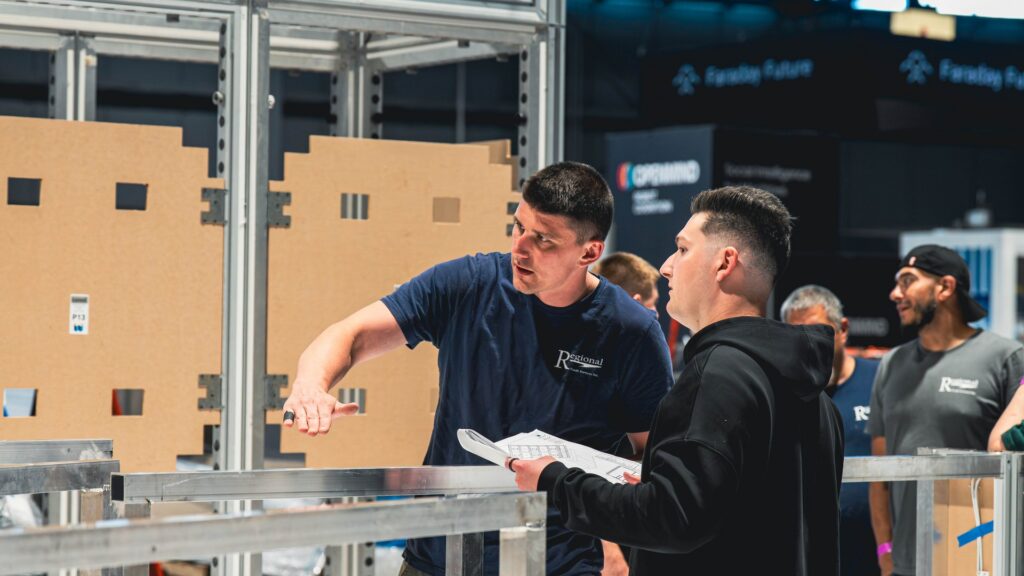
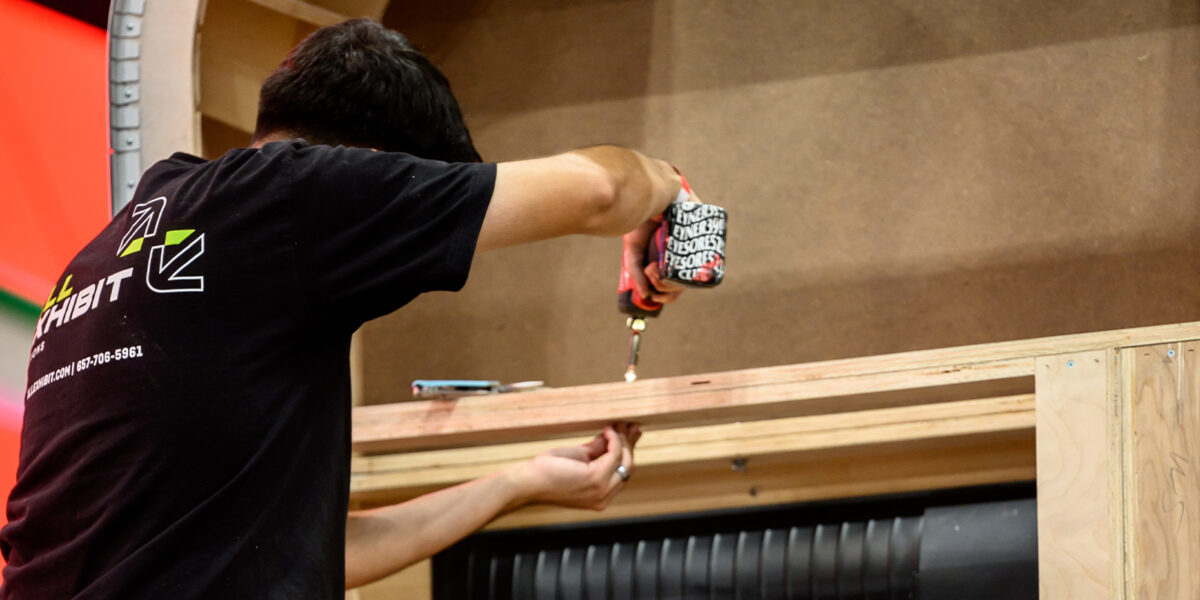
With detailed plans in hand, the real building begins. Skilled fabricators take over, transforming raw materials into walls, counters, stages, display cases, and structures. Woodworking, metalwork, graphics production, electrical setup, and custom elements all come together in a coordinated effort. This is the most hands-on and labor-intensive part of the trade show exhibit fabrication process.
Having an in-house fabrication team is a major advantage. It ensures better quality control, faster turnaround times, and clear communication across all departments. At All Exhibit Solutions, we work under one roof with state-of-the-art tools and experienced craftspeople. That allows for real-time collaboration, quick adjustments, and a final product that meets exact specifications.
Whether it’s a modular system built for flexibility or a fully custom island exhibit, every component is carefully constructed to handle the demands of the show floor. Durability, portability, and precision are the benchmarks of this phase, and they set the stage for a successful exhibit experience.
Phase 4: Pre-Show Prep and Quality Control
Once fabrication is complete, everything is thoroughly inspected and tested. Pre-show prep is where attention to detail really shines. Components are staged and assembled to ensure everything fits together perfectly. Lighting systems are tested, graphics are reviewed for alignment and color accuracy, and structural elements are double-checked for stability.
Packing is a science in itself. Each piece is crated in a way that ensures it will arrive at the venue intact and ready for installation. The quality control process includes mock setups when possible, so both the client and the fabrication team can confirm everything is show-ready. This proactive approach reduces risk, prevents delays, and avoids onsite surprises.
All Exhibit Solutions treats every pre-show prep like a dress rehearsal. It’s our final chance to validate the vision, and we take that responsibility seriously. When our crew hits the show floor, we’re confident everything will go exactly as planned.
Phase 5: Installation at the Show Site
The next step is where months of work come to life. The exhibit is shipped to the venue, and the installation and dismantle team takes over. Trade show floors are high-pressure environments with tight schedules, strict move-in rules, and limited setup windows. This is where experience makes all the difference.
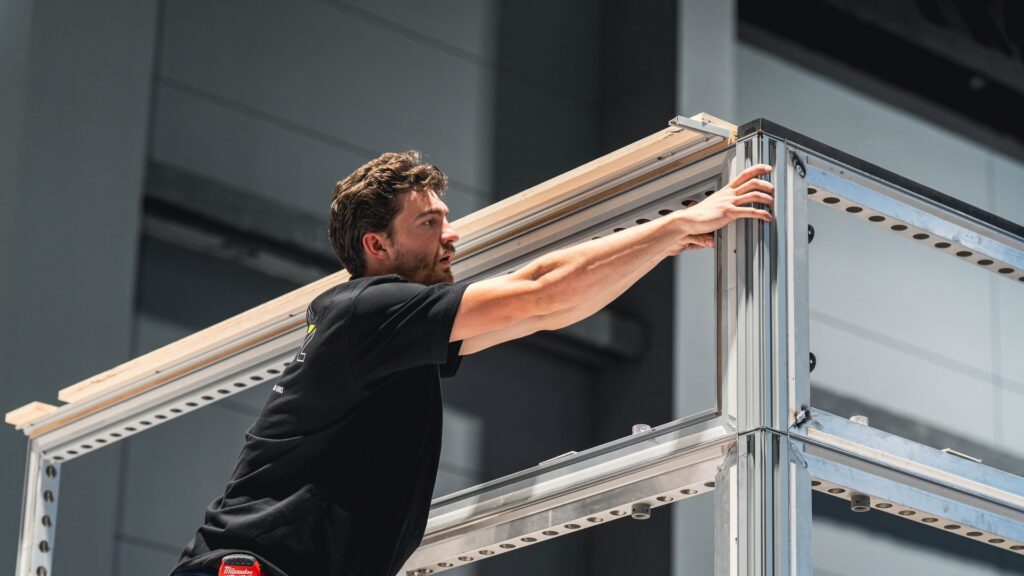
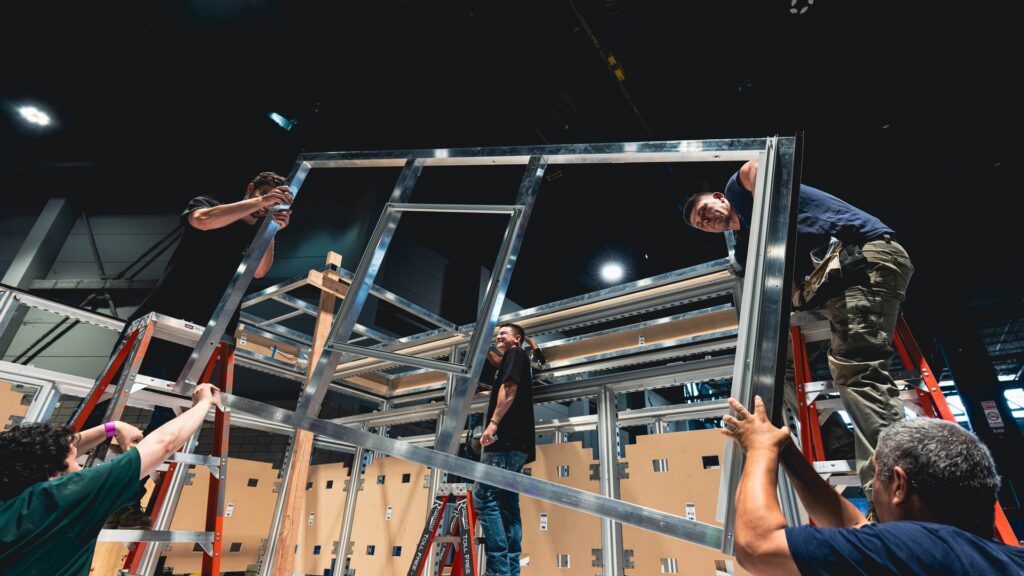
A professional installation team ensures the booth is assembled efficiently and safely. Components are uncrated, placed, and built according to the engineering plans. Graphics are mounted, lighting is installed, AV systems are tested, and any last-minute adjustments are made onsite. Speed and accuracy are essential. Delays or errors can impact not just the exhibit, but the entire event strategy.
All Exhibit Solutions provides trained I&D professionals who specialize in navigating show regulations, solving onsite challenges, and making sure every detail looks as it should. Our crews know how to bring an exhibit to life under pressure, making us a reliable partner when it matters most.
Phase 6: Dismantle and Post-Show Logistics
After the show wraps, it’s time to reverse the process, but this part is just as critical. Dismantle must be done quickly and carefully. Every piece of the exhibit must be broken down, inventoried, and repacked with care to ensure it’s ready for storage or its next appearance. Mistakes during this phase can lead to damage, loss, or costly repairs before the next event.
Depending on the client’s needs, exhibits can be returned to a warehouse, stored for future use, or shipped to the next venue. All Exhibit Solutions offers post-show logistics support to help clients manage this process seamlessly. We ensure every component is handled properly and returned in top condition, so it’s ready to perform again at the next show.
Proper dismantle and logistics planning help extend the life of a custom booth and maximize ROI. When managed correctly, a single exhibit can deliver value across multiple shows and seasons.
Trade show exhibits don’t just appear. They’re the result of a complex, collaborative, and highly skilled process. From the early planning stages to the final dismantle, each phase of the trade show exhibit fabrication journey demands precision and professionalism. When every step is executed with care, the result is a display that not only looks stunning but performs flawlessly in a fast-paced, high-stakes environment.
At All Exhibit Solutions, we manage every stage of the installation and dismantle process with precision and professionalism. Our clients trust us to bring their trade show presence to life, on time, on budget, and exactly as planned. If you’re looking for a reliable partner to handle the full scope of your booth setup and breakdown, we’re ready to get to work.
Recommended Articles
Trade Show Booth Rentals: Costs & What’s Included
It is worth asking how much of the rental inventory is genuinely reconfigurable, because that single answer shapes what you can do across a season. Many rental systems are modular by design, which...

Brendan Cogbill
Common Trade Show Rejection Reasons (and How to Avoid Them)
It is also worth separating the two kinds of no you might receive. A design rejection happens before the show, when your submitted plan conflicts with the rules, and it is the cheaper problem because...
Brendan Cogbill
Top Pop-Up Display Ideas for Your Exhibition Booth
Audience matters as much as venue size. A pop-up aimed at engineers and technical buyers can lean into detailed product imagery and a demo screen, while one built for a consumer-facing event might...
Brendan Cogbill
How to Choose a Trade Show Booth Company You Can Trust
However impressive a design looks in a rendering, it only matters if it goes up correctly, on time, and looking exactly as promised. Installation and dismantle is where every other decision is...
Brendan Cogbill
Inline vs. Island Booths: What Is an Inline Booth and Which Is Right for You?
The configuration you choose ripples straight through your budget and your build. Beyond the space rental itself, islands and peninsulas usually require more material, more complex structures, and...
Brendan Cogbill
Exhibit Management 101: Running Your Trade Show Program Like a Pro
A single trade show is a project. A year of trade shows is a program, and the difference between the two is exhibit management. When a company exhibits a few times a year, the work tends to be...
Brendan Cogbill
What Is Suitcasing at Trade Shows, and How Do You Stop It?
The deepest protection against suitcasing is not a rule; it is a presence so strong that drifting away from it feels like missing out. A well-designed, well-built, and well-staffed booth pulls...
Brendan Cogbill
What a Strong I&D Partner Actually Saves You
On paper, installation and dismantle looks like a line item, a cost to minimize on the way to the part of the budget that feels more important. In practice, the quality of your labor partner quietly...